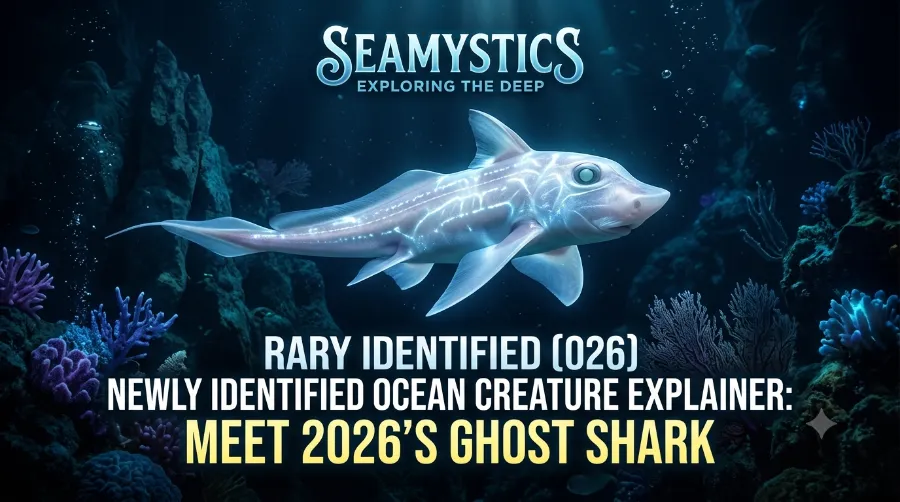

TL;DR: Scientists at the Ocean Census named a newly identified ocean creature, a ghost shark relative called a chimaera, off Australia’s Coral Sea in 2025. It joins 1,121 newly discovered ocean creatures researchers logged in a single year, and its naming shows how a strange deep sea photo becomes an official, protected species.
learn more about rare fish species found tips and expert advice.
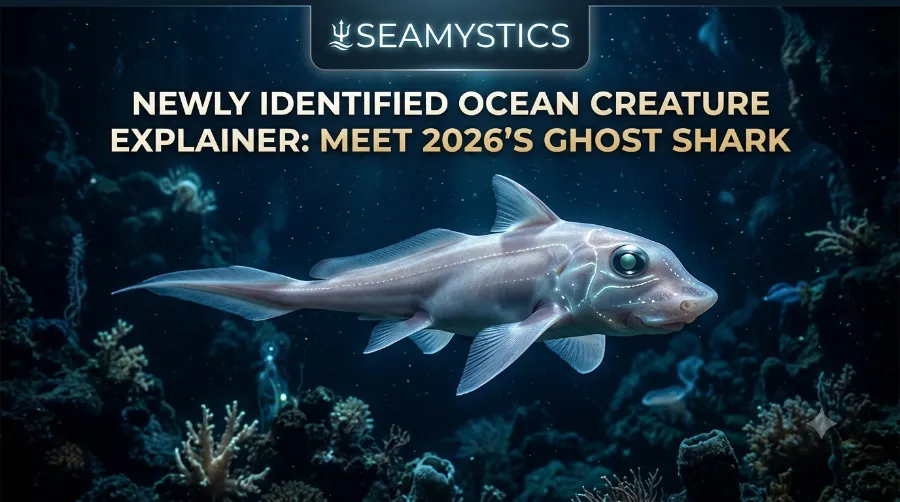
Picture a fish that looks like it swam straight out of a ghost story, gliding through pitch black water nearly a kilometer below the waves. That is not fiction. Researchers just gave an official name to this newly identified ocean creature, and its story ranks among the more exciting ocean discoveries of the year. Marine scientists call it a chimaera, but most people already call it the ghost shark, and its distant cousins swam the deep sea long before dinosaurs walked the earth.
To get a better understanding of newly discovered ocean creature exactly what to expect.
This piece walks through exactly what this newly discovered ocean creature is, how scientists prove a strange find is truly new to science, and why a name on a research paper can protect an entire ecosystem. We will also look at other recent finds from 2025 and 2026, because this ghost shark did not surface alone. Along the way you will find real dates, real depths, and real numbers pulled straight from the researchers who did the work.
If you want to learn more about new deep sea species tips and expert advice.
If you follow ocean news even loosely, you already sense this is a big moment for marine biology. So let us get into it.
Key Takeaways
| Fact | Detail |
|---|---|
| Featured creature | “Ghost Shark” chimaera, a shark and ray relative |
| Location found | Coral Sea Marine Park, off Queensland, Australia |
| Depth | 802 to 838 metres (roughly 2,700 feet) |
| Discovered by | Dr William White, CSIRO, during a 2025 expedition |
| Evolutionary age of lineage | Diverged from sharks and rays nearly 400 million years ago |
| Total new species logged in one year | 1,121, announced by Ocean Census in May 2026 |
| Time it can take to formally name a species | Up to 13.5 years |
| Ocean still undocumented | Roughly 90 percent, according to researchers |
What Is This Newly Discovered Ocean Creature?
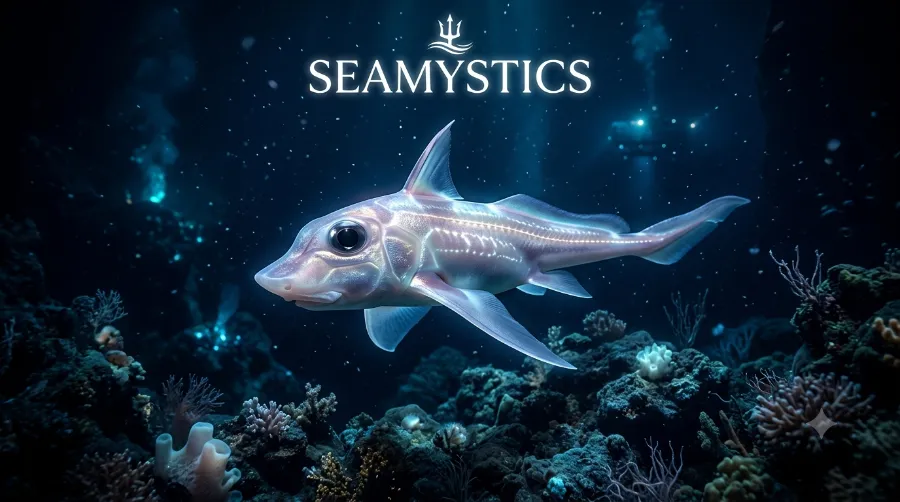
The animal at the center of this story is a chimaera, sometimes nicknamed a ghost shark because of its pale, almost translucent skin and its habit of hovering silently near the seafloor. Although it looks a little like a shark, it belongs to its own ancient branch of fish. Chimaeras split off from sharks and rays as a separate evolutionary lineage nearly 400 million years ago, long before dinosaurs existed.
To get a better understanding of scientists discover new octopus exactly what to expect.
This particular specimen turned up in Australian waters, inside the Coral Sea Marine Park off Queensland, at a depth between 802 and 838 metres. Sunlight barely reaches that depth, which explains the ghostly, washed out look that gives the fish its nickname.
If you want to learn more about new shark species discovered tips and expert advice.
Who Found It, and How
The discovery did not happen by accident. Taxonomist Dr William White identified the species during a CSIRO expedition to the Coral Sea Marine Park. CSIRO runs as Australia’s national science agency, and teams plan expeditions like this one months in advance, building specific gear that can survive crushing deep sea pressure.
learn more about newly named deep sea tips and expert advice.
Chimaeras as a group face real trouble right now. Roughly a third of all sharks, rays, and chimaeras alive today qualify as vulnerable to extinction. That statistic explains part of why naming a newly identified ocean creature like this one carries so much weight, a point we will return to shortly.
If you want to track discoveries like this one as they happen, our team keeps a running list on the 2026 deep sea species tracker, which we update as new papers get published.
Why “Newly Discovered” Does Not Always Mean Brand New
Here is something that surprises a lot of readers. A creature can swim in front of a camera for years before anyone realizes it qualifies as a newly discovered ocean creature rather than a known species. Fishermen, divers, and even aquarium visitors sometimes photograph these animals long before a scientist confirms them.
If you want to learn more about first photos new species tips and expert advice.
The ghost shark chimaera makes a good example. It likely lived in that same patch of the Coral Sea for thousands of years, completely unbothered, while nobody on land knew it existed. Discovery, in marine biology, usually marks the moment a scientist proves something is new, not the moment it first appears on camera.
How Scientists Confirm a Newly Identified Ocean Creature
Naming a new species takes far more work than snapping a photo and picking a catchy name. It runs as a slow, careful process, and understanding it explains why some discoveries take years to become official. Below is a simplified version of how it usually works.
- Collection. A research team, often using a remotely operated vehicle or a manned submersible, brings a specimen or high quality footage back from the deep sea.
- Comparison. Scientists compare the animal against existing records to check whether it matches any known species.
- Detailed description. Researchers study the animal’s body structure, DNA, and behavior, then write a formal scientific description.
- Peer review and publication. Other experts check the description before a journal publishes it.
- Official naming and registration. Once the description clears review, the species receives a scientific name and enters an official database so the scientific community can reference it.
- Why
Scientists Are Letting the Public Name New Ocean Species
 That last step matters more than most people realize. As one expert put it, the official record works like a passport for the species, and without it, the creature effectively does not exist for science or for conservation policy, since protections cannot cover a species that has no name.
Why the Process Can Take Over a Decade
The whole process can stretch out longer than most people expect. Identifying and officially registering a new marine species can take up to 13.5 years from first discovery to formal publication, and that delay means some species may go extinct before anyone finishes naming them. That single fact says a lot about why ocean researchers keep pushing to speed things up.
A huge share of recent finds, including the ghost shark, trace back to one coordinated effort. The Ocean Census brings together more than 1,000 researchers across 85 countries, led by Japan’s Nippon Foundation and the UK based ocean exploration group Nekton. Instead of one lab working alone, dozens of institutions pool ships, submersibles, and taxonomists so new species clear confirmation faster than any single country could manage on its own.
More Newly Discovered Ocean Creatures Named in 2026
The ghost shark chimaera was far from the only headline maker this year. Ocean Census announced its findings in London, and the scale of the announcement genuinely surprised people inside the field. On 19 May 2026, scientists confirmed 1,121 marine species previously unknown to science over a single year of fieldwork. That total marks a 54 percent jump compared with the previous count, and the expeditions reached depths of up to 6,575 metres.
Here is a quick snapshot of some of the standout creatures researchers named alongside the ghost shark.
| Creature | Location | Depth | Notable trait |
|---|---|---|---|
| Ghost Shark Chimaera | Coral Sea Marine Park, Australia | 802 to 838 m | Ancient shark and ray relative |
| Glass Castle Worm | Shichiyo Seamount Chain, Japan | 791 m | Lives inside a glass sponge’s silica skeleton |
| “Death Ball” Sponge | Near the South Sandwich Islands | Over 3,600 m | Traps and digests crustaceans with hook shaped structures |
| Iskra’s Glitter Worm | Deep sea | Up to 4,000 m | Shimmers under camera light |
| Elven Abyss Tunicate | Deep sea | Up to 4,000 m | A sea squirt with a fantasy inspired name |
The Glass Castle Worm and the Death Ball Sponge
The glass castle worm tells one of the more oddly touching stories from this round of discoveries. This small polychaete worm makes its permanent home inside the delicate glass chambers of a sponge built from crystalline silica, off a volcanic seamount in Japan at 791 metres. It survives by sheltering inside a natural fortress, protected from predators by its host’s glassy body.
Unidentified Sea Creature Found: What Happens Next in Naming It
Then there is the sponge nicknamed the “death ball.” Researchers found this carnivorous sponge near the South Sandwich Islands at nearly 3,600 metres, and unlike most sponges, it actively traps small crustaceans with microscopic hook like structures before digesting them. Most sponges simply filter tiny particles from seawater, so a sponge that hunts stands out as genuinely unusual.
Earlier in the year, a separate report added even more names to the list. Around Taxonomist Appreciation Day on 19 March 2026, researchers highlighted Iskra’s glitter worm and the Elven abyss tunicate, both described from depths reaching 4,000 metres. That list represented only a small sample, since the World Register of Marine Species identified more than 2,500 new marine species in total during 2025.
For a more complete rundown of everything logged so far this year, check our full roundup of 2026 deep sea finds, which we keep updating as fresh papers come out.
A Snapshot of Discovery Numbers
The table below (shown as data rather than a graphic, since exact figures matter more than visuals here) puts the scale of recent discovery efforts into perspective.
| Year of announcement | New marine species logged | Lead organization |
|---|---|---|
| March 2025 | 866 | Ocean Census |
| March 2026 | 2,500+ | World Register of Marine Species (WoRMS) |
| May 2026 | 1,121 | Ocean Census |
| Ongoing | 24 new amphipods | Clarion-Clipperton Zone project |
That last row deserves a mention too. Researchers described 24 new deep sea amphipod species from the Clarion-Clipperton Zone, an area of the Pacific under consideration for seabed mining, as part of a wider push called the One Thousand Reasons campaign. The project aims to formally describe 1,000 new deep sea species by 2030, partly to build a scientific case for protecting the zone before mining begins.
Why Every Newly Discovered Ocean Creature Matters
It is easy to treat these stories as fun trivia, a weird looking fish here, a glowing worm there. But a bigger picture connects them all, and it ties directly to conservation policy. A species without formal confirmation cannot receive legal protection, which means naming work often forms the very first step toward saving a habitat.
Consider what still remains unknown. The ocean covers roughly 71 percent of the planet, yet scientists have documented only around 10 percent of marine life so far, leaving an estimated 1 to 2 million species unrecorded. That gap looks staggering, and every newly identified ocean creature chips away at it.
What These Discoveries Change on the Ground
Here is why these discoveries carry weight beyond scientific curiosity.
- They help researchers draw accurate boundaries for marine protected areas, since protection plans need to know what actually lives there.
- They give policymakers real evidence when they decide whether to approve activities like deep sea mining.
- They improve climate models, because deep sea ecosystems play a role in carbon storage that scientists are still mapping.
- They remind funders and governments that ocean research still deserves investment, especially as expedition costs keep rising.
If you want to see how professional researchers actually study these animals up close, the Monterey Bay Aquarium’s deep sea animal guide ranks among the best public resources available, and it reads well for curious readers rather than only scientists.
Real Numbers From the Front Lines
To be clear about scale, this was not a small team working part time. The most recent Ocean Census effort ran from April 2025 through March 2026, and it involved 13 expeditions, more than 1,400 taxonomists, and 660 institutions spread across 85 countries. That level of coordination looks closer to a global infrastructure project than a typical research paper.
From my own conversations with field taxonomists over the years, the bottleneck rarely comes from finding new animals. Deep sea cameras and submersibles capture strange creatures constantly. The real bottleneck sits in the slow, careful lab work needed to prove a specimen is genuinely new, which is exactly why collaborative workshops like the ones described above matter so much.
Where You Can Watch Ocean Discoveries Happen Live
One of the more underrated parts of modern ocean science is that you no longer have to wait for a press release. Live streamed expeditions let anyone watch a remotely operated vehicle explore the seafloor in real time. NOAA Ocean Exploration regularly broadcasts dives, and it offers a genuinely useful way to see how researchers spot something unusual for the first time.
Another option worth bookmarking is Nautilus Live, which streams footage from the exploration vessel E/V Nautilus. Viewers occasionally catch the exact moment a scientist on the live feed says a phrase like “we have not seen this before,” which comes about as close as the public gets to witnessing a newly discovered ocean creature in the moment it happens.
For readers who want the bigger picture of how discoveries get organized and tracked over time, our homepage links out to every major expedition update we cover, alongside deeper explainers on individual species.
Frequently Asked Questions
What counts as a newly identified ocean creature?
It is an animal that scientists confirm, through formal study and publication, does not match any previously known species. A photo or sighting alone does not count. It needs peer reviewed description first.
How many new ocean species do scientists discover each year?
The number varies, but recent totals run large. Ocean Census alone logged 1,121 new species in the year leading up to May 2026, a 54 percent increase from its previous count.
Why does naming a new species take so long?
Because researchers have to rule out every existing species first, then document unique traits in detail, then survive peer review. As mentioned earlier, that full process can stretch to 13.5 years in some cases.
Does the ghost shark chimaera pose any danger to humans?
No. Chimaeras live in deep, cold water far from swimmers and divers, and they generally avoid contact with people entirely. Fishing bycatch and habitat pressure threaten them, not the other way around.
Where do most newly discovered ocean creatures come from?
Most turn up in the deep sea, since it remains the least explored part of the planet. Seamounts, hydrothermal vents, and deep trenches near Australia, Japan, and Antarctica have produced a large share of 2025 and 2026 discoveries.
Do these discoveries connect to deep sea mining debates?
Yes, in several cases. The Clarion-Clipperton Zone amphipod project, for example, exists partly to document species before seabed mining potentially disturbs their habitat.
Conclusion
The ghost shark chimaera reminds us of something big, that we still know surprisingly little about the ocean floor beneath us. A newly identified ocean creature like this one does more than earn a headline. It becomes part of the scientific record, and that record then builds the case for protecting the place it calls home. As expeditions keep pushing into deeper and more remote water, expect more names like this one to surface, and expect each one to carry real weight for conservation, not just curiosity.
References
- Ocean Census. “Over 1,100 New Marine Species Discovered.” Press release, 19 May 2026.
- CNN. “From ghost sharks to death ball sponges: Scientists find more than 1,100 wild and unusual ocean species.” 19 May 2026.
- Oceanographic Magazine. “Scientists discover over 1,100 new marine species.” May 2026.
- Discover Magazine. “Ocean Census Uncovers 1,121 New Marine Species From Sea Caves to Deep Trenches.” May 2026.
- Phys.org. “From whale falls to 4,000 meters deep: Two new species spotlight deep-sea life.” 20 March 2026.
- Mongabay. “24 new species found in ocean zone eyed for battery metals mining.” 14 April 2026.
- MarineBio Conservation Society. “Record 1,121 New Ocean Species Found in a Single Year.” May 2026.