
A rare deep sea mollusk gets pulled up from nearly 18,000 feet below the Pacific, and within a week, more than 8,000 strangers on the internet are arguing about what to call it. That is not a made-up scene. It happened in early 2026, when a team working with the Senckenberg Ocean Species Alliance let the public help name a newly found chiton. The final result, Ferreiraella populi, quite literally means “of the people.” This is the heart of a bigger shift happening across ocean science, where a new species named publicly is becoming less of a novelty and more of a normal part of how discovery works.
The Sargasso Sea Mystery: Why Ships Report Strange Silence There
Unidentified Sea Creature Found: What Happens Next in Naming It
Key Takeaways
| Point | What It Means |
|---|---|
| Public naming is growing | More labs and museums now run open naming contests instead of naming species alone |
| Speeds up recognition | Public campaigns can shrink years-long naming delays into months |
| Builds real conservation attention | Named species are easier to track, cite, and protect than unnamed ones |
| Science stays in control | Researchers still confirm names follow strict taxonomic rules |
| It works for funding too | Museums and nonprofits use naming rights to support fieldwork and research |
TL;DR: Marine scientists are increasingly inviting the public to suggest or vote on names for freshly discovered ocean species, because it builds public interest in biodiversity, speeds up formal naming, and can fund further research. The scientific description still follows strict rules of taxonomy, so the fun does not come at the cost of accuracy.
Brinicle Ice Finger of Death The Antarctic Phenomenon Filmed for the First Time
I have spent close to two decades working around tide pools, research vessels, and taxonomy labs, and I can tell you this trend caught even seasoned researchers off guard. Species naming used to be a quiet, almost private ritual. Now it is becoming a shared event, and the ocean is benefiting from the attention.
What Public Naming Actually Means
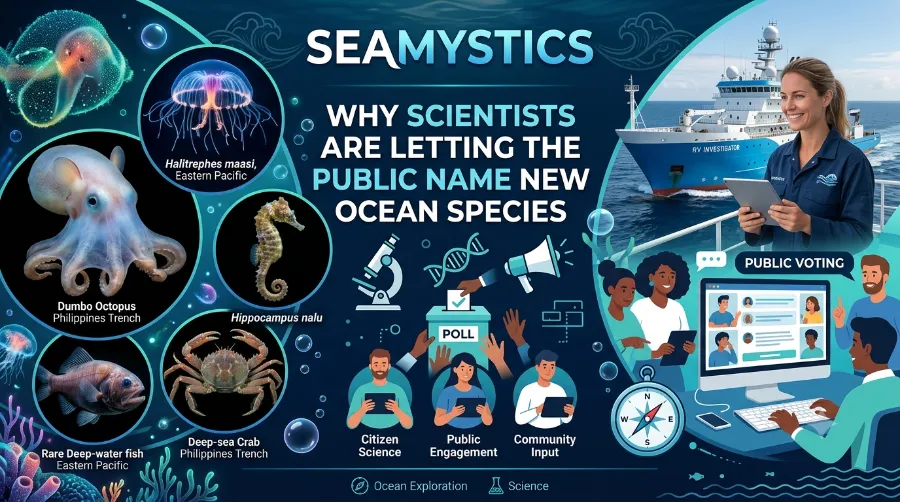
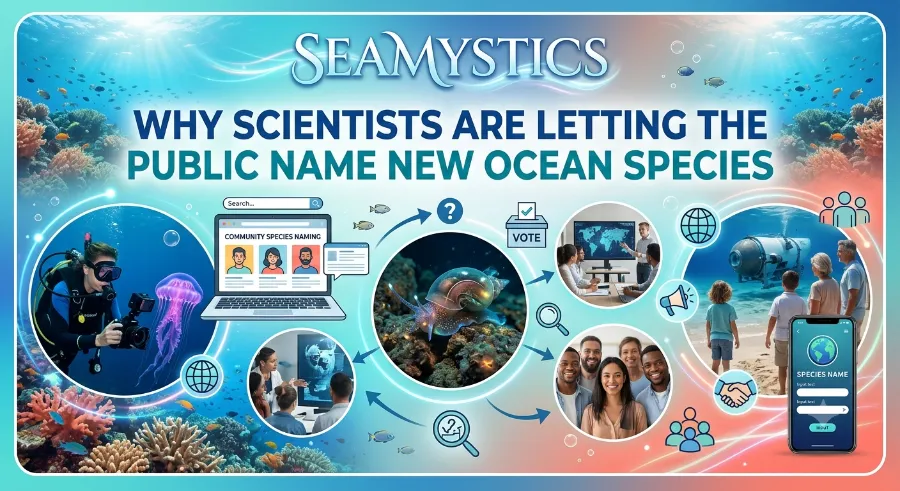
Public naming does not mean the internet picks a name out of thin air and a scientist rubber stamps it. It means people submit suggestions, sometimes vote on shortlists, and researchers pick a name that fits both the spirit of the public’s choice and the formal rules of biological naming, known as binomial nomenclature. The species still gets a proper two part Latin name, but part of it now often carries a story that regular people helped write.
Cold Seeps The Deep Sea Ecosystems That Run on Gas Not Sunlight
Traditionally, naming rights sat almost entirely with the taxonomist who first formally described the animal. That has not changed at a legal level. What has changed is how many scientists now choose to share that privilege, instead of guarding it.
A Quick Look at How Species Naming Normally Works
Most new species discoveries follow a fairly slow, careful pipeline:
- A specimen is collected or photographed during a survey, expedition, or fishing haul.
- Researchers compare it against known species using anatomy and, more often now, genetic sequencing.
- If it looks new, a formal written description is prepared, following the International Code of Zoological Nomenclature.
- The description, including the new name, is published in a peer reviewed journal.
- The name becomes permanent and searchable in global biodiversity databases.
This process has historically taken years. One marine taxonomist involved in recent deep sea naming work noted that the wait for a full scientific description can stretch past a decade, sometimes closer to twenty years, while specimens sit quietly in museum drawers.
Why Scientists Are Opening This Process Up
Public Naming Contests for New Species Build Real Attention
Public naming contests for new species solve a problem that has quietly bothered marine biologists for decades. Most ocean animals, especially invertebrates, never get any public sympathy at all. Nobody starts a petition for a chiton or a worm. A naming contest changes that instantly, because people feel some ownership over an animal once they helped choose its name.
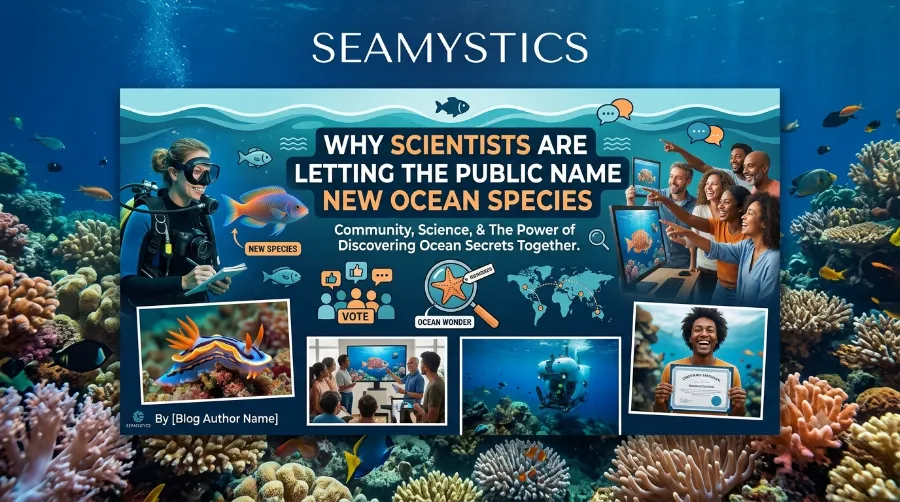
This matters more than it sounds. Conservation funding and policy protection tend to follow species that people already know and care about. Sharks, turtles, and whales get attention. Sponges and marine worms usually do not, even though they hold up entire seafloor ecosystems.
Faster Recognition Means Faster Protection
An unnamed species is genuinely harder to protect. Researchers cannot cite it cleanly in policy documents, environmental impact reports, or conservation lists if it does not yet have a formal name. A public naming push, paired with a fast track description process, can shrink a years long wait into a matter of months.
That is exactly what happened with the chiton case mentioned earlier. The animal was first collected in 2024 clinging to sunken wood in the western Pacific, and its formal name was published in early 2026, a pace researchers openly described as unusually fast for deep sea taxonomy.
It Funds the Next Expedition
Museums and universities have also realized that naming rights carry financial value. Some institutions, including Scripps Institution of Oceanography, invite donors and the public to propose names for freshly discovered marine species as a way to support ongoing fieldwork. A name is not for sale in the sense of buying a random label, but the invitation to suggest one, often tied to a gift, helps keep research vessels funded and labs staffed.
Real Examples of the Public Naming a New Ocean Species
Case studies work better than theory here, so let’s walk through a few that actually happened.
The Chiton Named “Of the People”
In early 2026, researchers from the Senckenberg Ocean Species Alliance, working with the science publisher Pensoft and YouTube science communicator Ze Frank, opened up naming for a newly discovered deep sea chiton. The animal had been pulled from nearly 18,045 feet down, clinging to a sunken log in the western Pacific, an odd little world scientists call a wood fall.
More than 8,000 name suggestions poured in after Ze Frank featured the creature on his channel. Eleven different people independently suggested the same winning species name, populi, the Latin word tied to “of the people.” Combined with the genus name, the chiton became Ferreiraella populi, a formally published, fully valid scientific name. As part of the same project, researchers also described two related chiton species from Madagascar and Papua New Guinea, showing the public naming effort sat inside serious taxonomic work rather than beside it as a marketing stunt.
Casper the Ghost Octopus
Back in 2016, a NOAA expedition off Hawaii filmed a pale, almost translucent octopus at a depth of about 4,290 meters, roughly 2.7 miles down. Its ghostly look and gentle movements earned it the nickname Casper from people following the expedition online. Years later, Casper still has no official scientific name, because a physical specimen has never been collected, which shows that even a beloved, internet famous animal has to wait for the slow, careful side of taxonomy to catch up.
The Dorado Octopus of Costa Rica
Off the coast of Costa Rica, the Schmidt Ocean Institute’s research team found several new octopus nurseries clustered around warm seafloor springs. One newly identified species was informally named the Dorado Octopus, after El Dorado Hill, the small rocky outcrop near where it was first observed brooding its eggs. The naming leaned on the same instinct behind public campaigns, giving a memorable, place based name to an animal that would otherwise be filed under a string of Latin syllables few people would ever repeat.
A Cave Shrimp Named by a Town Meeting
Public naming is not limited to famous online campaigns either. In Bosnia and Herzegovina, researchers working on a conservation project discovered a new species of cave shrimp. At the project’s closing event in the town of Trebinje, local community members voted on the final species name, choosing between anonymous paper ballots and a public social media poll. It is a small example, but it shows the same underlying idea working at a community level rather than a global one.
How Scientists Keep the Process Scientifically Sound
Letting the internet suggest a name sounds risky at first. Anyone who remembers the 2016 incident where an online poll almost named a British research vessel “Boaty McBoatface” understands the concern. Marine biologists have built in guardrails so that public enthusiasm does not turn into scientific chaos.
- Suggestions are collected, but researchers still choose the final name from a shortlist that fits taxonomic naming rules.
- Names must follow the formal Code of Zoological Nomenclature, meaning no duplicate names, no offensive language, and proper Latin grammar.
- The species description, habitat data, and physical measurements are peer reviewed regardless of how the name was chosen.
- Final names are checked against existing global databases to avoid clashing with species already on record.
None of this slows the fun down much. It just means the public gets a real say inside a system that still protects scientific accuracy.
Why This Trend Is Growing Faster in 2025 and 2026
Ocean exploration is producing far more new species than most people realize. In 2025 alone, taxonomists worldwide formally described somewhere between 15,000 and 20,000 new species across all groups, including marine animals, insects, and plants. The ocean floor remains one of the least mapped environments on the planet, and remotely operated vehicles are reaching depths that were nearly impossible to survey a decade ago.
With that much new material coming in, museums and research groups are leaning on public engagement partly out of necessity. A short, well produced video or social post about a strange looking creature can generate more public interest in ten days than a written journal paper does in ten years. Institutions have simply started meeting people where their attention already is.
You can track a rolling list of freshly identified marine animals on our own deep sea species tracker, which we update as new descriptions get published throughout the year.
The Emotional Pull Behind a Name
There is a reason a named animal feels different from an unnamed one. A name turns a data point into a character. Once a creature has a name, however playful, it becomes something people can root for, worry about, and remember. That single shift, from a specimen number to a name people chose themselves, does more for ocean literacy than most textbooks manage in a semester.
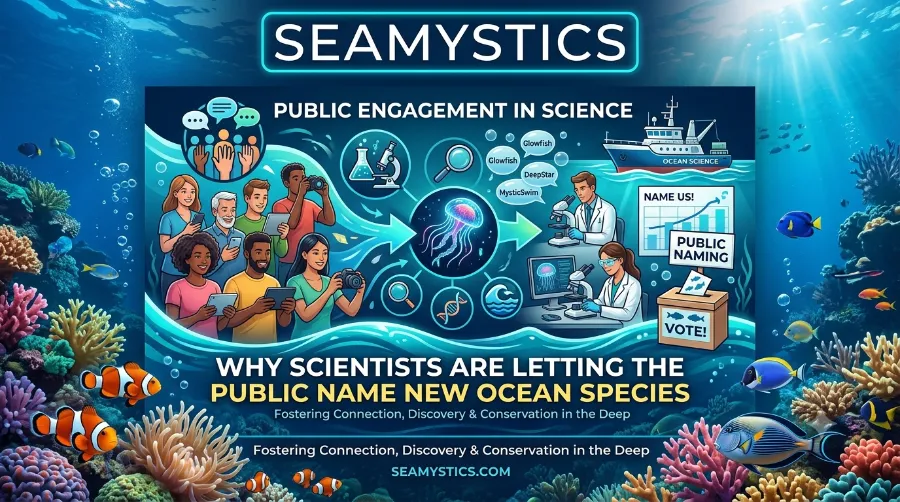
I have watched this happen in real time during fieldwork briefings, where a newly collected animal sits nameless and mostly ignored, right up until someone gives it a nickname. The moment that happens, the whole room starts asking better questions about where it lives, what it eats, and whether it is under threat.
What This Means for Ocean Conservation
Species with recognizable names are simply easier to defend. Environmental groups, journalists, and policymakers reference named species far more often than unnamed ones, partly because a name is something you can search, cite, and repeat in a sentence. For deep sea habitats facing pressure from mining and warming waters, that visibility genuinely matters.
Our recent roundup of 2026 deep sea finds shows how quickly this space is moving, with several species crossing from discovery to formal publication inside a single year, something that would have been unheard of a decade ago.
Frequently Asked Questions
Can anyone officially name a new species? No. Suggestions from the public are collected and considered, but the final scientific name must be chosen and published by the researchers who formally describe the species, following international naming rules.
Do scientists get paid when the public helps name a species? Sometimes naming rights are tied to donor programs at museums or universities, where a gift toward research funds the invitation to propose a name. This is separate from the free, open public naming contests run through social media.
Why do some famous ocean animals, like Casper the octopus, still not have an official name? A formal scientific name requires a preserved specimen and a full published description. Casper has been filmed but never physically collected, so it remains informally named only.
How long does it normally take to name a new species? Traditionally, it can take anywhere from several years to two decades from discovery to a published, formal name. Newer collaborative naming projects have shown this can be compressed to under two years in some cases.
Is public naming only used for ocean species? No, similar community based naming has been used for cave dwelling animals and other newly discovered land species, though ocean life has produced some of the most widely shared recent examples.
A Simple Comparison Table
| Species | Discovery Setting | Naming Method | Approx. Time to Formal Name |
|---|---|---|---|
| Ferreiraella populi (chiton) | Western Pacific, wood fall, 18,045 ft | Public online naming contest, 8,000+ entries | 2024 to 2026, about 2 years |
| Dorado Octopus | Hydrothermal springs off Costa Rica | Location based informal name from research team | Ongoing formal description |
| Casper Octopus | Deep waters off Hawaii, 2016 | Public nickname, no formal specimen collected | Still undescribed |
| Cave shrimp, Bosnia and Herzegovina | Cave conservation project | Local community vote at closing event | Tied to project timeline |
For more on how strange looking finds get identified and confirmed, our newly identified ocean creature explainer breaks the verification steps down in plain language.
The Other Side of the Debate
Not every taxonomist is fully on board with public naming. Some worry it nudges attention toward charismatic or visually striking animals while quieter, less photogenic species keep getting overlooked. Others point out that a rushed public campaign could pressure researchers to publish before all the taxonomic checks are complete. These are fair concerns, and most institutions running these programs seem aware of them, which is part of why the actual naming decision still stays inside the research team rather than being handed fully to a public vote.
Conclusion
Letting the public help name a new ocean species is not a gimmick, even though it looks like one from the outside. It is turning into a practical tool that speeds up recognition, builds public investment in creatures nobody used to care about, and occasionally helps fund the very expeditions that keep finding these animals in the first place. The chiton that became Ferreiraella populi is a small example of a much bigger shift, where ocean science is choosing to open its doors instead of keeping them shut. As more expeditions reach deeper water with better cameras, expect this kind of public involvement to keep growing, not fading.
For readers who want to keep up with the newest finds as they get formally confirmed, our newly discovered ocean creature page is updated regularly, alongside our coverage of rare fish species and new shark species making headlines this year.
References
- Senckenberg Ocean Species Alliance, Biodiversity Data Journal, “Ocean Species Discoveries 28 to 30,” 2026
- EurekAlert, “The internet names a new deep-sea species,” February 2026
- Scripps Institution of Oceanography, “Name a New Species” donor program
- NOAA Ocean Exploration, “Spooky Star,” Hohonu Moana expedition, 2016
- Schmidt Ocean Institute, deep sea octopus discoveries, Costa Rica
- U.S. Fish and Wildlife Service, Species Information
- Natural History Museum, London, New Species Discoveries
- ScienceDaily, Plants and Animals, New Species