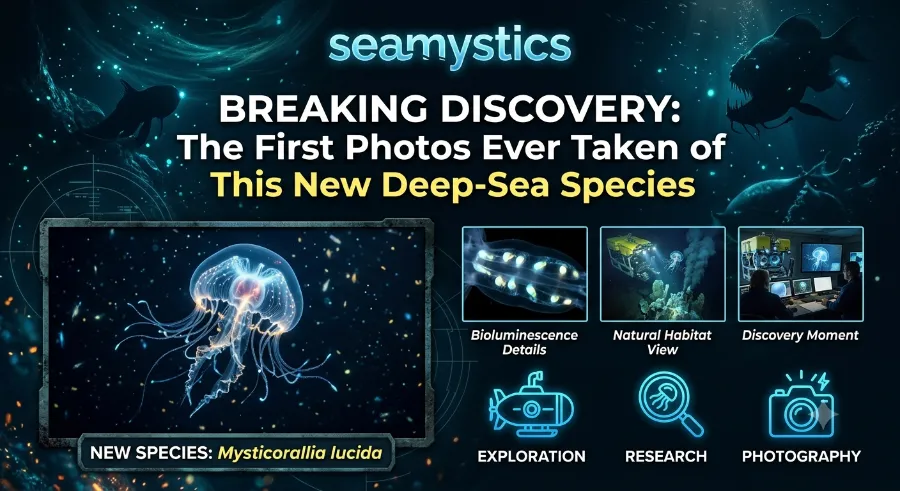

For most of ocean history, we only met new deep-sea animals after they died. A trawl net would haul up a bruised, colorless body. Scientists then had to imagine how the creature looked while it was alive and swimming in the dark. That has started to change. Gentler cameras and slow robotic vehicles now capture the first photos of a new species while it still moves, hunts, and glows in its own habitat. These images are reshaping what we know about life below the sunlit surface.
Unidentified Sea Creature Found: What Happens Next in Naming It
learn more about newly named deep sea tips and expert advice.
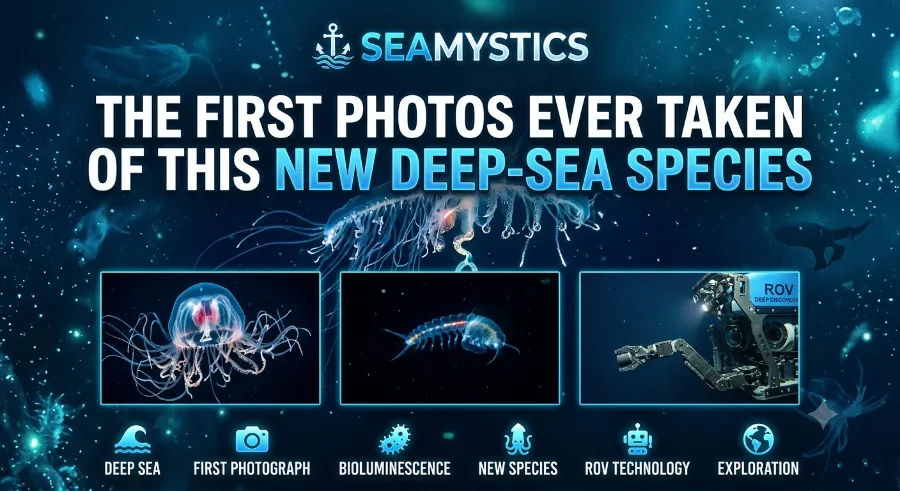
This shift matters because a photo of a living animal tells a different story than a jar specimen ever could. It shows color, posture, and behavior that a net destroys. So when a research team announces the first-ever photos of a new species, it is not just a nice picture for a magazine cover. It is a real leap forward for marine science.
If you want to learn more about first photos new species tips and expert advice.
Key Takeaways
| Point | What It Means |
|---|---|
| New camera tech, not just new locations | Soft, low-impact tools now let scientists photograph fragile deep-sea animals without killing them |
| Brazil expedition, June 2026 | Schmidt Ocean Institute researchers photographed 31 new midwater species off Brazil in about two weeks |
| Ocean Census, May 2026 | A global science network logged 1,121 new marine species in one year, and photographed many alive for the first time |
| First-ever footage, 2024 | Cameras filmed the painted swellshark alive for the first time off Timor-Leste, and extended its known range by over 1,100 km |
| Why it matters | Live images help protect species before they disappear, especially in areas facing new deep-sea mining |
TL;DR: Scientists now capture the first-ever photos of new species living thousands of feet below the ocean surface. They use gentle laser and camera systems instead of nets that damage delicate bodies. Recent expeditions off Brazil and other deep basins have photographed dozens of unknown animals alive in their natural habitat. These images help researchers map ocean biodiversity faster than ever, right as parts of the deep sea face new pressure from mining and warming water.
Why Scientists Are Letting the Public Name New Ocean Species
Why the First Photos of a New Species Are So Hard to Get
The deep ocean is not an easy place to point a camera. Past 200 meters, sunlight disappears almost completely. Pressure also builds fast enough to crush standard equipment. Many animals living there are soft-bodied and nearly transparent, built for a world with no light and little food.
Traditional collection methods make the problem worse. A trawl net drags through the water and crushes anything delicate inside it. By the time a jellyfish or comb jelly reaches the surface, its body is often torn apart. Scientists then have to guess at its living shape and color. That is a major reason why the first-ever photos of many deep-sea species simply did not exist until recently.
Newer tools are solving this problem. Remotely operated vehicles, known as ROVs, can hover gently next to an animal and record it without touching it. Laser-imaging systems can scan a creature in fine detail from a safe distance. Because of these tools, researchers no longer need to rely only on dead specimens. That change is transforming marine biology in real time.
A 2026 Case Study: 31 New Species Photographed Off Brazil
One clear recent example happened in June 2026. A research team aboard the Schmidt Ocean Institute’s vessel Falkor (too) spent about two weeks studying the ocean’s midwater zone off the coast of Brazil. This layer sits between the sunlit surface and the deep seafloor. Scientists consider it the largest habitable space on the planet, yet it remains one of the least studied.
The team used laser-based imaging and gentle ROV handling. In just a matter of days, they photographed and identified more than 30 new species. One highlight was a rarely seen female Haliphron atlanticus, also called the seven-arm octopus. The team filmed her feeding on a jellyfish at a depth of roughly 2,624 meters. Before this, most knowledge of the species came from damaged trawl specimens, not living animals.
The same expedition documented several other new finds, including:
- A previously unknown gossamer worm from the genus Tomopteris
- Nine new species of jellyfish
- Seven new siphonophores, including one that may belong to an entirely new genus
- Seven new comb jellies
Researchers on the project also ran genetic sequencing onboard, right alongside the imagery. This let them confirm new species faster than older lab-based methods allowed. That mix of live photography and rapid DNA work is quickly becoming the new standard for deep-sea fieldwork. You can see similar patterns in the broader 2026 deep-sea species tracker.
The Bigger Picture: Over 1,100 New Species in One Year
The Brazil expedition fits a much larger pattern. In May 2026, the Ocean Census initiative announced a major milestone. Led by the Nippon Foundation and Nekton, the group reported that scientists discovered 1,121 marine species over one year. The project ran 13 separate expeditions and nine species discovery workshops. Taxonomists from around the world took part.
Some finds came from extreme depths. Researchers located a new species of deep-sea ghost shark at depths of up to 6,575 meters. They also documented a symbiotic bristle worm living inside a glass-like structure, plus new corals, crabs, shrimp, and sea urchins. Our roundup of 2026 deep-sea finds breaks down these numbers region by region.
This total stands out for one reason beyond its size. Scientists photographed many of these animals alive before they even finished the formal description process. Ten years ago, that was rarely possible. It reflects a real, ongoing investment in gentler exploration technology across the marine science community.
First-Ever Footage: The Painted Swellshark
Not every milestone photo comes from a multi-week expedition ship. In November 2024, low-cost deep-sea cameras captured something new. Built through the National Geographic Society’s Exploration Technology Lab, the cameras filmed the first-ever live footage of the painted swellshark, Cephaloscyllium pictum. The location was off the coast of Timor-Leste.
The cameras recorded the shark at two separate sites. Depths measured about 570 meters and 536 meters, across two consecutive nights. In one sequence, a female shark returned to the bait several times. This gave researchers their first real look at how the species behaves in the wild. Scientists knew so little about the shark beforehand that the International Union for Conservation of Nature listed it as Data Deficient.
This discovery extended the species’ known range by more than 1,100 kilometers. It also marked the first confirmed record of the species in Timor-Leste waters. A single set of first-ever photos can update conservation status, distribution maps, and research priorities almost overnight. Our newly identified ocean creature explainer covers more on how researchers confirm a discovery like this.
How Scientists Confirm a “New” Species From a Photo
A photograph alone rarely proves a new species. Researchers usually follow a structured process before they publish a formal description. The typical steps include:
- Compare the animal’s visible features against known species in the same family or genus
- Collect a tissue sample, when possible, for genetic barcoding
- Cross-check the genetic data against existing DNA databases
- Record the depth, location, and behavior observed on camera
- Submit the findings for peer review before scientists formally name the species
Photos and video usually work alongside lab work rather than replacing it. A 2026 study in the journal ZooKeys followed this exact pattern. Researchers described 24 new deep-sea amphipods from the Clarion-Clipperton Zone, a mineral-rich stretch of the Pacific Ocean. Mining companies already eye this region for future seabed mining. The team combined imagery with molecular barcoding. One animal turned out significant enough to represent a brand-new superfamily, a rare event in modern taxonomy.
Why This Trend Matters Beyond the “Wow” Factor
It is easy to treat a striking deep-sea photo as pure novelty, something to scroll past on social media. These images carry real scientific and conservation weight, though, and here is why.
First, live photography speeds up species identification. That speed matters in places facing environmental pressure. Mining companies have already divided up the Clarion-Clipperton Zone, where researchers found those 24 new amphipods. A photographic and genetic record before mining begins gives regulators real data instead of guesswork.
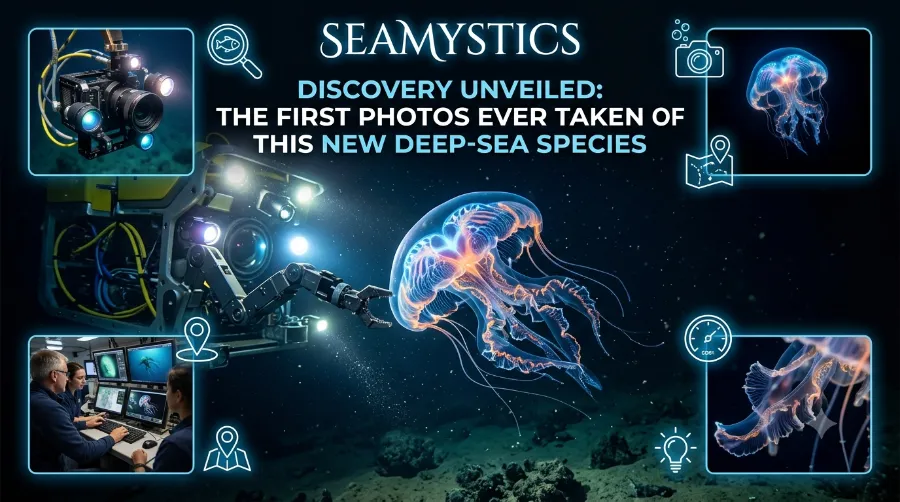
Second, photos correct outdated assumptions built from damaged specimens. The seven-arm octopus filmed off Brazil shows this well. Decades of trawl-based research left gaps in understanding its natural feeding behavior. One clear photo helped fill those gaps almost immediately.
Third, this kind of documentation supports public interest and funding for ocean science. A striking photo of a newly discovered species tends to travel further online than a technical paper. That attention often brings continued support for future expeditions, much like the interest that followed our coverage of a rare fish species found in earlier surveys.
What Equipment Makes These Photos Possible
Several technologies now drive this shift toward live imagery. Deep-sea researchers commonly rely on:
- Remotely operated vehicles, or ROVs, which hover near fragile animals without physical contact
- Laser-imaging systems that capture millimeter-scale, three-dimensional detail
- Low-cost baited camera landers, cheaper than a full ROV and easy to leave in place for hours
- Onboard genetic sequencing labs, which confirm a new species at sea instead of waiting months for samples to reach a university
The Brazil expedition combined several of these tools at once. The team even used a specialized microscope nicknamed a gravity machine, built at Stanford University. They also used a virtual reality viewing chamber from the University of Western Australia. Tools like these explain why so many newly discovered ocean creature stories are emerging in such a short window of time.
A Quick Snapshot: Recent First-Photo Milestones
| Year | Discovery | Location | Depth | Method |
|---|---|---|---|---|
| 2024 | Painted swellshark, first live footage | Off Timor-Leste | 536 to 570 meters | Baited camera lander |
| 2026 | 24 new amphipods, including a new superfamily | Clarion-Clipperton Zone, Pacific | Seabed mining region | Sampling plus genetic barcoding |
| 2026 | 31 new midwater species, including a seven-arm octopus | South Atlantic, off Brazil | Up to 2,624 meters | ROV and laser imaging |
| 2026 | 1,121 new marine species in one year | Global, 13 expeditions | Up to 6,575 meters | Ocean Census network |
Frequently Asked Questions
What counts as the “first photo” of a new species?
It usually means the first time a camera captures a living, undescribed animal in its natural habitat, rather than as a preserved or damaged specimen.
Why are so many new deep-sea species emerging right now?
Better ROV technology, gentler laser-imaging tools, and faster onboard genetic sequencing let research teams cover more ground. They can also confirm species without waiting months for lab results.
Are these new species already endangered?
Some are. Species found in areas like the Clarion-Clipperton Zone face pressure from proposed seabed mining before scientists even finish describing them. That is part of why fast documentation matters so much.
How long does it take to officially name a new species?
It varies, but the process usually takes months to a few years. It involves genetic comparison, peer review, and formal publication in a scientific journal.
Where can I see more recent deep-sea discoveries?
Ocean research organizations and academic journals publish new findings regularly. Roundups like our newly named deep-sea creature coverage track the latest confirmed species.
Conclusion
The first photos of a new species used to be rare. Available tools simply could not keep fragile deep-sea animals intact long enough to see them alive. That is no longer true. The Brazil midwater expedition, the Ocean Census count of over a thousand new species, and first-ever footage like the painted swellshark all happened within about two years of each other. As camera technology keeps improving and more of the ocean gets mapped, expect the list of newly photographed species to keep growing. Coverage like our new shark species discovery will likely keep following close behind, hopefully fast enough to help protect these animals before their habitats change for good.
References
- PetaPixel, “31 Otherworldly New Deep-Sea Species Photographed with Cutting-Edge Camera Technology,” June 2026
- Ocean Census, “Over 1,100 New Marine Species Discovered,” press release, May 19, 2026
- Discover Wildlife, “Deep-sea vehicle descends into South Atlantic Ocean and finds mysterious creatures in the darkness,” June 4, 2026
- Nature, “Deep-sea oddities and boatloads of other new species,” June 2026 science images roundup
- Popular Science, “Marine biologists discover 28 new deep sea species, and an old VHS tape,” February 4, 2026
- ScienceDaily / Pensoft Publishers, “24 new deep-sea species found including a rare new branch of life,” March 25, 2026
- AOL News, “First-ever live video footage of elusive deep sea shark captured,” reporting on Cephaloscyllium pictum, November 2024
- iNaturalist Forum: First Known Photographs of Living Specimens Project
- Blue Planet Aquarium, New Species Discovered in the Last Year
- BioKIC Arizona State University, Discovering New Species