
Somewhere off the coast of Cartagena, Colombia, a Spanish galleon has rested on the seafloor since June 8, 1708. It carried gold, silver, and emeralds. It took researchers 307 years and a robotic submarine to finally find it. That wreck, the San Jose, is now worth close to 17 billion dollars. It stands as one of the richest single finds in shipwreck salvage history. Stories like this one explain why treasure hunting still pulls at something primal in us. We hope the ocean is still hiding secrets worth chasing.
Underwater Archaeology Methods Explained How Sunken History Gets Recovered
Shipwreck salvage history is not just about gold bars and pirate legends. It blends engineering, law, archaeology, and stubborn human curiosity. The story stretches back to ancient Greek sponge divers. Today it includes autonomous underwater robots that map the seabed with nobody on board. We went from free divers holding their breath to sonar drones scanning square miles of ocean floor. That shift shows how far shipwreck recovery methods have come, and how much of the deep sea still remains untouched.
Key Takeaways
| Topic | What You Need to Know |
|---|---|
| Origins | Salvage began with ancient breath-hold divers who recovered cargo from wrecks like the Antikythera ship around 70 BC |
| Modern breakthrough | Mel Fisher found the Nuestra Senora de Atocha in 1985 after a 16 year search, and this sparked the modern treasure hunting boom |
| Technology | Side-scan sonar and AUVs, like the one that found the San Jose galleon in 2015, replaced slow manual searches |
| Salvage law ocean | The Law of Salvage, the Law of Finds, and the 1987 Abandoned Shipwreck Act all decide who can legally claim a wreck |
| International rules | The UNESCO 2001 Convention on Underwater Cultural Heritage discourages commercial salvage of historic wrecks |
| Recent precedent | Odyssey Marine lost a five year legal fight with Spain over the Black Swan treasure and handed over coins worth 500 million dollars |
TL;DR: Shipwreck salvage history runs from ancient sponge divers to hard-hat suits to today’s sonar-equipped robots. Every major shift in recovery methods changed who could find a wreck and how fast. Salvage law ocean rules, especially the Law of Salvage, the Law of Finds, and the UNESCO 2001 Convention, now decide whether a discovery becomes a payday or a court battle. Famous treasure salvage cases, from the Atocha to the Black Swan, show that finding a wreck is often the easy part.
Where Shipwreck Salvage History Actually Begins
Long before wetsuits and dive computers existed, people already pulled cargo up from the seabed. Greek sponge divers recovered bronze statues and amphorae from Mediterranean wrecks over two thousand years ago. They held their breath and worked by feel in cold, dark water. Sponge divers found the most famous early wreck, the Antikythera ship, in 1900 off a small Greek island. It later gave up a bronze gear mechanism so advanced that researchers still study it today.
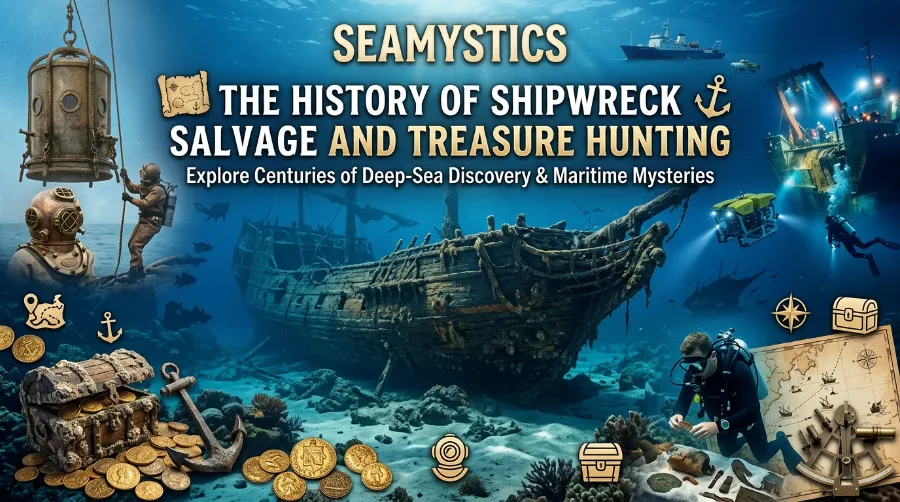
By the 1600s, European navies were losing whole treasure fleets to hurricanes in the Caribbean and the Atlantic. Salvage crews often dove on fresh wrecks within weeks of a sinking. Early divers used diving bells, weighted wooden barrels that trapped air, to stay underwater a little longer. They stripped cannons and coin chests from sunken hulls this way. The work was slow and dangerous, yet shockingly effective given how little equipment they had.
The Beagle Voyage Darwin Took How Five Years at Sea Rewrote Ocean Science
The Golden Age That Built Modern Treasure Hunting
The treasure hunting history most people picture today, tanned divers pulling gold coins from the sand, took real shape in the twentieth century. Mel Fisher spent 16 years searching for the Nuestra Senora de Atocha. This Spanish galleon sank in a hurricane off the Florida Keys in 1622. He finally found the main wreck site on July 20, 1985. The recovery totaled an estimated 450 million dollars in gold, silver, and emeralds.
The Invention of the Aqua-Lung How Modern Diving Began
That single find changed the entire industry. Investors and adventurers filed roughly 50 new shipwreck salvage claims in American waters within a few years. They rushed to copy Fisher’s success. Congress noticed too. That flood of claims is part of why lawmakers eventually stepped in to control who could legally search protected coastal waters.
Cold War Oceanography The Secret Race to Map the Ocean Floor
Shipwreck Recovery Methods: From Hard Hats to Robots
Shipwreck recovery methods have changed more in the last 40 years than in the previous 400. This shift explains why searchers only found so many famous wrecks recently, even after centuries of looking.
Early commercial salvage relied on:
- Hard-hat diving suits with surface-supplied air, which limited divers to shallow depths and short bottom times
- Magnetometers towed behind boats to detect iron and metal concentrations on the seafloor
- Airlift dredges, essentially giant underwater vacuums, to clear sand away from a suspected wreck site
- Grid-pattern searches plotted by hand using paper charts and dead reckoning
Modern shipwreck recovery methods look almost nothing like that. Side-scan sonar can now image the seafloor from a boat towing a sensor thousands of meters behind it. Autonomous underwater vehicles, commonly called AUVs, do the same job without a human anywhere nearby. A Woods Hole Oceanographic Institution REMUS 6000 AUV, fitted with side-scan sonar, found the San Jose galleon wreck on November 27, 2015. It worked at depths no diver could safely reach.
The History of Underwater Photography and Filmmaking
The USS Indianapolis sank in 1945, causing the greatest loss of life from a single ship in US Navy history. Researchers finally found it in 2017, sitting 5,500 meters down in the Philippine Sea. An AUV-based sonar system covered more than 1,000 meters on each side of its scan path. It did in weeks what decades of speculation never managed. Even smaller, newer players get results this way now. In May 2025, a research team ran a routine seafloor mapping mission off the French coast. They used a fleet of compact AUVs to scan four square kilometers in just three hours. They stumbled onto what may be the wreck of the Ravenel, missing since 1962.
How Sonar Was Invented and Changed Ocean Exploration
Why Robots Changed Everything
The shift to autonomous technology matters for three practical reasons.
- AUVs can operate at depths beyond 5,000 meters. Human divers cannot survive there without extreme and expensive equipment.
- Sonar coverage lets teams search dozens of square kilometers in hours. Earlier crews spent months or years towing magnetometers back and forth.
- Once a target is confirmed, remotely operated vehicles, or ROVs, send back live video and collect samples. Nobody has to risk a diver’s life.
If you want a closer look at how underwater imaging technology evolved alongside these search tools, our guide to the history of underwater photography covers the cameras and lighting rigs that made documenting these wrecks possible in the first place.
How Diving Bells Paved the Way for Modern Submarines
Salvage Law Ocean: Who Actually Owns a Sunken Ship
Finding a wreck is one thing. Legally keeping what is inside it is a completely different fight. This is where salvage law ocean rules get genuinely complicated. Two old maritime legal doctrines still shape almost every modern case.
The Law of Salvage generally rewards someone who voluntarily helps recover property from peril. It usually leaves ownership with the original party and just pays the salvor a fee or a percentage. The Law of Finds works differently. It can grant outright ownership to whoever recovers abandoned property first, provided nobody else has a valid ownership claim. Courts pick between these two doctrines by asking whether they consider a wreck abandoned. That single decision can be worth hundreds of millions of dollars.
In the United States, the 1987 Abandoned Shipwreck Act changed the playing field again. It removed many wrecks within three miles of the coast from federal admiralty law entirely. It handed ownership to individual states instead. States have stayed cautious ever since. Florida holds some of the richest wreck sites in the country, yet it has issued only around 30 exploratory permits and very few full recovery permits since the law passed.
Lighthouse Navigation History: How Beacons Guided Sailors for 2,300 Years
The UNESCO 2001 Convention and Why It Matters
Internationally, the fight over historic shipwrecks pushed UNESCO to adopt the Convention on the Protection of the Underwater Cultural Heritage in 2001. The convention protects anything that has sat underwater for at least 100 years. It strongly discourages commercial exploitation of these sites. It favors preserving wrecks in place over pulling everything to the surface. Not every country has ratified it, and the United States has not. That gap keeps this area of salvage law ocean policy genuinely unsettled.
That tension played out publicly in one of the most watched cases in treasure hunting history. Odyssey Marine Exploration, an American company, discovered a shipwreck in 2007 that it code-named Black Swan. The site sat in international waters about 100 miles west of the Strait of Gibraltar. The company recovered roughly 17 tons of silver and gold coins there. Spain argued the wreck was the Nuestra Senora de las Mercedes, a Spanish naval frigate that British ships sank in 1804. Spain claimed sovereign immunity protected the wreck regardless of who found it. A federal court agreed in 2009. After years of appeals, Odyssey handed over coins worth around 500 million dollars to Spain in 2012. The case remains one of the clearest reminders that a warship’s flag, even two centuries later, can outrank the salvor’s shovel.
Famous Treasure Salvage Stories Worth Knowing
Some recoveries shaped both public imagination and the legal rules that followed them. A few stand out as essential reading for anyone interested in this field.
- Nuestra Senora de Atocha (sank 1622, found 1985): Mel Fisher’s decades-long search recovered gold, silver, and emeralds worth an estimated 450 million dollars. The site still produces rare coins today. In July 2021, a diver working the site found a single gold coin worth 98,000 dollars, the first new gold coin discovered there since 2001.
- SS Central America (sank 1857, salvaged 1988): This steamship went down in a hurricane carrying gold from the California Gold Rush. Its recovery decades later helped establish modern legal precedent for deep-water commercial salvage operations.
- San Jose Galleon (sank 1708, found 2015): The San Jose sank in a battle with the British navy off Cartagena. It carried gold, silver, and emeralds from Peru’s mines. Only 11 of the roughly 600 people on board survived. Its estimated value near 17 billion dollars makes it the richest shipwreck ever documented.
- Black Swan or Mercedes (sank 1804, recovered 2007): Odyssey Marine’s discovery and the resulting legal battle with Spain became a landmark case. It shows exactly how salvage law ocean disputes get resolved when a warship is involved.
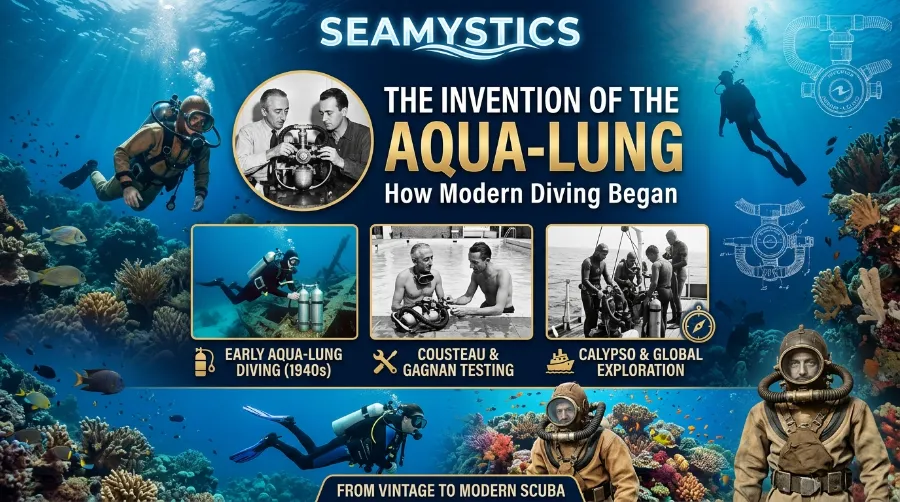
For readers who want to understand the equipment that made deep recoveries like these physically possible, our piece on the invention of the Aqua-Lung traces how self-contained breathing gear opened up wrecks that were previously out of reach for salvage divers.
Shipwreck Salvage by the Numbers
| Wreck | Year Sunk | Year Found or Recovered | Estimated Value | Discovery Method |
|---|---|---|---|---|
| Nuestra Senora de Atocha | 1622 | 1985 | ~$450 million | Magnetometer and diver search |
| SS Central America | 1857 | 1988 | Gold ingots and coins | Side-scan sonar |
| USS Indianapolis | 1945 | 2017 | Historic, not commercial | AUV-based side-scan sonar |
| San Jose Galleon | 1708 | 2015 | ~$17 billion | REMUS 6000 AUV |
| Black Swan (Mercedes) | 1804 | 2007 | ~$500 million | Deep-sea ROV recovery |
This table shows the pattern driving shipwreck recovery methods today. The gap between a wreck sinking and someone finding it used to span centuries. With modern sonar and AUV technology, that gap has shrunk to years, and in a few lucky cases, months.
What Most Guides Leave Out
A lot of articles on treasure hunting history stop at the exciting part: the gold coins and the headline dollar figures. They skip why so few modern salvors actually get to keep what they find. Working in this field, I see a consistent pattern. The technical challenge of locating a wreck has gotten dramatically easier. The legal challenge of claiming it has gotten dramatically harder. Sonar and robotics solved the search problem. Sovereign immunity claims, UNESCO obligations, and state permitting rules created a new bottleneck in its place.
Another point rarely covered is how much modern salvage now overlaps with pure marine science. Teams use the same AUVs and ROVs to find treasure galleons and to map deep-sea ecosystems. They also document new species living on wreck sites. This is where treasure hunting and ocean conservation now genuinely intersect. Our overview of deep-sea submersibles goes further into how these vehicles operate at crushing depths and what they can do beyond salvage work.
If you want to see how other outlets cover this niche, Shipwrecks.com keeps an active database of wreck locations and histories. Sedwick Coins’ shipwreck blog focuses heavily on the numismatic side of treasure finds and catalogs individual coins recovered from famous sites. For a regional angle, the Seaway Review’s piece on salvaging history in the Great Lakes shows that shipwreck salvage history is not only a Caribbean and Mediterranean story. Freshwater lakes preserve wrecks in ways saltwater never could.
Frequently Asked Questions
What is the difference between salvage law and the law of finds? Salvage law usually rewards a salvor with a fee while the original owner keeps title. The law of finds can grant full ownership to whoever recovers an abandoned wreck, depending on how a court classifies the site.
Who owns a shipwreck found in international waters? It depends on the wreck’s origin. A sunken warship generally stays the property of its flag nation under sovereign immunity, as Spain successfully argued in the Black Swan case, even in international waters.
Is treasure hunting still legal in the United States? Yes, but regulators watch it closely. Under the 1987 Abandoned Shipwreck Act, states control wrecks within three miles of their coast. Permits for full-scale recovery stay hard to get, even though exploratory permits are more common.
What technology finds shipwrecks today? Side-scan sonar, magnetometers, and autonomous underwater vehicles handle the initial search. Remotely operated vehicles handle close-up inspection and recovery once a wreck is confirmed.
What is the most valuable shipwreck ever found? Most experts consider the San Jose galleon, discovered off Colombia in 2015, the most valuable shipwreck ever documented. It holds an estimated 17 billion dollars in gold, silver, and emeralds.
Conclusion
Shipwreck salvage history really tells a story about two things racing each other. One is our ability to find what the ocean has swallowed. The other is the legal system trying to decide who gets to keep it. Technology won its half of that race decades ago, and sonar-equipped robots now find wrecks that generations of divers searched for in vain. The harder half is still being fought out in courtrooms today. Judges must balance a salvor’s effort against a nation’s history and an archaeologist’s need for context. That tension keeps this field interesting, and it explains why every new discovery still makes headlines, whether it ends in a payday or a lawsuit.
References
- Wikipedia, Convention on the Protection of the Underwater Cultural Heritage
- Fox News, “$500 Million in Sunken Treasure Returning to Spain”
- Coin World, “Court upholds ruling granting coins to Spain”
- Marine Technology News, “$17B Spanish Galleon San Jose: EdgeTech Instrumental”
- Marine Technology News, “EdgeTech Sonar Utilized in USS Indianapolis Discovery”
- Ocean News, “SEABER AUV Technology Discovers Lost Ship During SEAMAP Project”
- Tampa Bay Times archive, “Dying breed comes up dry in treasure hunt”
- Love Money, “Incredible shipwrecks currently being excavated for treasure”