
A snorkeler in Florida once photographed a strange little fish near a dock, uploaded it to an app, and went home for dinner. Within days, taxonomists flagged the photo as a species nobody had ever recorded before. This is the quiet power behind citizen science ocean projects today. Ordinary swimmers, divers, beachcombers, and even kids with tide pool nets are now feeding real data into marine research, and scientists are paying close attention.
ROV Ocean Discovery The Robots Finding New Deep-Sea Species Every Year
Sea Mystics has watched this shift happen year after year. What used to be a niche hobby for retired biologists has grown into a global movement, and the ocean is where it shows up most clearly.
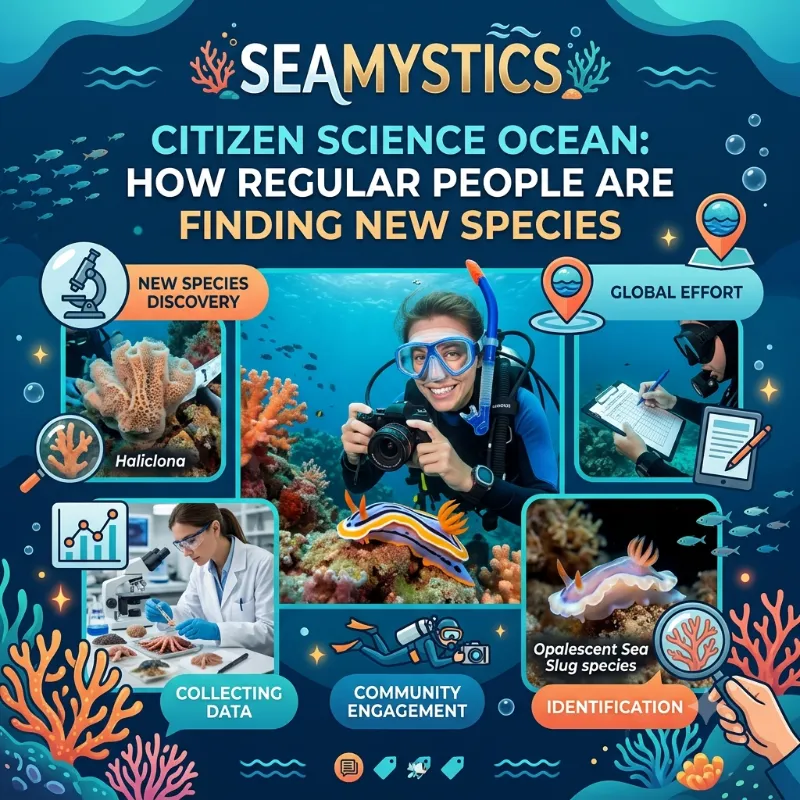
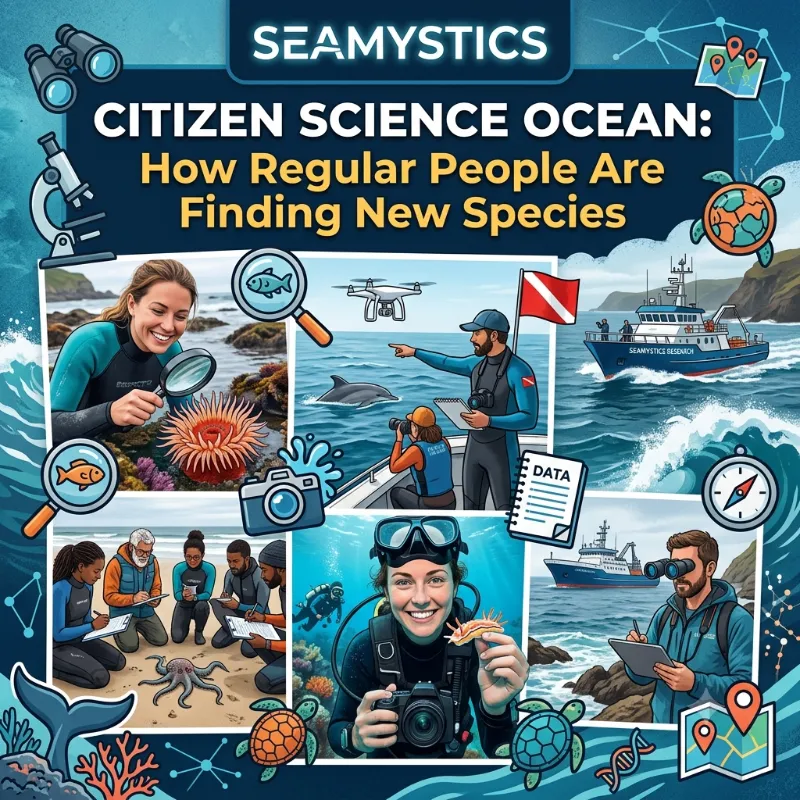
Citizen Science Ocean How Regular People Are Finding New Species
Key Takeaways
| Topic | Quick Fact |
|---|---|
| Platform growth | iNaturalist citations in peer reviewed papers grew tenfold between 2020 and 2025 |
| Public contribution | NOAA marine sanctuary volunteers logged 36,748 hours in 2025, worth about $1.3 million |
| New discoveries | Ocean Census confirmed over 1,100 new marine species using public and scientific collaboration |
| Regional impact | Citizen reports added over 30 first coastal records along Catalonia and northern Portugal |
| Data reliability | Roughly 72% of citizen submitted marine records are correctly identified at species level |
TL;DR: Regular people using free apps like iNaturalist are now helping scientists find, confirm, and track new ocean species faster than lab teams alone could manage. This citizen science ocean movement has already contributed to hundreds of new records since 2020, and it keeps growing every single year. If you enjoy the beach or diving, your photos might already matter more than you think.
The Ocean Census Project Inside the Global Hunt for New Marine Life
What Is Citizen Science Ocean Research, Really?
Citizen science ocean work simply means non professional volunteers collecting or reporting marine data that scientists then use. It is not new. Fishermen and coastal residents have reported strange catches for centuries. However, smartphones and apps changed the scale completely.
New Jellyfish Species Found Why Jellies Are Still Being Discovered
Today a person can photograph a nudibranch on a tide pool walk, upload it in seconds, and have it reviewed by identifiers across the globe within hours. That speed did not exist even fifteen years ago. Because of this, ocean citizen scientists now generate data at a volume that no single research vessel could match.
From Beachcombers to Data Scientists
The role of the amateur naturalist has changed a lot. Early citizen science mostly involved counting birds or logging weather. Marine versions were rare because the ocean is harder to access than a backyard.
That barrier is mostly gone now. Waterproof phone cases, cheap underwater cameras, and easy to use apps let anyone become a field researcher. As a result, public species discovery is no longer limited to trained scientists with grant funding.
How Citizen Science Marine Projects Actually Work
Most citizen science marine projects follow a fairly simple process, even though the science behind it is complex. Here is how a typical submission moves from a beach photo to a confirmed record.
- A volunteer photographs or logs an organism using a platform such as iNaturalist, eBird, or a regional bioblitz app.
- The app’s computer vision tool suggests a possible identification based on similar past sightings.
- Other users, including trained naturalists, review the photo and either confirm or correct the suggested species.
- Once enough identifiers agree, usually more than two thirds according to iNaturalist’s own research grade standard, the record becomes usable for science.
-
Rediscovered vs New The Difference Between a Lost Species and a New One
- Researchers pull this data for papers, conservation planning, or invasive species tracking.
- In rare but exciting cases, the sighting turns out to be something entirely new, which then moves toward formal species confirmation.
This last step is where things get interesting, and it connects directly to our guide on how new species get formally confirmed.
Real Ocean Citizen Scientists Making Real Discoveries
Numbers only tell part of the story, so let us look at what has actually happened in recent years.
The iNaturalist Effect
According to a 2025 study published in BioScience, the use of iNaturalist data in peer reviewed research grew tenfold between 2020 and 2025. That is not a small trend. It reflects a genuine shift in how mainstream science treats public contributions.
Hybrid Ocean Species When Two Marine Animals Interbreed Naturally
Below is a simple breakdown of that growth pattern, based on the study’s findings.
Chart: iNaturalist Data Use in Published Research (2020 to 2025)
| Year | Relative Research Use |
|---|---|
| 2020 | ██ (baseline) |
| 2021 | ███ |
| 2022 | █████ |
| 2023 | ███████ |
| 2024 | █████████ |
| 2025 | ██████████ (10x baseline) |
Marine biologist Brittany Mason, who authored that study, explained that citizen data does not replace professional surveys. Instead, it fills in gaps that time and funding usually prevent scientists from covering on their own.
Case Study: The Mediterranean Bioblitz Network
A 2025 to 2026 Frontiers in Marine Science study tracked two community groups monitoring the Catalan and northern Portuguese coasts. Their citizen reports added more than 30 first ever records for that stretch of coastline, including early detection of the invasive macroalgae Undaria pinnatifida in Portuguese waters.
This kind of early flagging matters because invasive species spread fast once established. Local divers noticing something unusual gave researchers a head start that satellite surveys or occasional lab visits simply could not provide.
New Coral Species Discovered What Makes Reef Taxonomy So Difficult
Case Study: NOAA Sanctuary Volunteers in 2025
In the United States, the story looks similar. NOAA’s Office of National Marine Sanctuaries reported that 6,806 volunteers logged 36,748 hours of monitoring work in 2025 alone. NOAA estimated that effort at roughly $1.3 million, equal to the workload of twenty full time federal employees.
These volunteers were not marine biology graduates. Many were retirees, students, and weekend divers who simply wanted to help protect coastlines they cared about.
Ocean Census: Public and Professional Teams Together
The Ocean Census program, backed by the Nippon Foundation and Nekton, confirmed over 1,100 new marine species as of its 2026 reporting cycle. While much of this work involved trained scientists using submersibles and ROVs, public engagement campaigns and citizen submitted imagery helped narrow down search zones and flag unusual specimens for follow up review.
One notable 2025 find included a new species of giant isopod, Bathynomus vaderi, first spotted off Vietnam and nicknamed after its resemblance to a well known film character. Another was a third confirmed manta ray species in Atlantic waters, something researchers had suspected for over fifteen years before public and scientific sightings finally confirmed it.
New Crustacean Species The Crabs and Shrimp Still Being Named
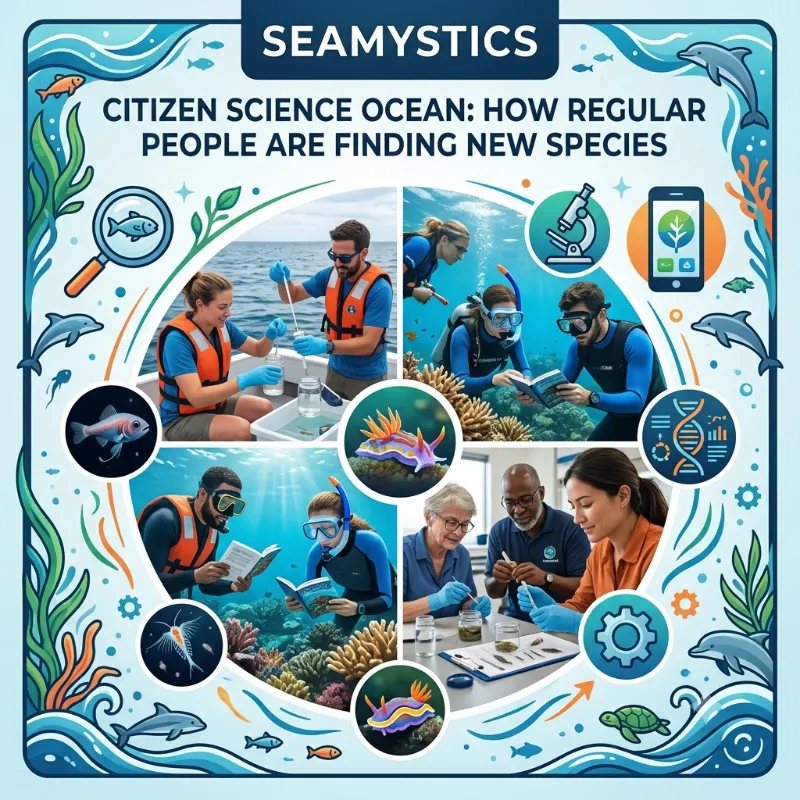
Once a specimen looks promising, researchers often turn to genetic tools to settle the identification for good. That process is explained in detail in our guide on DNA barcoding for species identification, which shows exactly how a photo becomes a confirmed genetic match.
Public Species Discovery: The Tools Regular People Use
You do not need a marine biology degree to contribute. A phone and a bit of curiosity go a long way. Here are the tools most ocean citizen scientists rely on right now.
- iNaturalist: The largest biodiversity focused platform, combining AI suggestions with human expert review.
- eOceans and Reef Life Survey: Built specifically for divers logging fish and invertebrate sightings.
- NOAA’s citizen science portal: Connects volunteers with sanctuary monitoring projects across the United States.
- Seagoing Green’s citizen initiatives: A useful resource for people wanting structured ocean conservation projects, detailed in this overview of ocean conservation through citizen science.
- California Academy of Sciences citizen science media hub: Offers guides, training videos, and project listings, available through their citizen science media resources.
These platforms work together in a loose network. A sighting logged on one app often gets referenced by researchers pulling data from several sources at once, which is part of why cross platform reporting has become so valuable.
Amateur Ocean Discovery: Where Quality Control Matters
Not every photo leads to a real discovery, and that is fine. Still, quality control is a fair concern people raise about amateur ocean discovery work.
A 2023 study in Aquatic Ecology reviewed West Atlantic marine records on iNaturalist and found that about 72% were correctly identified at the species level, based on cross checks against scientific collections. Certain groups, like bryozoans and flatworms, had lower accuracy because they are genuinely hard to identify from photos alone.
This is exactly why expert review layers exist within these platforms. A blurry photo of a crab rarely becomes a confirmed record on its own. Instead, it usually needs agreement from multiple identifiers, and sometimes a specimen sample for lab confirmation.
Why DNA Still Matters
Photos can only tell researchers so much. Two species can look nearly identical while being genetically distinct, which is common among reef fish and deep sea invertebrates. That is why genetic barcoding remains the final step before any new species gets officially named.
Our team at Sea Mystics has reviewed dozens of these confirmation cases, and the pattern is consistent. Public sightings spark interest, but lab work closes the loop. If you want the full technical breakdown, our pillar guide on new species confirmation walks through the entire process from first photo to published paper.
How You Can Become an Ocean Citizen Scientist
If this has you curious about joining in, the process is easier than most people expect. Here is a simple path to get started.
- Download a free platform such as iNaturalist or eOceans.
- Photograph any marine life you notice on a beach walk, snorkel, or dive, including the seemingly boring stuff like algae or worms.
- Add the correct time, date, and location, since this metadata is often more valuable to researchers than the photo itself.
- Let the community help identify your sighting, and read the suggested corrections carefully since they are genuinely educational.
- Join a local bioblitz event if one exists near your coastline, as these short, focused events often produce the most surprising finds.
- Follow up on your submissions occasionally. Some sightings take months or years before a researcher notices something unusual about them.
None of this requires expensive gear. A basic waterproof phone case and a genuine interest in what you are looking at are usually enough to start contributing real data.
Frequently Asked Questions
Can a regular person really discover a new marine species?
Yes, though it usually happens indirectly. Most public sightings get flagged by identifiers first, then confirmed later through expert review and genetic testing.
Is my data actually used by scientists, or does it just sit in an app?
Based on the tenfold increase in iNaturalist citations within published research between 2020 and 2025, public data is increasingly used in real scientific papers, not just casual reference.
What ocean areas need the most citizen reporting?
Coastal zones near Africa, South America, and parts of Southeast Asia remain underreported compared to North America and Europe, which means sightings from those regions carry extra scientific value.
Do I need diving experience to help?
Not at all. Tide pools, docks, and shallow snorkeling spots produce plenty of useful sightings. Many confirmed records come from shoreline observations rather than deep dives.
How long does it take for a sighting to become a confirmed new species?
It varies widely. Some cases take only months, while formal description and publication can take several years, especially when genetic testing and museum comparisons are required.
Conclusion
The ocean is still mostly unexplored, and that gap is exactly why citizen science ocean work has become so important. Regular people with cameras and curiosity are now sitting alongside trained researchers in the story of marine discovery, and the data proves it. From NOAA’s thousands of volunteer hours to Ocean Census confirming over a thousand new species with public support, this movement keeps growing every year. If you live near a coast or ever visit one, your next beach photo could genuinely matter to science.
References
- Mason, B. et al. (2025). iNaturalist accelerates biodiversity research. BioScience, 75(11), 953-965. Oxford Academic.
- Office of National Marine Sanctuaries (2025). Citizen Science Volunteer Report. NOAA Fisheries.
- Ocean Census (2026). Over 1,100 New Marine Species Discovered. The Nippon Foundation-Nekton.
- Frontiers in Marine Science (2026). Machine learning, eDNA and citizen science in monitoring biodiversity at sea.
- Aquatic Ecology, Springer Nature (2023). West Atlantic coastal marine biodiversity: the contribution of iNaturalist.
- Ecosphere (2022). Citizen scientists contributing to alien species detection in European marine waters.