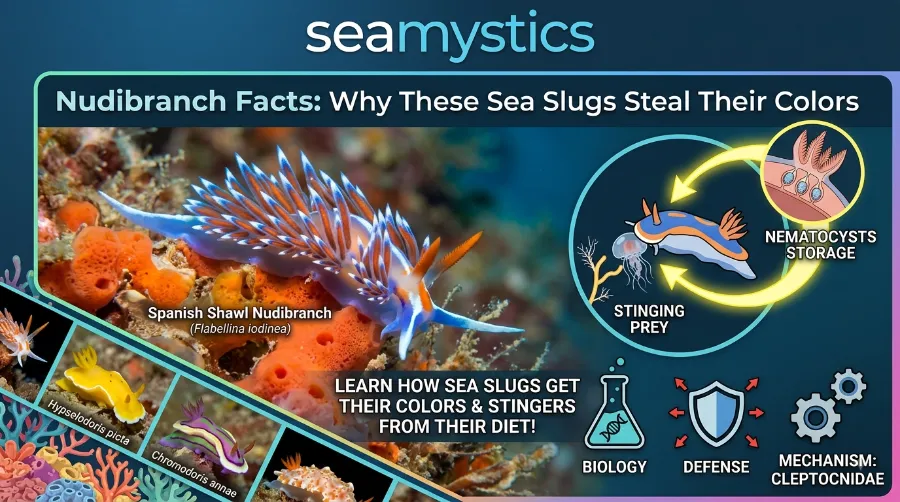

A nudibranch does not make most of its own color. It borrows it, along with the poison that keeps it alive. These small, shell-less sea slugs pull pigments and toxins straight from their dinner. Then they wear the result on their skin as a warning sign. These nudibranch color facts explain why divers and scientists find this animal so strange, and they turn a slow, soft-bodied creature into one of the ocean’s boldest survivors.
Key Takeaways
| Fact | Detail |
|---|---|
| Number of known species | Roughly 3,000 nudibranch species have been described worldwide |
| Main color source | Diet-derived pigments and, in many species, stolen toxins |
| New 2025 to 2026 discovery | Guanine crystal structures create many blue and iridescent hues, not just pigment |
| Classic example | Glaucus atlanticus steals stinging cells from the Portuguese man o’ war |
| Purpose of color | Mostly aposematism, a warning signal that says “I am toxic or unpleasant” |
| Best places to see them | Lembeh Strait, Bali, and other Indo-Pacific reef and muck-diving sites |
TL;DR
Nudibranchs get their colors mainly from what they eat. They absorb pigments and, in many cases, store toxins straight from sponges, hydroids, and jellyfish. Recent research shows some of their most vivid blues actually come from microscopic guanine crystals rather than pigment alone. Either way, the bright colors usually serve one job: warning predators to stay away.
What Is a Nudibranch, Exactly?
Nudibranchs are soft-bodied marine mollusks, close cousins of sea snails, but without the shell. Once a nudibranch grows past its larval stage, it sheds its protective shell for good. From then on, it relies on other tricks to survive. Because of this, biologists sometimes call them the butterflies of the sea. The nickname nods to how flashy and varied their patterns can be.
Mantis Shrimp Facts The Animal With the Strongest Punch in the Ocean
Nudibranchs follow two main body plans. Dorid nudibranchs carry a feathery gill cluster on their back. Aeolid nudibranchs sprout finger-like projections called cerata along their sides. Both groups use their exposed bodies as billboards, and this is where their diet-driven coloring becomes so important.
Nudibranch Diet Colors: A Stolen Palette
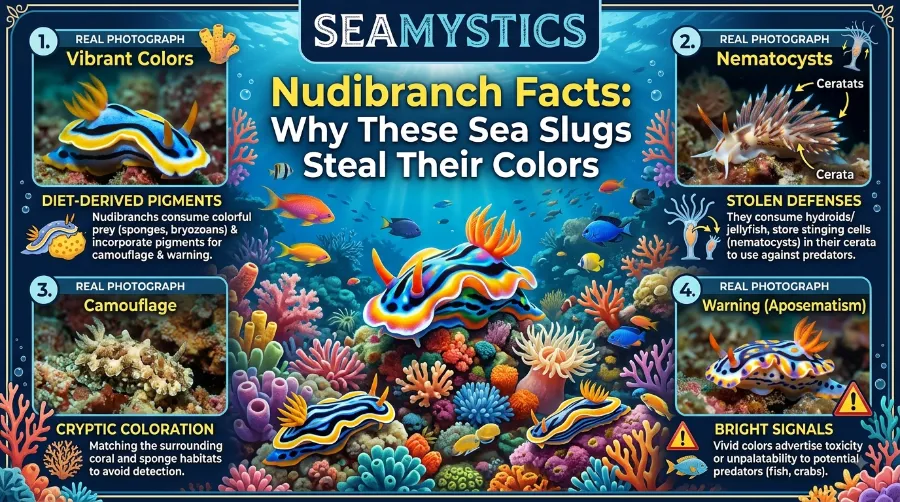
The clearest explanation behind most sea slug color science starts at the dinner table. Nudibranchs are carnivores. They feed on sponges, hydroids, anemones, bryozoans, and sometimes other sea slugs. As they digest this food, they do not just extract nutrients. They also absorb pigments and chemical compounds and route them into their own skin.
A nudibranch that spends its life grazing on a red sponge often ends up reddish itself, since the sponge’s pigment moves directly into the slug’s tissue. This process works differently from how most animals build color. Vertebrates like fish and birds usually modify dietary pigment before using it. Nudibranchs frequently deposit it almost unchanged.
How Nudibranchs Steal Toxins From Prey
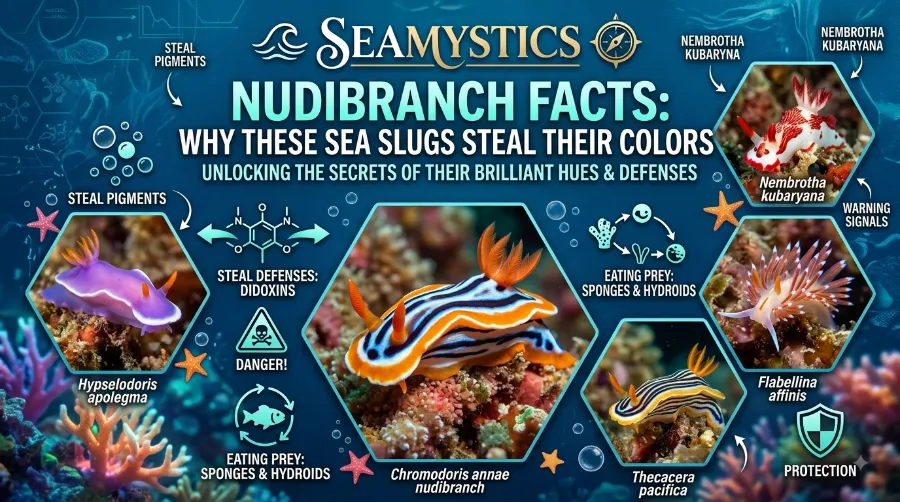
Color is only half the story. Many nudibranchs also sequester the toxic or distasteful chemicals in their prey. They store these chemicals in their own tissue as a built-in weapon. Scientists call this kleptochemistry: essentially stealing someone else’s defenses and repurposing them.
The aeolid group takes this even further with cnidarian prey. When an aeolid nudibranch eats a hydroid or anemone, it can move the prey’s stinging cells, called nematocysts, through its gut without triggering them. It then stores them at the tips of its cerata. From there, the borrowed stingers work exactly as they did for the original owner. The slug gains a functional sting it never had to evolve on its own.
One of the most striking real-world cases is the blue dragon sea slug, Glaucus atlanticus. This tiny, ocean-drifting nudibranch feeds on the Portuguese man o’ war and transfers the jellyfish’s stinging cells into its own body. A blue dragon barely a few centimeters long can deliver a sting nearly as painful as its prey’s. The same underlying idea, stealing another species’ toxic gear, shows up in stonefish venom too, though that fish makes its own poison rather than stealing it, as covered in our stonefish venom facts guide.
Carotenoids, Melanins, and Tetrapyrroles
Not every color comes from stolen stingers. A large share of nudibranch coloring is straightforward pigment chemistry, and three pigment families do most of the work.
- Carotenoids produce warm yellows, oranges, and reds, usually pulled straight from prey.
- Melanins create black, brown, and darker tones, often layered for contrast.
- Tetrapyrroles link to some greens and blues, though these tones are less common and less well understood.
Diet varies so much between individuals that even members of the same species can look noticeably different. It depends on what they have eaten and where they live. This is one reason field identification of nudibranchs frustrates even experienced divers.
Sea Slug Color Science: What 2026 Research Changed
For decades, most marine biologists assumed nudibranch color came almost entirely from pigment. Newer research has complicated that picture in an interesting way. A study published through PNAS, and later expanded in preprint work, found something unexpected: many of the brightest blues in dorid and aeolid nudibranchs are not pigment-based at all. They’re structural.
Researchers used techniques including cryogenic focused ion beam electron microscopy. They mapped tiny, layered guanine crystal structures inside the skin of species like Chromodoris annae. These microscopic “pixels” bend and reflect light the same way a butterfly wing or a peacock feather does. They produce color through physics rather than chemistry. The team behind the work called this a genuine surprise, since the field had leaned so heavily on the pigment explanation for so long.
This structural coloring appears to be widespread across both major nudibranch groups. Researchers have tied it to the same warning function pigments serve. A separate line of research on the sponge-derived toxin latrunculin A has also explored a related puzzle. Chromodoris species carry a compound potent enough to disrupt cell structure without harming themselves, and one leading idea is that their own cell proteins have evolved to resist it. As of 2026, scientists still are not fully certain which protective mechanism dominates. That open question is part of what keeps this corner of marine biology so active right now.
The same underlying theme, using physical structure rather than simple pigment, also shows up in cuttlefish camouflage. There, skin cells physically change shape to shift both color and texture in real time.
Nudibranch Species Facts: Real Examples Worth Knowing
Abstract biology is easier to remember with real animals attached to it. Here are a few well-documented species that show these nudibranch color facts in action.
- Glaucus atlanticus (blue dragon): Blue and silver countershading helps this species blend with the sky and ocean surface where it drifts, while its stolen nematocysts provide genuine defense.
- Chromodoris annae: A vivid blue dorid nudibranch and one of the species used to confirm the guanine crystal discovery, showing structural rather than pigment-based blue.
- Hexabranchus sanguineus (Spanish dancer): Named for its flowing red mantle, it sequesters chemical defenses from the sponges it eats and can grow to roughly 40 centimeters, unusually large for a nudibranch.
- Phyllodesmium species: Rather than warning colors, some of these slugs match the exact hue of the Xenia soft coral colonies they live on, using diet-derived pigment for camouflage instead of aposematism.
- Pteraeolidia semperi: This aeolid houses living Symbiodiniacean algae in its tissue. It gains a solar-powered energy boost while also shifting its coloration toward the algae’s greenish-brown tones.
That last example is a good reminder that camouflage strategies across the ocean take very different forms. Cuttlefish change color through neural control of skin cells. Mimic octopuses reshape their entire body to imitate other species. Nudibranchs mostly rely on chemistry borrowed from their food. Our ocean animal camouflage guide walks through the major approaches side by side, and the mimic octopus facts page covers one of the more dramatic contrasts to nudibranch strategy.
Why Colorful Sea Slugs Don’t Fear Most Predators
Bright colors in nature almost always mean the same thing, and nudibranchs are a textbook case of it. Biologists call this aposematism: the strategy of advertising toxicity or unpleasant taste instead of hiding it. Research on opisthobranchs, the wider group that includes nudibranchs, has found a real correlation between how conspicuous a species looks and how toxic it actually is. Roughly half of studied opisthobranch species show this kind of warning coloration.
A predator that bites into a foul-tasting or mildly toxic nudibranch usually survives, but it remembers the experience. It then avoids similarly colored slugs afterward. Over time, that learned avoidance protects the entire population, not just the one individual that got bitten. This is the same basic logic behind warning colors in poison dart frogs and certain venomous snakes on land.
Interestingly, not every brightly colored nudibranch is actually dangerous. Some harmless species mimic the color patterns of genuinely toxic ones. They borrow the reputation without doing the chemical work. Biologists call this free-riding Batesian mimicry, and it works only because predators cannot easily tell the mimics apart from the real thing.
Nudibranch Color, Diet, and Defense at a Glance
| Species | Primary Color Source | Main Prey | Defense Type |
|---|---|---|---|
| Glaucus atlanticus | Pigment plus countershading | Portuguese man o’ war | Stolen nematocysts |
| Chromodoris annae | Guanine structural color | Sponges | Sequestered chemical toxins |
| Hexabranchus sanguineus | Pigment (red mantle) | Sponges | Sequestered chemical toxins |
| Phyllodesmium spp. | Diet-matched pigment | Xenia soft coral | Camouflage, not toxicity |
| Pteraeolidia semperi | Algal symbiont tint | Hydroids, algae uptake | Mild toxicity plus camouflage |
Where to See Colorful Sea Slugs in the Wild
Divers chasing these animals in person usually head to the Indo-Pacific “coral triangle,” where nudibranch diversity is highest. Lembeh Strait in North Sulawesi is famous for muck diving. Well-known sites there regularly turn up dozens of species on a single dive. Bali’s reefs and volcanic slopes are another dependable spot. Dive operators report new color variations turning up almost every season as more of the coastline gets surveyed.
If a dive trip is not on the calendar, aquariums remain a solid alternative for seeing live specimens up close. Many public aquariums now keep small nudibranch tanks specifically because visitors respond so well to the color.
Frequently Asked Questions
Do nudibranchs make their own color, or is it always from food?
Both happen. Many species rely heavily on diet-derived pigment, while newer research shows some blues come from structural guanine crystals in the skin rather than pigment at all.
Are all brightly colored nudibranchs toxic?
No. Bright color links strongly to toxicity across the group, but some harmless species mimic toxic ones instead of carrying real defenses themselves.
Can nudibranchs actually see their own colors?
No. Nudibranchs lack the visual capacity to perceive color the way humans do, so the signal is aimed at predators, not at other nudibranchs.
How many nudibranch species exist?
Roughly 3,000 species have been formally described, and scientists are still identifying new ones regularly, especially in under-surveyed reef areas.
Why do some nudibranchs match their prey’s color exactly?
Species like Phyllodesmium use diet-derived pigment for camouflage rather than warning. They blend into the soft coral colonies they live and feed on.
Conclusion
The nudibranch color facts at the center of this article point to one underlying idea: these sea slugs turn their meals into both their wardrobe and their weapon. The color might come from a sponge pigment, a stolen nematocyst, or a microscopic guanine crystal only recently identified by researchers. Either way, the goal is almost always the same: survive without a shell by making predators think twice. As marine research keeps refining tools like cryo-electron microscopy, we will likely keep discovering that these small, slow animals pack more chemistry and physics into their skin than most of the ocean’s flashier residents. For readers curious about other reef animals that turn borrowed biology into defense, our guides on leafy sea dragon camouflage, flounder camouflage facts, and sea cucumber facts are good next stops. You can browse the full library at Sea Mystics.
References
- Two Fish Divers, “Why are nudibranchs so colorful?”
- Bali Ocean, “5 Facts About Nudibranchs, The Most Colourful Animals in the Ocean”
- Living Planet Aquarium, “Nudibranchs”
- PNAS, “Nudibranch color diversity shares a common physical basis in guanine photonic structure pixels”
- National Geographic Kids, “Nudibranch”