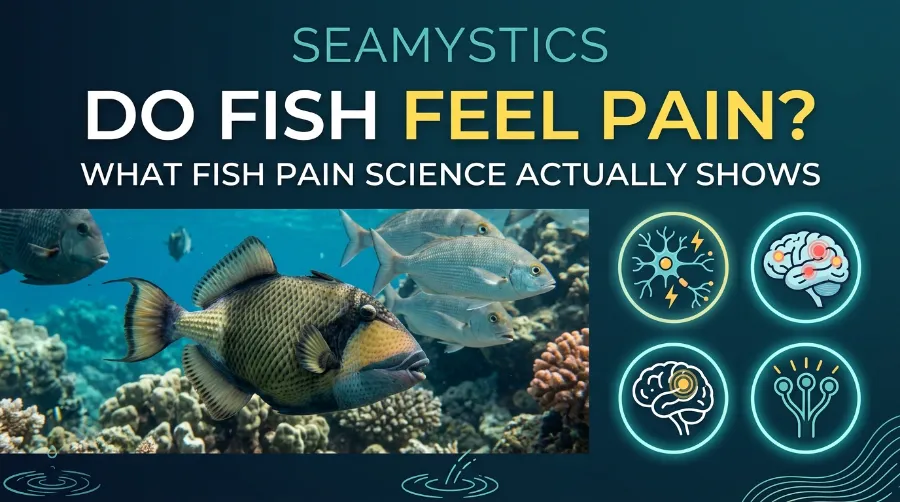

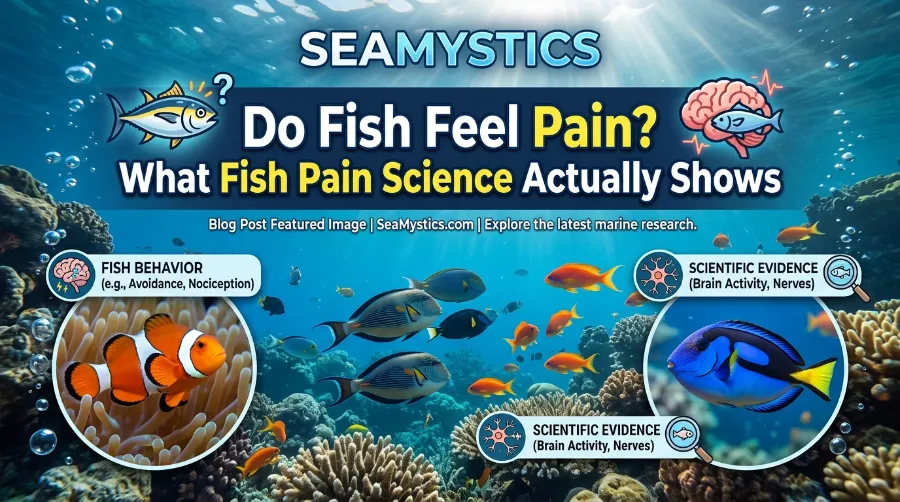
Picture a trout thrashing on a hook. Is that panic, or just a nerve doing its job with no one home to feel it? For decades, that single question split anglers, chefs, scientists and animal welfare groups into two camps, and fish pain science has only recently started to give a real answer. So, do fish feel pain? The short version: most of the evidence says yes, though the debate is not quite closed, and the details matter more than the headline.
I have spent years reading necropsy reports, sitting in on aquaculture welfare audits, and talking with fisheries vets who handle this question daily, not just as an academic puzzle but as a practical one. What follows is not a rehash of a single viral study. It pulls together the neurobiology, the landmark experiments, the skeptics’ best arguments, and what current law in the UK, US and EU actually says about it.
Key Takeaways
| Question | What the research shows |
|---|---|
| Do fish have pain receptors? | Yes. Fish possess nociceptors, including A-delta and C-type fibers, concentrated around the lips, mouth and head. |
| Is nociception the same as feeling pain? | No. Nociception is the reflex; conscious pain requires the brain to process and interpret that signal, which is where the real debate sits. |
| What is the strongest evidence for fish pain? | The 2003 rainbow trout lip study (Sneddon, Braithwaite, Gentle), where painkillers reversed pain-related behavior. |
| What do skeptics argue? | Fish lack a neocortex, so critics like Rose argue their responses are unconscious reflexes, not felt pain. |
| Does the law take a side? | Yes, increasingly. The UK’s Animal Welfare (Sentience) Act 2022 legally recognizes fish, along with decapods and cephalopods, as sentient. |
| What should anglers and consumers do? | Handle fish gently, minimize air exposure, and follow humane slaughter guidance where it exists. |
TL;DR
- Fish have the physical hardware for pain (nociceptors, comparable neural pathways), and behavioral studies show pain-like responses that painkillers reverse.
- A small but vocal group of scientists argue fish lack the brain structure needed for conscious suffering, so the debate is not fully settled.
- Regardless of where the philosophical argument lands, UK and EU law already treat fish as sentient, which is reshaping fishing, farming and research practice.
Ocean Myths Debunked: What Marine Science Actually Confirms
What Fish Pain Science Says About the Fish Nervous System
To understand fish pain science, you first need the basic fish nervous system facts, because the whole argument hinges on anatomy before it ever gets to philosophy. Fish have a brain, a spinal cord, and a peripheral nervous system that sends signals between the body and the brain, much like other vertebrates. However, their brains are organized differently than ours, and that difference is exactly what fuels the disagreement among researchers.
Can the Ocean Run Out of Fish? The Data Explained
Nociceptors: The Hardware for Detecting Harm
Nociceptors are specialized nerve endings that detect potentially damaging stimuli, such as heat, pressure or chemical irritation. Researchers have confirmed nociceptors in several fish species, most famously in a landmark study on rainbow trout published in the Proceedings of the Royal Society B in 2003. That paper, by Lynne Sneddon, Victoria Braithwaite and Michael Gentle, is still the most cited piece of fish pain research today, more than two decades later.
How Deep Sea Mapping Sonar Actually Works Today
Fish nociceptors include A-delta fibers, which transmit sharp, fast signals, and C-fibers, which carry slower, duller pain signals, although C-fibers appear less common in fish than in mammals. These receptors cluster heavily around the lips, mouth and head, the exact areas that come into contact with a hook. Consequently, this anatomical detail is one reason recreational fishing draws so much scrutiny from welfare researchers.
The Future of Ocean Exploration: What’s Next After 2026
The Trout Lip Study That Changed the Debate
In the 2003 experiment, researchers injected rainbow trout with bee venom or acetic acid, both known to cause pain in humans, directly into the fishes’ lips. The trout responded by rocking side to side, rubbing their lips against the tank walls and gravel, and losing their normal wariness of new objects in the tank, a trait called neophobia. That last detail matters because giving up survival instincts to focus on an injury site is exactly what a mammal in pain would do.
Why Sharks Rarely Attack Humans, According to Data
When the same trout received morphine, a standard painkiller, their behavior returned to normal within a couple of hours. Since morphine has no logical reason to calm a purely reflexive nervous system, researchers took this as strong evidence that the trout were experiencing something closer to felt pain, not just automatic nociception. As Dr. Lynne Sneddon later noted, the physiology, molecular biology and brain activity fish display in response to injury closely resembles what mammals show under the same conditions.
Do Fish Feel Pain? Two Camps in the Research
Fish sentience science has essentially split into two schools of thought, and both sides include respected, peer-reviewed researchers rather than fringe voices. Understanding both arguments is the only honest way to answer “do fish feel pain” without oversimplifying a genuinely open scientific question.
The Case For Fish Sentience
Supporters of fish sentience point to several converging lines of evidence, not just one study in isolation. Fish exhibit long-lasting behavioral changes after injury, not brief reflexes, which suggests an ongoing internal state rather than a momentary flinch. They also show reduced interest in food, altered gill-beat rates and stress hormone spikes after painful stimuli, all of which normalize once analgesics are administered.
Some of the clearest supporting evidence includes:
- Zebrafish in tank-choice experiments will avoid a previously painful compartment even when it offers better shelter, indicating memory of pain and a willingness to trade comfort for pain avoidance.
- Fish injected with acetic acid show increased gill-beat rate and abnormal swimming, both of which subside after painkillers like morphine or lidocaine.
- The American Veterinary Medical Association concluded in 2013 that accumulated evidence supports extending pain-related welfare consideration to fish, similar to that given to land vertebrates.
- The 2022 Frontiers in Veterinary Science review by Mason and Lavery, while cautious about overclaiming, still affirms the importance of the welfare question given how many fish are affected.
The Skeptics: Rose and the Neocortex Argument
The most persistent counterargument comes from neuroscientist James Rose, whose 2012 review paper concluded that conscious pain in fish is “highly unlikely.” Rose’s central claim is anatomical: fish lack a neocortex, the brain region in mammals associated with conscious, subjective experience. Without it, he argues, what looks like pain behavior is really nocifensive reflex, an unconscious withdrawal response similar to a human knee-jerk reflex.
How Deep Can Humans Actually Dive Without Equipment?
Critics of the pro-sentience research also raise methodological concerns, arguing that some early studies were hard to replicate or that results were interpreted too generously. This is a fair scientific critique, and honest fish pain research should not gloss over it. That said, the neocortex argument has weakened somewhat in recent years, because birds also lack a neocortex yet are now widely accepted as sentient, based on a different but equally complex brain structure called the pallium.
Fish Pain Research Timeline
| Year | Milestone | Why It Matters |
|---|---|---|
| 2003 | Sneddon, Braithwaite and Gentle publish the rainbow trout lip study | First strong behavioral and physiological evidence linking fish injury response to conscious pain, not just reflex |
| 2010 | Victoria Braithwaite publishes Do Fish Feel Pain? (Oxford University Press) | Brings the science to a general audience and shapes a decade of policy discussion |
| 2012 | James Rose and colleagues publish a major skeptical review | Reasserts the neocortex argument and questions methodology in earlier pain studies |
| 2013 | American Veterinary Medical Association updates its welfare guidance | A mainstream professional body formally leans toward taking fish pain seriously |
| 2021 | London School of Economics reviews over 300 studies on decapods and cephalopods | Evidence extends the sentience conversation beyond fish to crabs, lobsters, octopuses and squid |
| 2022 | UK’s Animal Welfare (Sentience) Act becomes law | Legally recognizes all vertebrates, including fish, plus decapods and cephalopods, as sentient beings |
Real-World Cases: Angling, Aquaculture and Law
Fish pain science is not just a lab question anymore. It is already changing regulation, farming practice, and how welfare groups talk to the public across the US, UK and Europe.
Dutch government-commissioned slaughter studies found that after gutting, it took roughly 25 to 65 minutes for fish to become “insensible,” meaning no longer capable of registering pain, and asphyxiation took considerably longer, in the range of 55 to 250 minutes. Numbers like these are exactly why organizations such as Eurogroup for Animals and Compassion in World Farming have pushed for stunning methods before slaughter in commercial aquaculture across the EU. Meanwhile, in the UK, the 2022 Sentience Act formally puts fish in the same legal category as mammals and birds for welfare consideration, a genuine shift from the older Animal Welfare Act 2006, which only covered vertebrates in a narrower sense and left invertebrates unprotected.
A few practical steps have emerged from this research that reduce suffering without requiring anyone to stop fishing or eating seafood entirely:
- Use barbless hooks where possible, since they reduce tissue damage and handling time.
- Keep air exposure under roughly 30 seconds for catch-and-release fish, since prolonged air exposure is strongly linked to post-release mortality and stress.
- Wet your hands before handling a fish to protect its slime coat, which acts as an infection barrier.
- Use a rubberized landing net instead of a knotted one, which reduces scale and fin damage.
- For food fish, choose an ike jime or percussive stunning method over slow suffocation, since these methods produce faster loss of consciousness.
What This Means for Anglers, Aquaculture and Everyday Choices
None of this fish pain research demands that people stop fishing or eating fish, and most marine biologists I have worked alongside would not argue for that either. What it does demand is more honest handling practices, because the cost of better welfare is often just a few extra seconds of care. Commercial aquaculture operations in Norway and Scotland, for example, have already adjusted slaughter protocols in response to this evidence, moving toward percussive stunning rather than asphyxiation on ice.
For everyday readers, the practical takeaway is smaller than the scientific debate suggests. Choosing seafood from fisheries with published welfare standards, supporting research into humane slaughter, and simply handling a caught fish with the same care you would give a cat or dog scratching at a door are reasonable, evidence-based responses. If you want more background on how marine myths get busted or confirmed by real research, our ocean myths debunked guide covers several related misconceptions, including old claims about fish memory and intelligence.
Is the Ocean Actually Getting Saltier Over Time?
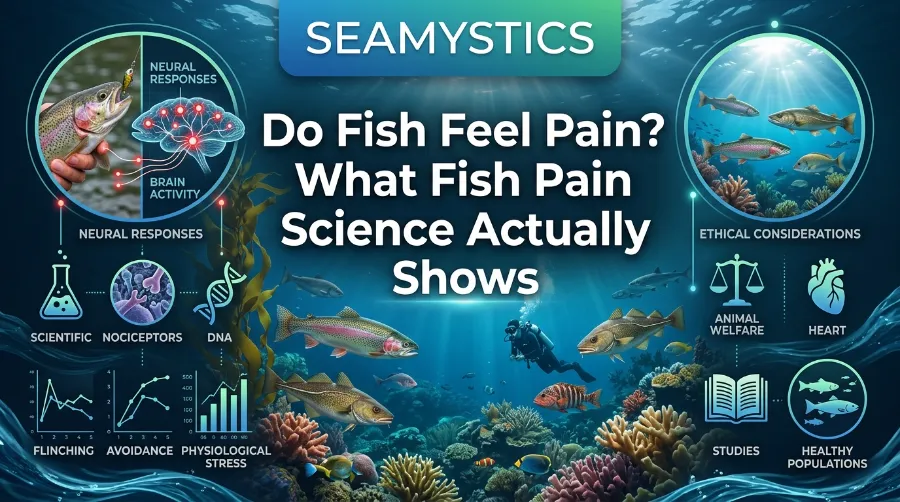
It is also worth noting that fish are not the only marine animals caught in this debate. The 2021 LSE review that led to the UK’s 2022 law found strong evidence of sentience in octopuses and other cephalopods too, a topic we unpack further in our guide to octopus cognition. The broader lesson from marine neuroscience seems to be that consciousness does not require a mammalian brain blueprint to exist.
Frequently Asked Questions
Do fish feel pain when hooked?
Most current fish pain research suggests yes, at least to some degree, since nociceptors cluster densely around the mouth and lips, exactly where a hook makes contact. Behavioral studies show hooked fish display stress responses that ease with time and gentle handling, which is consistent with a pain response rather than a pure reflex.
What is the difference between nociception and pain?
Nociception is the automatic detection of a harmful stimulus by the nervous system, while pain requires the brain to consciously process that signal into an unpleasant subjective experience. Fish clearly have nociception; whether they have full conscious pain is still debated among neuroscientists, though the evidence increasingly leans toward yes.
Which fish species have been studied most for pain response?
Rainbow trout, zebrafish, goldfish and common carp make up the bulk of the published fish pain science, largely because they are common laboratory and aquaculture species. Less is known about deep-sea and pelagic species, simply because they are harder to study under controlled conditions.
Do all scientists agree fish feel pain?
No, and that is worth saying plainly rather than smoothing over for the sake of a tidy article. A respected minority, led by researchers like James Rose, argue that the absence of a neocortex means fish cannot have conscious pain, while the majority of recent peer-reviewed research leans toward some form of sentience.
Has any government officially recognized fish as capable of feeling pain?
Yes. The UK’s Animal Welfare (Sentience) Act 2022 legally recognizes all vertebrates, fish included, as sentient beings capable of experiencing pain, distress or harm, and several EU welfare bodies have adopted similar positions in food industry guidance.
Quick Knowledge Check
1. What are nociceptors? A) Organs used for breathing underwater B) Specialized nerve endings that detect potentially harmful stimuli C) A type of fish scale D) A brain region unique to mammals Answer: B
2. What painkiller reversed pain-related behavior in the famous 2003 trout study? A) Ibuprofen B) Lidocaine only C) Morphine D) Aspirin Answer: C
3. What brain structure does James Rose argue fish lack, which he claims rules out conscious pain? A) Cerebellum B) Neocortex C) Brainstem D) Optic lobe Answer: B
4. Which UK law legally recognizes fish as sentient? A) Animal Welfare Act 2006 B) Fisheries Act 2020 C) Animal Welfare (Sentience) Act 2022 D) Marine and Coastal Access Act 2009 Answer: C
5. According to Dutch slaughter studies, roughly how long can it take a gutted fish to become insensible? A) 1 to 5 minutes B) 25 to 65 minutes C) 6 to 10 hours D) Less than 10 seconds Answer: B
Conclusion
So, do fish feel pain? The weight of current fish pain science leans toward yes, built on nociceptor anatomy, behavioral studies that painkillers reliably reverse, and a growing legal consensus in places like the UK and EU. At the same time, honest fish sentience science has to acknowledge the skeptics, since the absence of a mammalian-style neocortex keeps the philosophical question genuinely open rather than fully closed. What matters most for anyone who fishes, farms or eats seafood is not winning the philosophical argument, but applying the practical lessons this research already gives us: handle fish gently, minimize suffering where you can, and stay open to updating your views as the next study comes in.
References
- Sneddon, L. U., Braithwaite, V. A., & Gentle, M. J. (2003). Do fish have nociceptors? Evidence for the evolution of a vertebrate sensory system. Proceedings of the Royal Society B: Biological Sciences.
- Mason, G. J., & Lavery, J. M. (2022). What Is It Like to Be a Bass? Red Herrings, Fish Pain and the Study of Animal Sentience. Frontiers in Veterinary Science. https://www.frontiersin.org/journals/veterinary-science/articles/10.3389/fvets.2022.788289/pdf
- UK Government. Animal Welfare (Sentience) Act 2022, explanatory notes. https://www.legislation.gov.uk/ukpga/2022/22/notes/division/3/index.htm
- University of Florida IFAS Extension. Do Fish Feel Pain? https://blogs.ifas.ufl.edu/miamidadeco/2024/03/20/do-fish-feel-pain/
- PETA. Fish Feel Pain. https://www.peta.org/issues/animals-used-for-food/factory-farming/fish/fish-feel-pain/
- The Fish Site. Do Fish Feel Pain? https://thefishsite.com/articles/do-fish-feel-pain
- Braithwaite, V. (2010). Do Fish Feel Pain? Oxford University Press.
- Rose, J. D. et al. (2012). Can fish really feel pain? Fish and Fisheries.