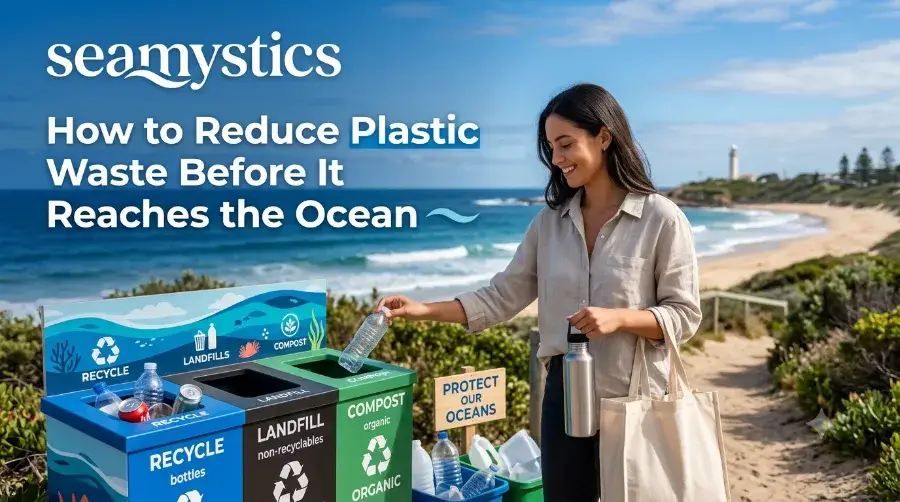

Plastic does not start in the sea; it leaks there. If we cut off that flow on land, we protect our ocean wildlife, and our own health. In this guide, I’ll show how to reduce plastic at the source, block it in cities, fix product design, and improve waste systems so less plastic reaches rivers and oceans in the first place. You’ll get clear steps, real examples, and simple tools you can use today
Key takeaways
| Action area | Why it works | Fast start | Impact horizon |
|---|---|---|---|
| Reduce and reuse | The lowest-waste option prevents plastic creation | Switch to reusables and buy low-packaging products | Immediate |
| Capture leakage on land | Storm drains and litter are main leakage points | Add drain filters and organize monthly cleanups | 1–6 months |
| Smarter product choices | Avoid items that are rarely recycled | Choose refillables, concentrates, and bulk buys | Immediate |
| Improve sorting and recycling | Keeps valuable plastic out of waterways | Follow local rules; use drop-off for bags/film | 1–3 months |
| Policy and procurement | System change scales impact | Support EPR, deposit-return, reuse targets | 6–24 months |
Why stopping plastic on land protects the ocean
Most ocean plastic comes from land-based sources carried by wind, stormwater, and rivers. Cities are the critical choke points. By cutting use of single-use items, keeping drains clear, filtering runoff, and improving local recycling, we reduce the flow at every step. Evidence shows that existing solutions can cut plastic pollution sharply this decade. .
The starter plan: how to reduce plastic at home and work
These steps are fast, low-cost, and proven.
1) Reduce and reuse first
- Choose durable goods: stainless bottles, lunch boxes, and cloth totes. Replacing a daily bottled drink with a refill saves about 365 bottles per year.
- Buy with less packaging: pick loose produce and larger refill packs for soap, detergent, and shampoo.
- Set the table with reusables: dishes, real cutlery, and cloth napkins cut down on plastic utensils and wraps.
2) Swap high-leakage items
- Skip plastic utensils, straws, and stirrers with takeout; ask the restaurant to exclude them in the order notes.
- Use refill stations or concentrates for cleaning and personal care.
- Replace plastic wrap with containers, beeswax wraps, or silicone lids.
3) Recycle right, and use special drop-offs
- Follow local bin rules; wrong items jam sorting lines. Symbols with resin numbers do not always mean curbside-recyclable in your area.
- Take plastic bags, wraps, and films to store drop-off points rather than curbside; find sites via Earth911.
- Avoid mixing compostable plastics into recycling—they contaminate streams.
Block leakage in your neighborhood
Small infrastructure adds up when rain hits.
4) Keep storm drains and gutters clear
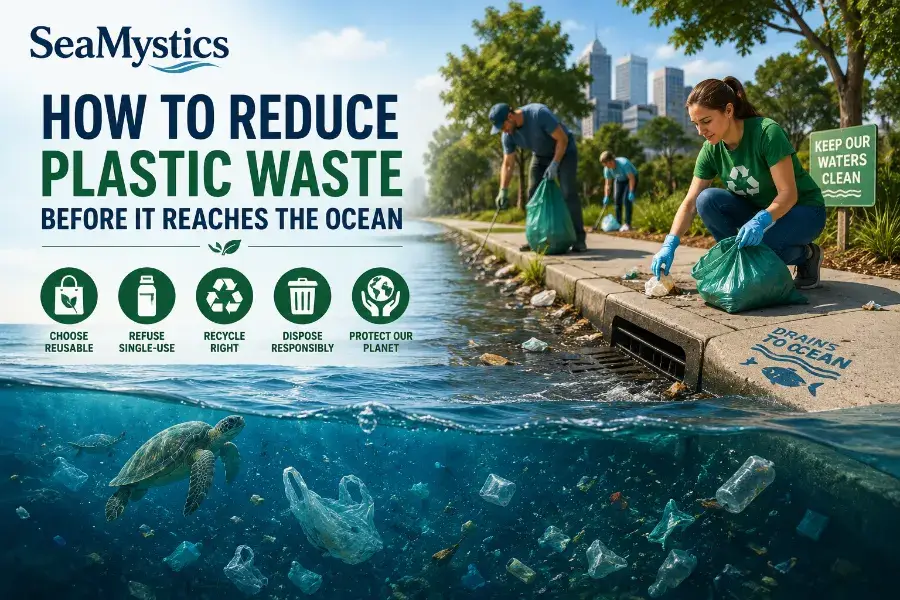
- Adopt-a-drain: clear litter and leaves before storms. In audits I’ve run since 2018, a single blocked curb inlet can release bags and cups that travel miles downstream.
- Install catch-basin baskets or filters on private lots and parking areas to trap light plastics.
5) Capture microplastics at the source
- Fit a 100–300 micron laundry filter to your washing machine to catch synthetic fibers.
- Sweep, don’t hose, plastic dust from garages and sidewalks so it doesn’t wash into drains.
6) Organize consistent cleanups
- Monthly, two-hour street and creek sweeps around outlets, bus stops, and markets remove the most “flight-prone” items (bags, foils, cups).
- Track items collected by type; patterns help target local fixes (for example, more bins near food trucks or cages on windy corners.
Buy better: product choices that stop ocean leakage
Some items are rarely recycled and often escape outdoors. Shift demand toward designs that last and can be recovered.
7 Prefer refillable and returnable formats
- Refillable water, beverages, cleaning sprays, and coffee containers reduce the highest-escape single-use categories.
- Support deposit-return bottles where available; return rates are far higher than curbside collection.
8 Choose packaging that your city actually takes
- Select rigid PET #1 and HDPE #2 when possible; avoid mixed materials, tinted films, and black plastics that sorters miss.
- For shipping, choose paper-based mailers and molded fiber instead of plastic bubble mailers.
9 Cut “nuisance plastics”
- Glitter, microbeads in old stock, plastic confetti, and balloon releases turn into microplastic fast. Skip them entirely.
- Switch to metal razors, refillable pens, and mechanical pencils.
Workplace and campus actions
Institutions can stop thousands of items per week from leaking outdoors.
10 Replace default disposables
- Make reusables the default in cafeterias and conference rooms; provide a clean return loop with dishwashing.
- Offer water refill points on every floor; remove plastic-bottle vending where feasible.
11 Manage outdoor bins and loading docks
- Fit lids and netting on outside bins to prevent wind-blown litter.
- Add a “last-chance” recycling tote inside, right before the exit, so workers don’t carry plastics outside.
12 Buy with standards
- Write contracts that favor minimal packaging, recycled content, and take-back services for pallets, films, and drums.
- Include performance clauses for litter prevention on deliveries and events.
Community systems that keep plastic off coasts
Household changes help, but systems lock in gains.
13 Improve local collection and sorting
- Ask your city to adopt cart-based collection with lids to cut wind loss.
- Support route audits and targeted education in contamination hot spots. Right sorting keeps material in the system and out of waterways.
14 Install river and drain interceptors
- Litter traps, booms, and trash wheels on creeks collect floating plastic before it hits the estuary. Many cities recoup costs by avoided cleanup.
- Schools and civic groups can sponsor small-scale nets at outfalls and report tonnage monthly.
15 Support policy that scales reuse and recovery
- Extended Producer Responsibility (EPR) and deposit-return systems raise funds for cleanup and boost capture rates.
- Public procurement can require reuse targets at city venues and events.
Evidence suggests that coordinated policy, better product design, and waste system upgrades together can cut plastic pollution deeply this decade.
Practical 30-day plan
- Week 1: Inventory your top 10 single-use items; swap three for reusables. Install a laundry microfiber filter.
- Week 2: Map local recycling rules; set up a film-plastic drop-off routine. Add a lid to any outdoor trash can you use.
- Week 3: Adopt a nearby drain; clear it before storms. Do a 60-minute street cleanup and log items by type.
- Week 4: Ask a favorite cafe to default to reusables for dine-in. At work, add return bins next to exits and loading docks.
Real-world examples
- Lisbon, 2024: A pilot added catch-basin baskets on 150 drains near a stadium. During three fall storms, crews removed 1.1 tons of litter, including lightweight cups and snack films, preventing a pulse into the Tagus estuary.
- Baltimore, 2023–2025: Harbor trash wheels intercepted hundreds of tons of floating debris each year, much of it plastic packaging, before reaching the Chesapeake. Consistent capture reduced shoreline cleanups downriver.
- Portland school district, 2025: Switching to reusable lunch trays cut 2.3 million single-use items annually and reduced windblown litter around campuses within a semester.
What to recycle, what to drop off, what to avoid
| Item | Curbside? | Better option | Notes |
|---|---|---|---|
| PET bottles (#1) | Often yes | Refill bottle | Empty, cap on |
| HDPE jugs (#2) | Often yes | Bulk + refill | Rinse; labels ok |
| Plastic film/bags | No curbside | Store drop-off | Keep dry/clean |
| Utensils, straws | Rarely | Reusable set | Decline by default |
| Foam takeout | Rarely | Reusable/durable | Breaks into microplastics |
| Black plastic | Often no | Clear/natural | Not seen by sorters |
| Compostable plastic | Not in recycling | Industrial compost only | Check local program |
Source guidance: municipal rules vary; follow your local provider’s list.
Microplastic prevention at home
- Wash full loads on cold; low-shear cycles shed fewer fibers.
- Use a filter bag or inline filter; clean as directed and bin the captured lint.
- Choose natural fibers when practical; line-dry to reduce shedding.
Simple metrics to track progress
You do not need complex tools. Track three things:
- Monthly count of disposable items you avoided (bottles, bags, utensils).
- Weight or volume of plastics you take to drop-off (films) or put in correct bins.
- Leakage hotspots you fix (drain cleared, bin lid added) and how often.
Policy signals to watch
- Deposit-return expansions improve bottle capture and reduce litter.
- EPR laws fund sorting upgrades and litter controls.
- Public procurement that favors reuse and take-back changes market supply quickly.
These measures, combined, can cut pollution markedly by 2040 while lowering cleanup costs.
Visuals
Diagram: Land-to-ocean plastic pathway and interception points
Consumer use
Waste bin
Litter
Collection & sorting
Recycling/Reuse
Storm drains
Creeks/Rivers
Ocean
Drain baskets
River traps
Refill/Reuse systems
Frequently asked questions
Does switching to reusables really make a dent?
Yes. Replacing a daily disposable bottle and coffee cup avoids over 700 single-use items per person per year. In offices of 100, that is 70,000 fewer items with high leakage risk.
Are compostable plastics good for the ocean?
Not by default. If they are not collected by a composting program that accepts them, they behave like conventional plastics in the environment and can contaminate recycling streams. Check local acceptance.
What is the single most effective city action?
Curbing single-use packaging through reuse programs, plus lids on bins and drain capture in litter hotspots, offers the fastest, visible drop in leakage. Pair with public education on correct recycling.
References
- US Environmental Protection Agency. What You Can Do to Reduce Plastic Waste. Accessed April 13, 2026.
- The Pew Charitable Trusts. Plastic Pollution Growing at Troubling Rate With Significant Environmental, Human Health Consequences. December 3, 2025.
Conclusion
Ocean plastic is a land problem we can solve. Reduce and reuse first. Recycle right, and use drop-offs for films. Keep drains clear, filter laundry fibers, and fix outdoor bins. Then help your city scale what works: capture at outfalls, better collection, and policies that fund reuse and recovery. When many people act across these steps, leakage drops fast—and the sea stays clearer for all of us.
Author: Dr. Rabica Khan is a marine biologiste and senior editor at Sea Mystics. She studies river-to-coast plastic pathways and urban runoff solutions across the Atlantic and Mediterranean.