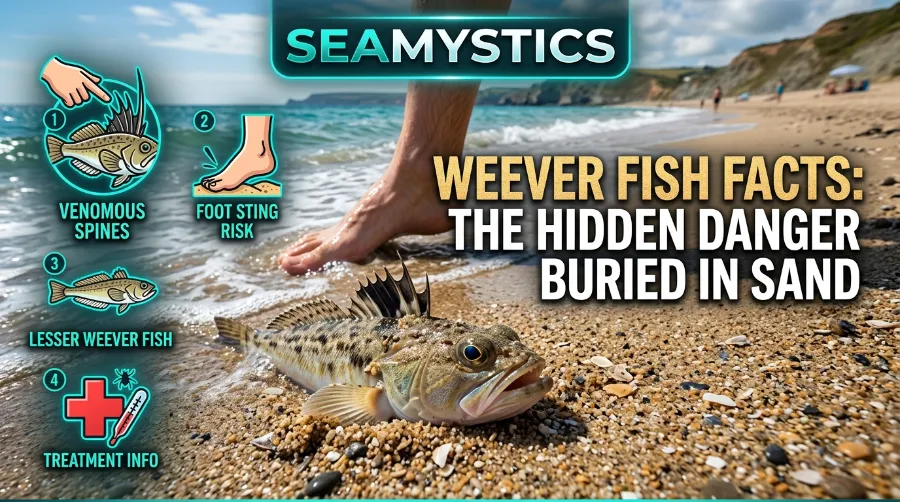

You are standing ankle-deep in warm, calm water on a perfect summer afternoon. The sand feels soft under your feet, right up until it doesn’t. A jolt of pain shoots up your leg like you have stepped on a live wire, and within minutes you are hopping back to your towel wondering what on earth just happened. Chances are, you just met a weever fish, a small, sand-coloured predator that lifeguards from Cornwall to the Costa del Sol deal with thousands of times every summer.
This guide pulls together the weever fish facts that actually matter: where they hide, why the sting hurts so much, how to treat it properly, and how to avoid becoming one of the season’s statistics. If you swim, paddle, or fish along the coasts of the UK, Ireland, France, Spain, or Portugal, this is one hidden beach danger fish worth ten minutes of your time.
Key Takeaways
| Topic | Quick Fact |
|---|---|
| What it is | A small venomous fish that buries itself in shallow sand |
| Main species | Lesser weever (Echiichthys vipera) and greater weever (Trachinus draco) |
| Where found | Atlantic coast, North Sea, Mediterranean, English Channel |
| Peak risk season | June to August, especially around low tide |
| Sting mechanism | Venomous dorsal and gill-cover spines, not teeth |
| First aid | Immerse the sting in water as hot as safely tolerated |
| Danger level | Extremely painful but rarely life-threatening |
| Best prevention | Wear beach shoes and shuffle your feet in shallow water |
TL;DR: Weever fish are small, venomous fish that bury themselves in shallow, sandy shores across the UK and Europe, and stings mostly happen in summer around low tide. The venom causes intense, immediate burning pain rather than lasting damage, and hot water immersion is the fastest, most effective treatment. A pair of beach shoes and a bit of awareness of tide timing are usually all it takes to avoid one entirely.
Fire Coral Facts: Why It Burns and How to Treat It
What Is a Weever Fish? The Basics Behind the Panic
Despite the fear they inspire on crowded beaches, weever fish are not aggressive hunters looking for a fight. They are small, well camouflaged fish that spend most of their day buried in sand or mud, waiting for shrimp, small fish, and fry to swim past. Their venomous spines are a defence mechanism, not a weapon of attack, which is an important distinction when trying to understand this hidden beach danger fish rather than fear it.
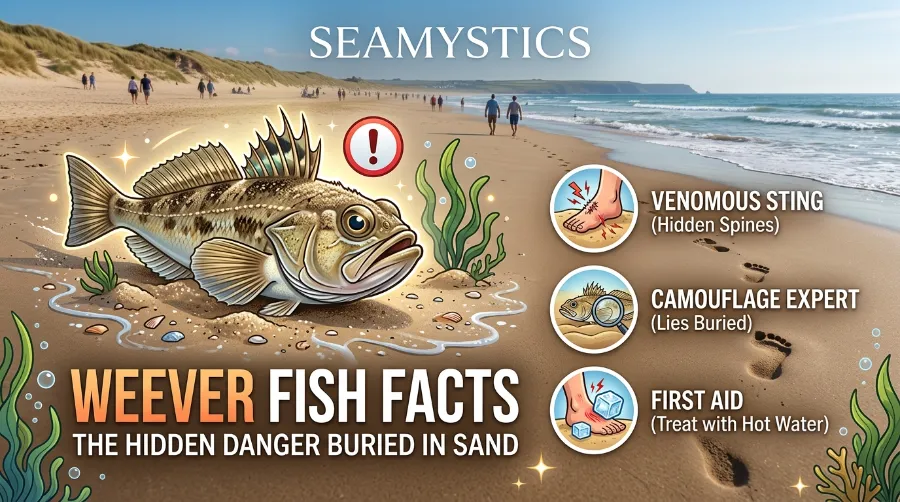
There are two species that matter to swimmers and anglers here. The lesser weever, Echiichthys vipera, is responsible for almost every beach sting, typically growing to around 8 to 12 centimetres. The greater weever, Trachinus draco, is a deeper-water species found offshore rather than in the shallows where bathers wade.
You will rarely spot one before it stings you. As National Aquarium Ireland explains, their upturned eyes and mottled, sandy colouring make them almost invisible until you are standing directly on top of one. For a closer look at their appearance and biology, Fact Animal has a detailed breakdown that pairs well with this guide.
Weever Fish Habitat: Why Sandy Beaches Are Their Favourite Hideout
Weever fish habitat is almost exclusively shallow, sandy or muddy seabeds, exactly where families paddle, surfers wade out, and children build sandcastles. According to the Wildlife Trust, the lesser weever is found all around Britain, with the highest concentrations in the south and southwest.
Beyond the UK, their range stretches widely across European coastlines, with stings particularly common in Portugal, Spain, France, Morocco, and the United Kingdom during summer. That range means this is a Europe-wide coastal safety issue, not just a British one.
A few habitat details worth remembering:
- They prefer calm, shallow water close to shore, often less than a metre deep
- They are most active during warm, sunny afternoons
- They tend to cluster near the same stretches of beach year after year
- They can sting through thin wetsuit neoprene
A University of Plymouth study found that 89 percent of weever fish stings occur during June, July, and August, clustering around low tide, the same calm, sunny conditions that draw the most swimmers to the beach.
Weever Fish Sting UK: What Actually Happens the Moment You’re Stung
A weever fish sting UK case almost always starts the same way. At first it feels like stepping on broken glass. Within minutes, that sharp pain deepens into an intense, radiating burn many victims compare to touching a hot iron.
The venom is delivered through spines on the dorsal fin and gill covers rather than a bite. Reports from Countryfile describe the lesser weever as measuring roughly 15 centimetres, about the length of a pencil, yet capable of a serious punch.
Textile Cone Snail vs Geography Cone: Comparing the Deadliest Shells
Common Symptoms After a Sting
- A sharp, localised puncture wound, usually on the sole or heel of the foot
- Burning pain that intensifies over the first 30 minutes
- Redness, swelling, and warmth around the sting site
- Occasional nausea, headache, or dizziness
- In rare cases, fever, tremors, or a drop in blood pressure
According to Surfer Today, pain typically peaks around 30 minutes before gradually easing, though discomfort can linger up to 24 hours. Deaths from weever fish stings are extremely rare.
A Real Example From the UK Coast
In June 2018, the Ramsgate RNLI lifeboat crew was called out after a fisherman was stung on both hands by a weever fish while working roughly five miles offshore. On a larger scale, UK lifeguards dealt with around 19,000 minor beach injuries in 2016, most of them weever fish stings.
If venomous marine animals interest you, our guides on the blue-ringed octopus and Portuguese man o’ war cover two other important warm-water dangers.
Weever Fish Treatment: The Fastest Way to Stop the Pain
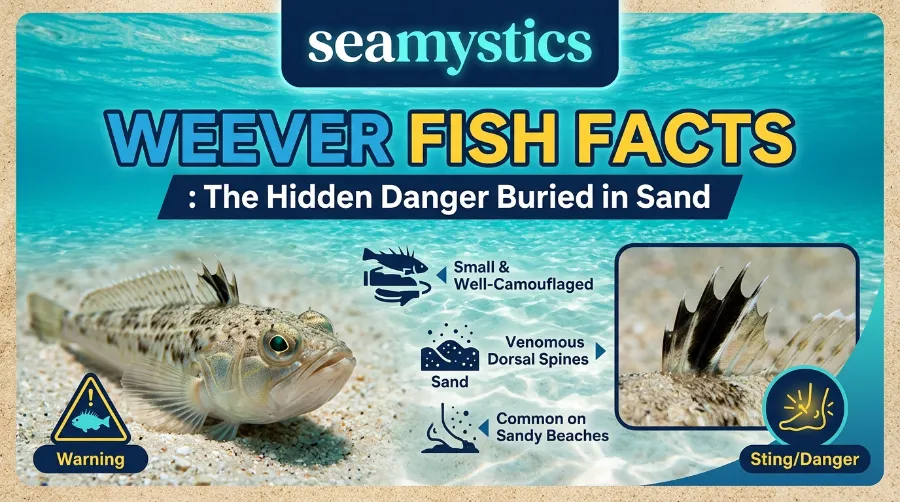
Weever fish treatment is genuinely simple, because it works on basic chemistry rather than folklore. The venom is protein-based, so it breaks down and loses potency when exposed to heat.
Step-by-Step First Aid
- Get out of the water immediately and sit or lie down somewhere safe
- Rinse the wound with seawater to remove any spine fragments
- Immerse the area in water as hot as you can tolerate without scalding, ideally 40 to 45°C, for 30 to 90 minutes
- Take an over-the-counter pain reliever if needed
- Watch for spreading redness, fever, or breathing difficulty, and seek medical attention if these appear
British Sea Fishing confirms this approach, noting that hot water destroys the protein-based venom through heat, and advises that children, elderly people, or anyone with health conditions should seek medical advice for severe symptoms.
Table: Sting Severity at a Glance
| Symptom Level | What You’ll Notice | Recommended Action |
|---|---|---|
| Mild | Localised sharp pain, small puncture | Hot water immersion, monitor 24 hours |
| Moderate | Spreading burn, swelling, nausea | Hot water immersion plus pain relief |
| Severe | Fever, tremors, breathing changes | Immediate medical attention or A&E |
How to Avoid a Weever Fish Sting in the First Place
- Wear water shoes or neoprene beach boots in shallow sand
- Shuffle your feet along the seabed instead of stepping down directly
- Avoid wading in warm, shallow water at low tide during peak heat
- Follow posted beach warning flags
- Teach children the shuffle-step habit
For more on coastal hazards, see stingray sting facts and box jellyfish facts, and for the bigger ocean picture, our sustainable seafood guide.
FAQ
Is a weever fish sting dangerous? Very painful but rarely dangerous; most people recover within a day.
Can you get stung through a wetsuit? Yes, spines penetrate thin neoprene.
How long does the venom last? Peak pain around 30 minutes, easing over 24 hours.
Do weever fish attack on purpose? No, they’re ambush predators defending themselves.
Are they only found in the UK? No, they’re common across the Atlantic, North Sea, Channel, and Mediterranean.
Quick Quiz
- Where do weever fish hide? B) Buried in shallow sand or mud
- Best first aid? C) Immerse in hot water
- Peak sting season? B) Summer afternoons around low tide
Conclusion
Weever fish are a small, shy fish doing exactly what evolution built them to do: hide, ambush, and defend themselves when stepped on. Knowing their habitat, symptoms, and that hot water is your best friend removes most of the fear from this hidden beach danger fish.
References
Surfer Today · Countryfile · British Sea Fishing · Angling Direct · Isle of Thanet News (2018) · National Aquarium Ireland · Wildlife Trust · Fact Animal
Dr. Rabica is a marine biologist and science writer specialising in venomous marine species and coastal safety.
The Word file above already has these same links live and clickable — let me know if you’d like anything adjusted.