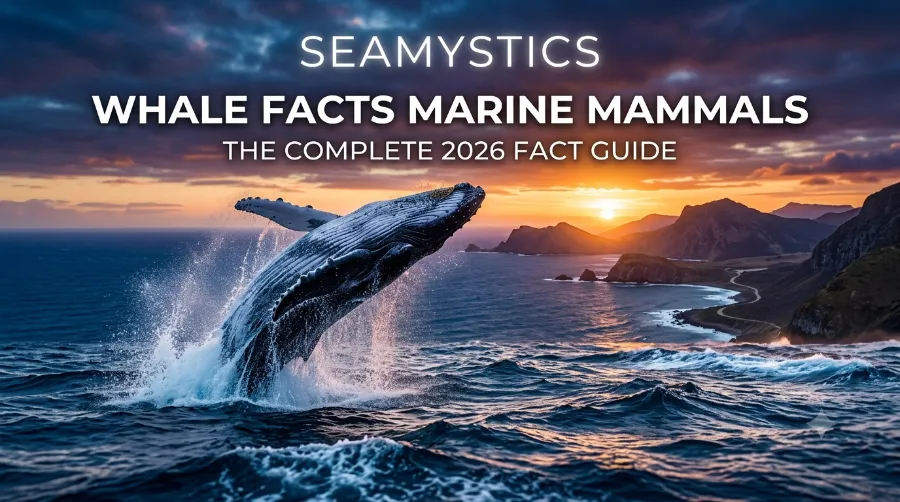

Picture a heart so big a child could crawl through its arteries. That is not a myth. That is a blue whale, and it is just one of the countless whale facts marine mammals researchers keep uncovering every single year. Whales have fascinated sailors, scientists, and ocean lovers for centuries, and honestly, the more we learn, the stranger and more wonderful they become.
If you want to learn more about Humpback whale’s annual migration route guide for practical tips and expert advice.
This guide brings together the newest research, the biggest numbers, and the most surprising behaviors from the whale world. Whether you live near the coast of Maine, the cliffs of Cornwall, or nowhere near an ocean at all, these marine mammals matter to everyone. So, let us dive right in.
If you want to learn more about seal vs sea lion tips and expert advice.
If you want to learn more about narwhal facts arctic whale guide for practical tips and expert advice.
Key Takeaways at a Glance
| Fact Category | Quick Insight |
|---|---|
| Total whale species | Around 90 recognized species of whales, dolphins, and porpoises |
| Largest animal ever | Blue whale, reaching up to 98 feet long |
| Longest living whale | Bowhead whale, possibly living 150 to 200 years |
| Biggest brain | Sperm whale, brain weighing up to 9 kg |
| Carbon storage | Each great whale captures roughly 33 tons of CO2 |
| Most endangered | North Atlantic right whale, fewer than 340 left in 2026 |
| Top threats | Vessel strikes, fishing gear entanglement, ocean noise |
Why Whale Facts Marine Mammals Matter More Than Ever
Whales are not just big fish swimming around the ocean. In fact, they are not fish at all. They are warm-blooded mammals that breathe air, nurse their babies, and even form lasting friendships with other whales, much like people do.
If you want to learn more about whale song communication explained tips and expert advice.
Because of this, scientists often call whales “ecosystem engineers.” When a whale dives deep and returns to the surface, it stirs up nutrients from the ocean floor. This process, sometimes called the whale pump, helps feed tiny plankton, which in turn feed fish, which in turn feed us. So, protecting whales actually protects entire food chains.
Meanwhile, whales also fight climate change in their own quiet way. According to the World Wildlife Fund, each great whale stores an average of 33 tons of CO2 over its lifetime, locking that carbon away in the deep sea once it dies naturally. That is roughly the same carbon output as thousands of car trips. Consequently, whale conservation and climate policy are more connected than most people realize. World Wildlife Fund
How Many Whale Species Exist in 2026
Scientists are still finding new whale species, which honestly makes this field endlessly exciting. As of now, researchers group whales, dolphins, and porpoises together under one big scientific family called cetaceans. According to the Whale and Dolphin Conservation organization, the Society of Marine Mammalogy currently recognizes 90 species of whales, dolphins, and porpoises. whales
Interestingly, a brand new species was identified fairly recently. As WDC notes, an entirely new species of baleen whale was recognized in the Gulf of Maine in 2021. That discovery reminds us how much ocean territory remains unexplored, even today. whales
Cetaceans split into two main groups, and understanding this split makes everything else about whales easier to follow.
- Baleen whales (mysticetes): These whales use comb-like plates instead of teeth to filter tiny prey from seawater. Blue whales, humpback whales, gray whales, and bowhead whales all belong here.
- Toothed whales (odontocetes): These whales hunt fish, squid, and sometimes other marine mammals using actual teeth. Sperm whales, orcas, belugas, and narwhals fall into this category.
Because of this split, feeding habits, migration patterns, and even communication styles vary wildly across the whale family tree.
Whale Facts Marine Mammals: Size and Records That Break the Scale
Nothing captures attention quite like raw numbers. Below is a quick data snapshot pulled from current whale research, useful for understanding just how extreme these animals really are.
If you want to learn more about sperm whale deep divetips and expert advice.
| Record | Whale Species | Measurement |
|---|---|---|
| Longest body | Blue whale | Up to 98 feet (29.9 meters) |
| Heaviest heart output | Blue whale | Pumps roughly 5,300 liters of blood |
| Largest brain | Sperm whale | Around 9 kg, five times human brain volume |
| Deepest diver | Cuvier’s beaked whale | Recorded dive of 2,992 meters |
| Fastest swimmer | Fin whale | Bursts up to 55 km/h |
| Loudest voice | Blue whale | Sounds reaching 186 decibels |
These figures come directly from field research compiled by Whale and Dolphin Conservation, and they show just how far whale biology stretches beyond anything on land.
The Blue Whale: Still the Undisputed Giant
The blue whale remains the largest animal to ever exist on Earth, bigger than any dinosaur that ever walked the planet. A newborn blue whale calf already weighs about three tons at birth, roughly the size of a fully grown hippo. During its first six months, that calf gains an incredible 250 pounds or more every single day, thanks to drinking mother’s milk that is nearly half fat. whales
Sadly, blue whale numbers remain fragile. Current estimates suggest between 10,000 and 25,000 blue whales exist worldwide, with roughly half of them mature adults. Before commercial whaling, populations were far larger, so recovery is slow but ongoing. World Population Review
The Sperm Whale: Nature’s Deep Thinker
Sperm whales carry the largest brain of any creature on the planet. Their brains weigh close to 9 kilograms, which is about six times heavier than a human brain. However, most of their massive head is not actually brain tissue. Instead, it holds an oil-filled organ called spermaceti, which helps them navigate using echolocation.
If you want to learn more about manatee facts marine mammal tips and expert advice.
The Bowhead Whale: The Arctic Time Traveler
Bowhead whales might just be the oldest living mammals on Earth. According to WDC, scientists believe bowheads can live for at least 150 years and possibly beyond 200 years. In fact, one bowhead whale examined in 2007 was found carrying a century old harpoon fragment, traced back to a New England factory active around 1880. That single discovery rewrote how scientists understood whale lifespans. whales
How Whales Communicate: The Ocean’s Most Complex Language
If you thought whale sounds were simple, think again. Whale song is one of the most sophisticated forms of animal communication known to science, and different species sing in completely different styles.
- Humpback whales sing the most complex songs, sometimes lasting up to 30 minutes and spanning nearly seven octaves.
- Fin whales produce the simplest, most repetitive low frequency pulses, likely used during mating season.
- Blue whales sing the lowest frequency songs of any animal, and researchers have found their voices are getting deeper each year.
- Bowhead whales create the most diverse songs of all, with scientists documenting 184 distinct melodies recorded in one area over a three year period. whales
As a result, whale song research has become its own branch of marine acoustics, helping scientists track migration and population health without ever seeing a single whale.
Marine Mammals Beyond Whales: The Wider Family
While this guide focuses on whale facts marine mammals, it helps to understand the broader marine mammal family too. Seals, sea lions, walruses, dolphins, porpoises, manatees, and even polar bears all fall under this umbrella. However, whales remain the largest and, arguably, the most studied group.
Killer whales, technically the largest species of dolphin, deserve special mention here. Their diet is the most varied of any cetacean, and different populations specialize in hunting specific prey. Sadly, the Southern Resident killer whale population off the Pacific Northwest coast remains endangered, and NOAA continues intensive monitoring of this group throughout 2026.
Whale Conservation Status in 2026
Unfortunately, not every whale story has a happy ending yet. Despite decades of protection efforts, several species remain in serious trouble.
The North Atlantic right whale sits at the top of the concern list. As IFAW reports, less than 340 remain, and fewer than 70 are reproductive females capable of producing calves. This is a sobering number, especially since these whales once numbered in the tens of thousands before commercial whaling nearly wiped them out. IFAW
Here are the main threats whales face today, based on current conservation research.
- Vessel strikes: Ships colliding with whales cause serious injury or death, especially along busy shipping lanes.
- Fishing gear entanglement: According to IFAW, roughly hundreds of thousands of whales die every year due to entanglement in nets and ropes. IFAW
- Ocean noise pollution: Shipping and industrial activity disrupt whale communication and can damage their hearing over time.
- Climate change: Warming oceans shift prey locations, forcing whales to travel further for food, which lowers reproductive success.
That said, there is genuine progress worth celebrating. In March 2026, wildlife officials in Florida documented a North Atlantic right whale named Mirror giving birth to her first calf, spotted just off Crescent Beach. Sightings like this matter enormously for a species clinging to survival, and every single calf counts.
New Ropeless Fishing Technology in 2026
One bright spot for whale safety involves new fishing gear technology. NOAA Fisheries and partner organizations are actively developing on-demand fishing systems, sometimes called ropeless gear, designed to reduce the vertical lines that cause entanglement. According to NOAA, there is a roadmap for providing fishermen an option to use on-demand fishing systems in the Greater Atlantic Region by 2028. This kind of innovation shows how conservation groups and the fishing industry can work together toward shared solutions. NOAA Fisheries
How Whales Evolved From Land to Sea
Perhaps the strangest whale fact of all involves their ancestry. Whales did not start out in the ocean. Instead, their ancestors were four legged, hoofed land mammals that lived around 50 million years ago, distantly related to modern hippos, deer, and cows.
Over roughly 8 million years, these ancestors gradually adapted to life in water. Their front legs became flippers, their back legs shrank away, blubber replaced fur, and their nostrils slowly migrated to the top of their heads. Fossils of an ancient whale called Basilosaurus, once mistaken for a dinosaur, show this transformation clearly, complete with tiny leftover back legs.
For readers who enjoy learning how ocean creatures adapt over time, our related guide on /related-guide-marine-evolution covers this topic in much greater depth.
Practical Ways to Support Whale Conservation
You do not need to live near an ocean to help whales. Here are simple, effective steps anyone can take.
- Choose sustainable seafood options that avoid harmful fishing practices linked to bycatch.
- Reduce single use plastic, since ocean debris directly harms whales through entanglement and ingestion.
- Support responsible whale watching tours that follow safe distance guidelines.
- Donate to or follow reputable marine conservation organizations doing fieldwork.
- Share accurate whale facts marine mammals research with others, since public awareness genuinely shapes policy decisions.
If you want a deeper breakdown of sustainable travel and wildlife tourism, check our related resource at /related-guide-sustainable-ocean-travel.
Frequently Asked Questions
What are the most interesting whale facts marine mammals researchers have found recently?
Recent research highlights include a newly recognized baleen whale species in the Gulf of Maine, deeper understanding of bowhead whale lifespans nearing 200 years, and continued documentation of individual right whale calves through 2026 aerial surveys.
How many whale species exist today?
Scientists currently recognize about 90 species within the broader cetacean family, which includes whales, dolphins, and porpoises together.
Which whale lives the longest?
The bowhead whale holds this record, with evidence suggesting some individuals live well beyond 150 years, possibly reaching 200 years old.
Are whales actually fish?
No, whales are mammals. They breathe air through lungs, nurse their young with milk, and are warm-blooded, just like humans.
Why are whales important for climate change?
Whales store carbon in their massive bodies throughout their lives. When they die naturally, that carbon sinks to the ocean floor instead of returning to the atmosphere, making whales a natural climate ally.
Is whale hunting still happening in 2026?
Yes, unfortunately. Despite an international moratorium on commercial whaling, a small number of countries continue limited commercial whale hunts, which remains a point of ongoing international debate.
Conclusion
Whales remind us that the ocean still holds mysteries worth protecting. From the blue whale’s record-breaking size to the bowhead whale’s astonishing lifespan, every whale fact marine mammals researchers uncover adds another reason to care about ocean health. Their survival is tied directly to cleaner seas, quieter waters, and smarter fishing practices, all things that benefit humans too. As new research continues through 2026 and beyond, staying informed is one of the simplest ways to support their future. For more ocean life stories and marine science updates, visit us at seamystics.com and explore our growing library of marine mammal guides.
References
- NOAA Fisheries, Whales Overview and Species Data, fisheries.noaa.gov
- Whale and Dolphin Conservation USA, Facts About Whales, https://us.whales.org/whales-dolphins/facts-about-whales/
- Canadian Wildlife Federation, 10 Amazing Facts About Whales, https://blog.cwf-fcf.org/index.php/en/10-amazing-facts-about-whales-that-you-probably-didnt-know/
- International Fund for Animal Welfare, Whales Habitat and Conservation, ifaw.org
- World Wildlife Fund, Whale Species Overview, worldwildlife.org
- International Whaling Commission, Population Status Summaries, iwc.int