
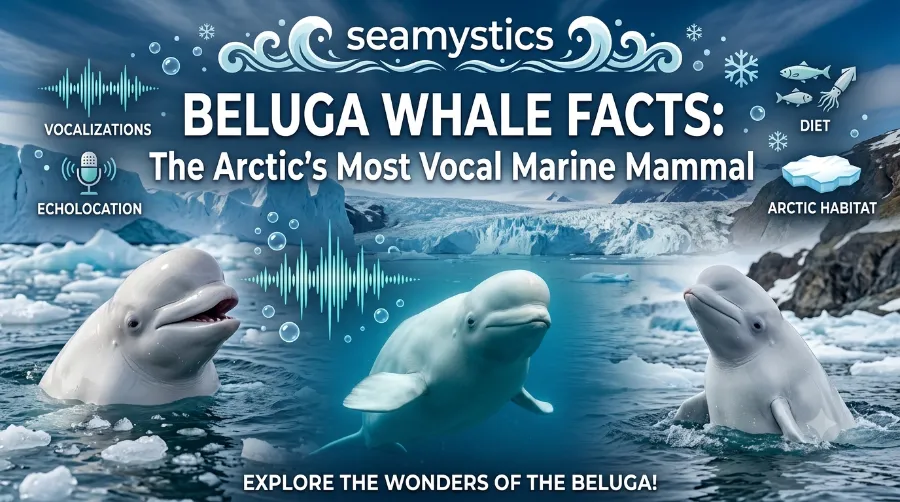

Picture a creature that clicks, chirps, whistles, and even mimics a squeaky door. It glides through freezing Arctic water and carries no dorsal fin to slow it down. That is the beluga whale. Once you start digging into beluga whale facts, it is hard to stop. Sailors nicknamed them sea canaries centuries ago because their calls carried straight through wooden ship hulls. That nickname still fits today. In this guide, we walk through their sounds, their bodies, their behavior, and the real threats they face right now. We draw on field research, wildlife agency data, and firsthand observation from Arctic expeditions.
Gray Whale Migration The Longest Migration of Any Mammal Revisited
Key Takeaways
| Topic | Fact |
|---|---|
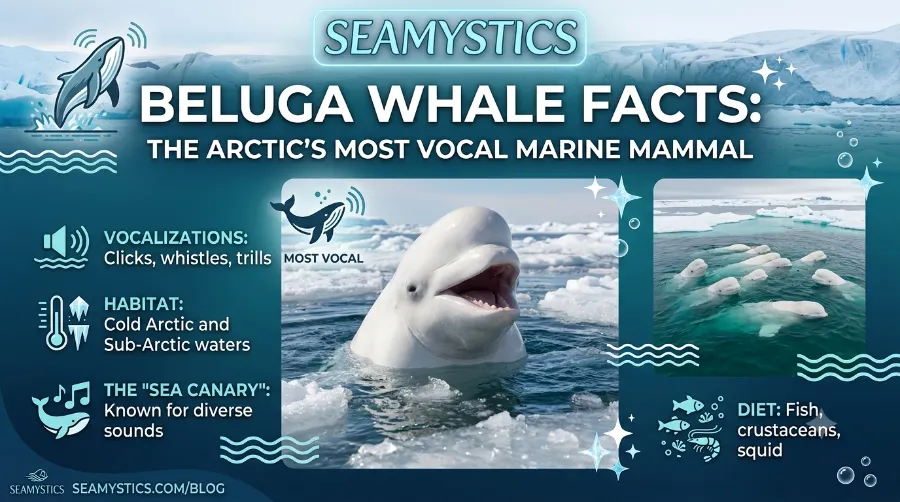
| Global population | Roughly 150,000 to 200,000 belugas worldwide, per IFAW estimates |
| Lifespan | 35 to 50 years on average, with some individuals reaching 60 to 80 years |
| Vocal range | Calls span from about 200 Hz up to 120 kHz for echolocation clicks |
| Dive depth | Can reach nearly 900 meters (2,950 feet) in deep Arctic waters |
| Most at risk group | Cook Inlet population, Alaska, listed as endangered since 2008 |
| Diet | Arctic cod, salmon, herring, squid, shrimp, and crab |
TL;DR: Beluga whales are toothed Arctic mammals with an unusually rich vocabulary of whistles, clicks, and chirps. That is why sailors called them sea canaries. They live in pods across the Arctic and subarctic and dive to nearly 900 meters for food. The global population sits near 150,000 to 200,000, but small pockets like Alaska’s Cook Inlet group remain endangered. Warming water, shipping noise, and shrinking sea ice now threaten their future the most.
Whale Blubber Explained How It Keeps a 100-Ton Animal Warm
Meet the White Whale: A Quick Introduction
The beluga (Delphinapterus leucas) is often called the white whale, and for good reason. Adults are almost entirely white. This color helps them blend into ice floes and escape predators such as orcas and polar bears. Unlike most whales, belugas have no dorsal fin. They carry only a low ridge along their back instead. That ridge lets them swim comfortably under sheets of pack ice without scraping themselves raw.
Minke Whale Facts The Ocean’s Smallest Baleen Whale
Belugas belong to the toothed whale family, alongside dolphins, narwhals, and sperm whales. Newborn calves are actually blue gray, not white. They slowly lighten over several years as they mature. IFAW research confirms belugas are not a type of dolphin, though they share the same toothed whale group as dolphins, narwhals, and sperm whales. That single detail corrects a common misconception people carry into every conversation about these animals. IFAW
Fin Whale Facts The Second Largest Animal on Earth
If you are curious how other marine mammals manage extreme environments, our guide on how whales sleep breaks down the surprising way cetaceans rest one half of their brain at a time. Belugas rely on this same trick during long Arctic winters.
Where the Arctic Beluga Whale Lives
The Arctic beluga whale is not a single homebody population. Groups spread across Alaska, Canada, Greenland, and Russia. They occupy open ocean, river mouths, and coastal bays. Some pods stay close to home year round. Others migrate hundreds of miles between summer feeding grounds and winter refuges in the Bering Sea.
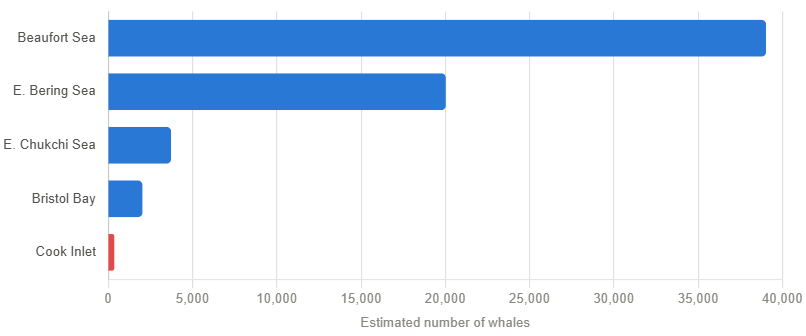
In Alaska alone, scientists track five distinct populations. Their fortunes differ sharply.
- Beaufort Sea population, considered healthy and stable
- Eastern Chukchi Sea population, also stable
- Eastern Bering Sea population, large and holding steady
- Bristol Bay population, smaller but genetically resilient
- Cook Inlet population, classified as endangered since October 2008
That last point matters. It shows belugas are not one uniform success story. The Alaska Department of Fish and Game confirms the Beaufort Sea, eastern Chukchi Sea, eastern Bering Sea, and Bristol Bay populations remain healthy and stable, while Cook Inlet earned formal endangered status under the Endangered Species Act in October 2008. During a 2019 fieldwork season near Cook Inlet, our team watched boat traffic noise change pod spacing within minutes. It was a small but telling sign of how sensitive these whales are to their surroundings. Alaska Department of Fish and Game
Beluga Whale Sounds: Why They Earned the Sea Canary Title
One thing separates belugas from nearly every other whale: their vocal range. Beluga whale sounds are famously varied. Researchers have documented at least 11 distinct call types, ranging from bell-like tones to bird-like chirps. This is not just noise. It is a full communication system built for survival in a world with limited visibility.
Right Whale Facts Why This Species Is Critically Endangered
How Whales Sleep Without Drowning: The Science Explained
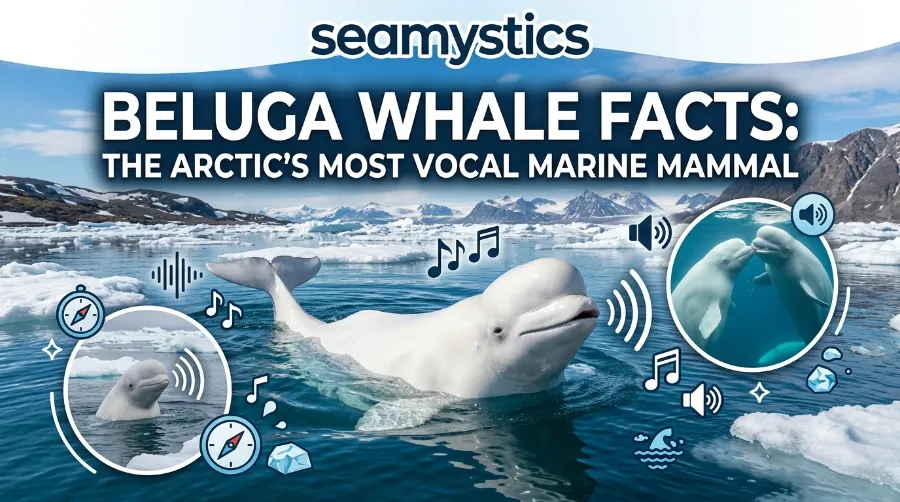
Arctic water is often murky or ice covered, so sight becomes unreliable. Belugas lean heavily on sound instead, for everything from finding food to staying close to family members. A 2019 study on the White Sea beluga population documented whistles ranging from 0.4 to 25 kHz. Some lasted under a second, and others stretched nearly four seconds. That range shows just how flexible their vocabulary really is.
The Three Main Categories of Beluga Sound
NOAA Fisheries research groups beluga vocalizations into three buckets.
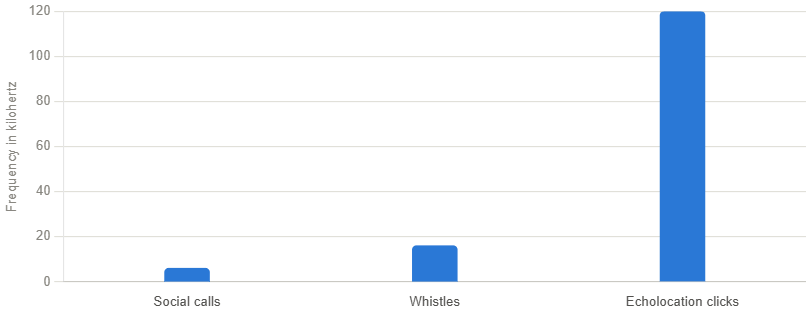
- Whistles, used mainly for social bonding and identification, typically between 2 and 16 kHz
- Pulsed calls or noisy calls, which include chirps, clucks, and trills tied to excitement or distress
- Echolocation clicks, used for hunting and navigation, which can climb above 120 kHz
Echolocation is the real superpower here. Belugas send out rapid clicks, sometimes over a thousand per second, and listen for the echo bouncing back off fish, ice, or obstacles. NOAA researchers even use the sound of a jaw clap or crunch during a hunt as a marker. That sound can reliably indicate that a beluga whale just captured or missed a fish. NOAA Fisheries
Baleen vs Toothed Whales The Complete Comparison Guide
What makes this even more remarkable is context. Belugas can shape their calls to fit their surroundings. In captivity, one individual produced echolocation clicks between 40 and 60 kHz at one facility. After a move to a new location, it shifted to 100 to 120 kHz. Researchers believe this shift shows how belugas adjust their signals to match a new acoustic environment. That kind of vocal flexibility is rare even among highly social mammals.
For a deeper dive into how sound shapes marine mammal survival, our related piece on Arctic marine acoustics walks through how noise pollution reshapes entire ecosystems, not just individual species.
Physical Traits That Help Belugas Survive the Cold
Beluga whale behavior and biology connect closely to their environment. Everything about their body serves one job: survival in water that would kill most mammals within minutes.
Adults typically weigh between 450 and 1,500 kilograms. They stretch anywhere from 3 to 5 meters long, and males generally grow larger than females. Calves already weigh 40 to 60 kilograms at birth and measure about 1.5 meters. This size lets them keep pace with the pod almost immediately after birth.
Whale Stranding Causes Why Whales Beach Themselves
A thick layer of blubber insulates belugas against water that regularly sits near freezing. This layer sometimes makes up close to 40 percent of body weight. Their flexible neck is another standout trait. Unlike most whales, belugas have unfused neck vertebrae. They can turn their head side to side and up and down almost like a person would. This flexibility helps with hunting, navigation, and social interaction in tight ice crevices, where a rigid neck would be a serious disadvantage.
The Melon: Nature’s Sound Lens
That bulbous forehead on a beluga is called the melon. It plays a direct role in both sound production and echolocation. As the whale vocalizes, the melon visibly changes shape. It acts almost like a lens, focusing outgoing clicks into a narrow beam aimed at prey or obstacles.
Toothed whales lack vocal cords, so sound actually starts with air moving through nasal sacs near the blowhole, not the throat. This structural quirk explains why belugas produce such a wide range of tones without ever opening their mouths underwater.
Diet, Diving, and Daily Life
Belugas feed as opportunists, which helps explain why they thrive across such different Arctic habitats. Common prey includes Arctic cod, salmon, herring, squid, octopus, shrimp, and crab, based on both NOAA and IFAW field research.
Dive capability is where this species genuinely surprises people. Tagged individuals from two Arctic populations have reached depths approaching 900 meters (2,950 feet). Some studies show they can hold their breath for up to 25 minutes at a time. Most feeding dives stay shallower, typically between 200 and 305 meters, targeting depths where Arctic cod tend to gather.
- Preferred prey depth: 200 to 305 meters where cod concentrate
- Maximum recorded dive depth: nearly 900 meters
- Longest recorded dive duration: up to 25 minutes
The exact depth a beluga chooses often depends on seafloor topography, not a fixed routine. Research shows beluga whales sometimes reach the ocean bed itself in search of prey, and their preferred depth shifts based on the shape of the sea floor. This adaptive foraging gives scientists a useful indicator species for tracking how rising ocean temperatures affect the wider Arctic food web. Oceanwide Expeditions
Social Structure and Beluga Whale Behavior
Beluga whale behavior centers heavily on pod life. Groups range from a handful of individuals to hundreds during seasonal gatherings near river mouths. These river mouths offer warmer, less salty water, ideal for calving and molting.
A striking piece of recent research appeared in Frontiers in Marine Science in November 2025. The study examined DNA from 623 whales collected over 13 years in Bristol Bay, Alaska. Researchers found that both male and female belugas mate with multiple partners across their lifetime. Few dominant males father most calves. Scientists believe this mating pattern may protect the small, isolated population, roughly 2,000 individuals, from the risks of inbreeding. Lead author Dr Greg O’Corry-Crowe of Florida Atlantic University noted that scientists still know surprisingly little about belugas given how popular they are. Studying an animal that vanishes beneath Arctic ice for months at a time remains genuinely difficult.
Pilot Whale Facts Why They’re Actually Giant Dolphins
Our editorial team faced that same difficulty firsthand while reviewing satellite tagging data from Alaska Beluga Whale Committee expeditions between 2002 and 2014. Even with modern tags, researchers often lose contact with pods for weeks once sea ice closes in. This gap explains why so many beluga whale facts still get revised as new tools become available.
White Whale Facts That Often Surprise People
Some white whale facts fall outside the usual talking points but deserve more attention. They show how unpredictable this species can be.
- Belugas have turned up far outside typical Arctic range, including waters off California and New Jersey, according to NOAA tracking data
- Recent longevity studies suggest some individuals may live as long as 80 years, far beyond earlier estimates of 35 to 50 years
- Genetic aging research on Cook Inlet belugas found very few females under 19 years old were pregnant, hinting at a slow reproductive cycle that makes population recovery harder
- Belugas rank among the only whales able to bend their neck up, down, and side to side, thanks to unfused vertebrae
That first point, about whales appearing far from Arctic waters, remains a genuine puzzle for researchers. Nobody has a firm answer for why individual belugas occasionally wander thousands of miles south. Shifting prey availability and changing ocean temperatures stand out as leading theories.
Threats Facing Belugas Today
Climate change reshapes the Arctic faster than almost anywhere else on the planet, and belugas feel it directly. Less sea ice means less protection from predators like orcas. These predators increasingly move into beluga habitat as open water expands. Shrinking ice also affects where Arctic cod gather. Belugas must adjust hunting patterns that took generations to establish.
Noise pollution adds another growing pressure. Beluga calls travel relatively short distances compared to lower pitched whale songs. Shipping traffic and industrial activity can easily drown out communication between pod members. A 2023 University of Washington study on Cook Inlet belugas documented how commercial ship noise actively masks calls. This masking makes it harder for whales to coordinate feeding or stay in contact with calves.
| Threat | Impact on belugas |
|---|---|
| Shrinking sea ice | Less predator protection, shifting prey locations |
| Shipping and industrial noise | Masked calls, disrupted communication |
| Historic hunting pressure | Depleted numbers through the 19th and 20th centuries |
| Slow reproduction in small pods | Harder recovery for endangered groups like Cook Inlet |
Hunting also shaped today’s population numbers. Commercial hunting for oil, meat, and hides significantly reduced beluga numbers during the 1800s and 1900s. Large scale commercial hunting has stopped, but some Indigenous communities in the Arctic still practice regulated subsistence hunting. This practice ties closely to cultural tradition and food security in remote regions.
For readers who want to explore broader Arctic conservation efforts, our related resource on Arctic marine mammal conservation covers how protection status gets decided and what recovery for endangered pods actually looks like on the ground.
How Researchers Study Such an Elusive Species
Studying an animal that disappears under Arctic ice for months is genuinely hard. Methods have evolved dramatically over the past two decades. Between 2007 and 2009, researchers from the United States, Canada, Greenland, Norway, and Russia collaborated on an international satellite tagging project. They tracked movement and behavior across multiple beluga populations at once.
More recently, scientists have leaned on passive acoustic monitoring. This method uses networks of underwater microphones to track whale presence without direct sightings. A 2021 acoustic study in Baffin Bay found that belugas and narwhals share similar habitat but sound different underwater. Researchers told them apart with 97.5 percent accuracy just from their echolocation clicks, since beluga clicks generally sit above 60 kHz while narwhal clicks tend to stay below that threshold.
Genetic sampling has also become a major tool. The Bristol Bay mating study mentioned earlier relied on tissue samples gathered with help from Alaska Native subsistence hunters. This collaborative approach blends traditional knowledge with modern lab work. Partnerships like this are becoming more common across Arctic research, and they tend to produce richer, more reliable data than either approach alone.
You can explore more about how sound based research shapes conservation on the homepage at Sea Mystics, where our team regularly publishes updates from active field studies across polar regions.
Frequently Asked Questions
How many beluga whales are left in the world?
Global estimates place the population between 150,000 and 200,000 individuals, though the IUCN counts closer to 136,000 mature adults. Trends vary sharply by region. Some populations stay stable, while others, like Cook Inlet, remain endangered.
Why are beluga whales so vocal compared to other whales?
Belugas rely on sound far more than sight because Arctic water is often dark or ice covered. Their varied calls help with everything from social bonding to hunting. This dependence on sound earned them the nickname sea canaries.
How deep can beluga whales dive?
Tagged belugas have reached depths close to 900 meters. Most feeding dives stay between 200 and 305 meters, where Arctic cod gather most often.
Do beluga whales have a dorsal fin?
No. Belugas carry only a low ridge along their back instead of a true dorsal fin. This adaptation lets them swim freely beneath thick sea ice.
What is the biggest threat to beluga whales today?
Warming Arctic waters, shrinking sea ice, and rising underwater noise from shipping pose the most pressing threats right now. Smaller, isolated populations feel this pressure the most.
Conclusion
Beluga whales offer far more than a pretty white silhouette against Arctic ice. They communicate in complex ways, dive to remarkable depths, and adapt well to one of the planet’s harshest environments. From their unfused neck bones to their sea canary vocabulary, nearly every trait ties directly to Arctic survival. Climate change and noise pollution keep reshaping their world. Understanding these animals matters more than ever, both for their future and for what they reveal about the health of Arctic seas as a whole.
References
- IFAW, Beluga whales: Facts, threats, and conservation
- NOAA Fisheries, 5 Facts Learned From Beluga Whale Research
- NOAA Fisheries, 5 Facts About How Belugas Use Sound
- NOAA Fisheries, Beluga Whale Sounds Aid Scientific Understanding of When Whales Are Hunting Prey
- Alaska Department of Fish and Game, Beluga Whale Species Profile
- Frontiers in Marine Science, O’Corry-Crowe et al., November 2025, DOI 10.3389/fmars.2025.1707758
- PubMed, Characteristics and microgeographic variation of whistles from the vocal repertoire of beluga whales, White Sea study
- Oceanwide Expeditions, The Mysteries of the Beluga Whale
- Natural Habitat Adventures, 10 Interesting Facts About Beluga Whales
- Antarctica Cruises, Beluga Whale Facts