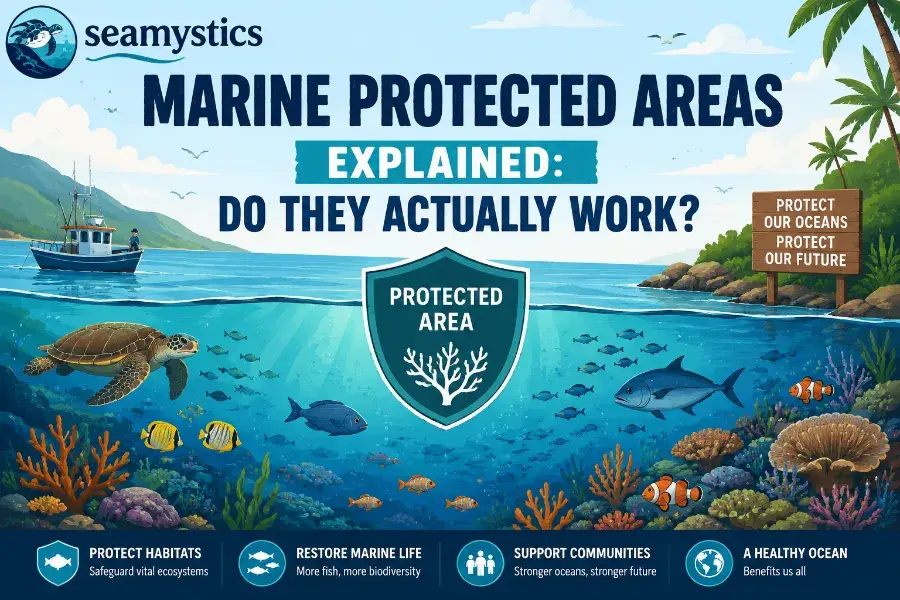

The world’s oceans face growing pressure from overfishing, pollution, climate change, and habitat destruction. Every year, these threats reduce marine biodiversity and weaken the ecosystems that millions of people depend on for food, jobs, and coastal protection. That is why conversations about marine protected areas explained have become more important than ever. While many people see these protected zones as the solution to ocean conservation, others question whether they truly deliver long-term results.
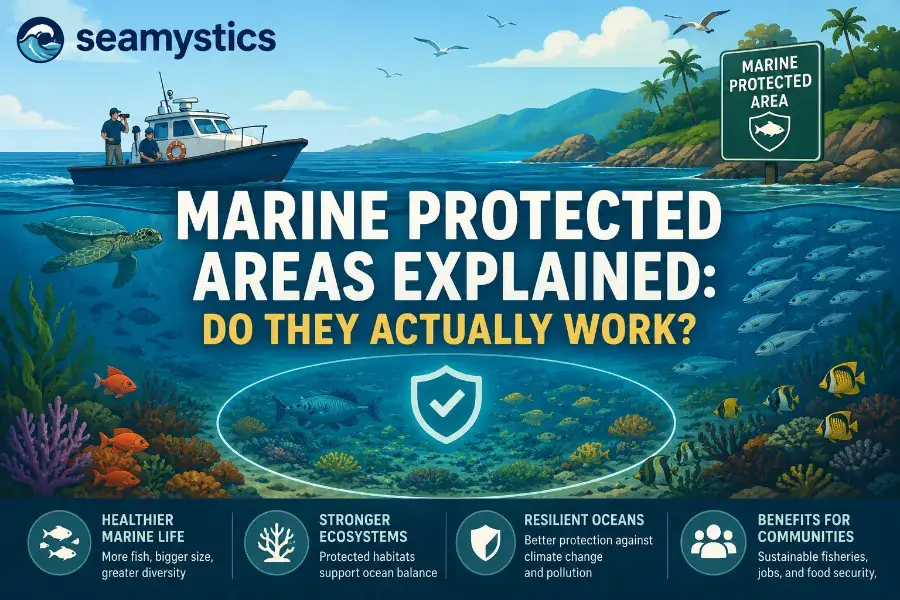
The answer is more encouraging than many expect. When governments create well-designed marine protected areas (MPAs) and manage them effectively, marine life often recovers faster than surrounding waters. Fish populations increase, coral reefs become healthier, and endangered species gain safe places to breed and grow. However, success depends on strong protection, scientific monitoring, and community support.
you can read our blog plastic pollution facts
Key Takeaways
| Topic | Key Insight |
|---|---|
| What is an MPA? | A protected section of the ocean managed to conserve marine life and habitats. |
| Do MPAs work? | Yes, when properly managed and enforced. |
| Main Benefits | More fish, healthier reefs, stronger ecosystems, and improved biodiversity. |
| Biggest Challenge | Weak enforcement and limited funding reduce effectiveness. |
| Global Goal | Protect at least 30% of the world’s oceans by 2030. |
What Are Marine Protected Areas?
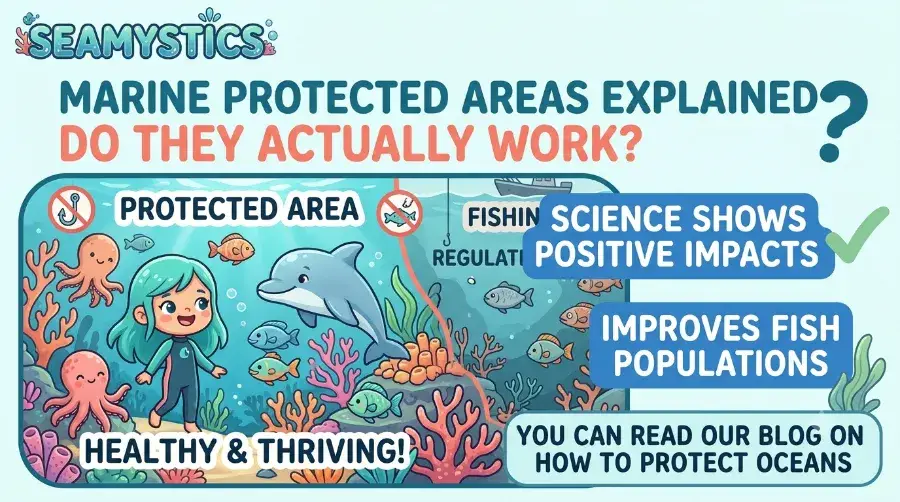
Marine Protected Areas, commonly called MPAs, are sections of oceans, seas, estuaries, or coastal waters where human activities receive special management to protect marine ecosystems. Some MPAs completely prohibit fishing and mining, while others allow carefully regulated activities.
The main purpose is simple: give marine life enough space and time to recover from human pressure.
Depending on local conservation goals, an MPA may protect:
- Coral reefs
- Seagrass meadows
- Mangrove forests
- Deep-sea habitats
- Fish spawning grounds
- Whale migration routes
- Sea turtle nesting beaches
Scientists compare MPAs to national parks on land. Instead of protecting forests or mountains, they protect underwater ecosystems that support countless species.
Why Marine Protected Areas Matter
Healthy oceans support life far beyond the coastline. They produce much of the oxygen people breathe, regulate Earth’s climate, absorb carbon dioxide, and provide food for billions of people.
Without protection, marine habitats continue to decline because of:
- Overfishing
- Plastic pollution
- Coastal development
- Climate change
- Coral bleaching
- Illegal fishing
When these pressures continue unchecked, ecosystems become less productive and more vulnerable.
Marine protected areas help reverse this trend by reducing human impacts while allowing natural ecological processes to recover.
How Marine Protected Areas Work
Every MPA has different management rules. Scientists and governments design regulations based on local environmental needs.
Some protected areas allow tourism but ban commercial fishing. Others permit traditional fishing while prohibiting destructive methods like bottom trawling.
The strongest protection comes from No-Take Marine Reserves, where removing marine life is prohibited.
Typical Management Measures
| Protection Tool | Purpose |
| Fishing limits | Prevent overharvesting |
| No-take zones | Allow full ecosystem recovery |
| Habitat restoration | Repair damaged ecosystems |
| Scientific monitoring | Measure ecosystem health |
| Patrol and enforcement | Prevent illegal activities |
Research consistently shows that stricter protection generally produces better ecological outcomes.
Do Marine Protected Areas Actually Work?
This question has attracted decades of scientific research.
The short answer is yes—but only when MPAs receive proper protection and long-term management.
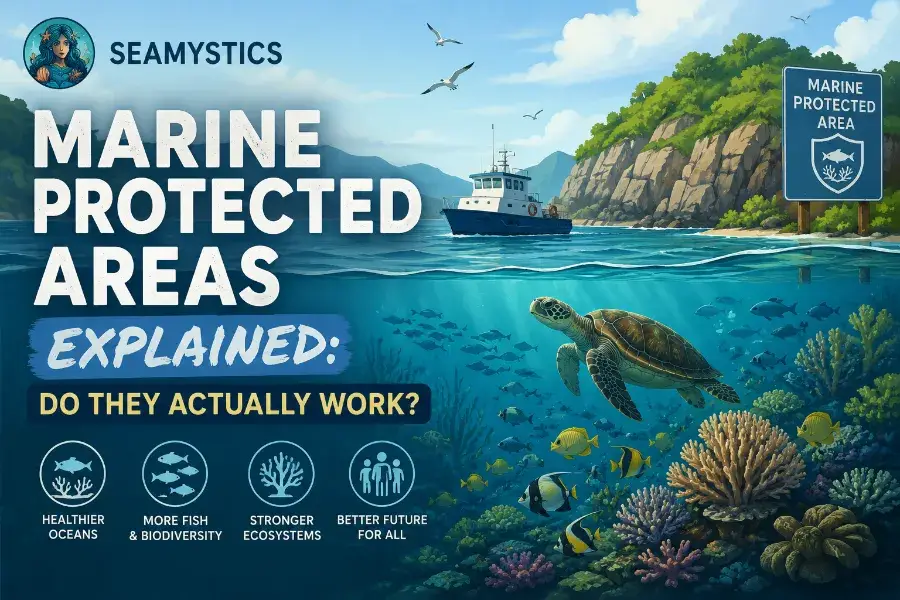
Well-managed MPAs commonly show:
- Larger fish populations
- Greater biodiversity
- Increased coral cover
- More breeding adults
- Higher survival rates for endangered species
- Better ecosystem resilience
Marine species often reproduce inside protected waters. Their young later move into surrounding fishing areas, creating what scientists call the spillover effect. This process benefits both conservation and local fisheries.
Studies have documented fish biomass increasing several times over within fully protected marine reserves after years of consistent protection.
Latest Global Progress
Many countries continue expanding marine conservation efforts.
Global Marine Protection Progress
| Year | Estimated Ocean Protected |
| 2010 | ~1% |
| 2015 | ~3% |
| 2020 | ~7% |
| 2024 | ~8%–9% |
Although progress continues, scientists agree much more protection is needed to conserve marine biodiversity effectively.
Simple Trend Chart
Ocean Protection Growth
2010 ▓
2015 ▓▓▓
2020 ▓▓▓▓▓▓▓
2024 ▓▓▓▓▓▓▓▓▓
The steady increase reflects growing international investment in marine conservation, although protected areas still cover only a small share of the world’s oceans.
Conclusion
Marine protected areas are one of the most effective tools available for conserving ocean life, but they are not a complete solution on their own. When governments, scientists, local communities, and conservation organizations work together, well-managed MPAs help restore fish populations, protect fragile habitats, strengthen biodiversity, and improve the resilience of marine ecosystems. These benefits also support coastal economies, sustainable fisheries, and future generations that depend on healthy oceans.
At the same time, creating an MPA is only the first step. Strong enforcement, ongoing scientific monitoring, adequate funding, and public support determine whether a protected area succeeds. As ocean temperatures rise and human pressures continue to grow, expanding and effectively managing marine protected areas will play a vital role in safeguarding marine life. Protecting the ocean today is an investment in a healthier, more sustainable future for both people and the planet.