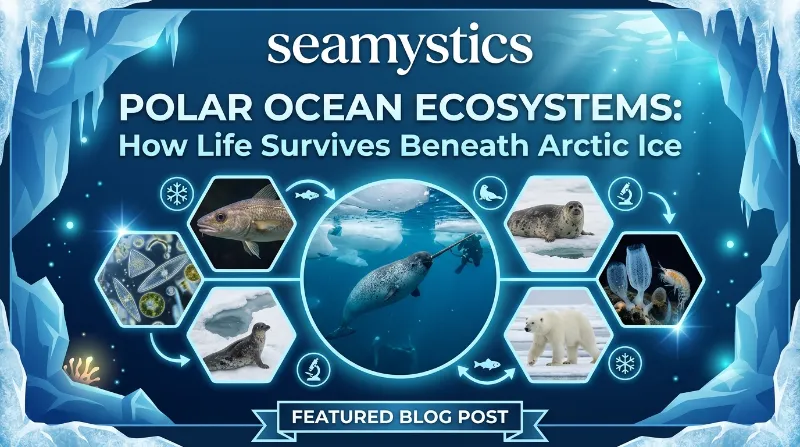

Picture total darkness for four straight months. The water is cold enough to freeze on contact. A ceiling of ice, several feet thick, presses down from above. Most creatures would not last a week there. Yet a full polar ocean ecosystem hums along under these exact conditions, packed with fish, algae, seals, and tiny drifting organisms that never see the sun for half the year. This hidden world beneath the Arctic and Antarctic ice is one of the toughest habitats on Earth. It is also, strangely, one of the most productive.
Tide Pool Ecosystem A Complete Guide to Life Between the Tides
Scientists have spent decades trying to understand how this happens. Recent expeditions have turned up answers nobody expected. This guide walks through what actually lives under the ice, how these species pull off their survival tricks, and what the latest data says about a system now changing faster than almost anywhere else on the planet.
Deep Sea Coral Ecosystems The Reefs That Never See Sunlight
TL;DR: A polar ocean ecosystem survives brutal cold and months of darkness through microscopic algae that grow directly inside sea ice. Animals time their whole life cycle around the short bursts of sunlight each year. Warming water and shrinking ice, confirmed by NSIDC and NASA data through 2026, are now shifting food supplies for krill, fish, seals, and whales across both poles.
Coastal Upwelling Ecosystems Why Some Waters Explode With Life
Key Takeaways
| Topic | Quick Fact |
|---|---|
| Arctic sea ice minimum, 2025 | 4.60 million km² recorded on September 10, 2025, the 10th lowest on record (NSIDC) |
| Arctic winter maximum, 2026 | 14.29 million km² on March 15, 2026, statistically tied for the lowest winter peak since 1979 |
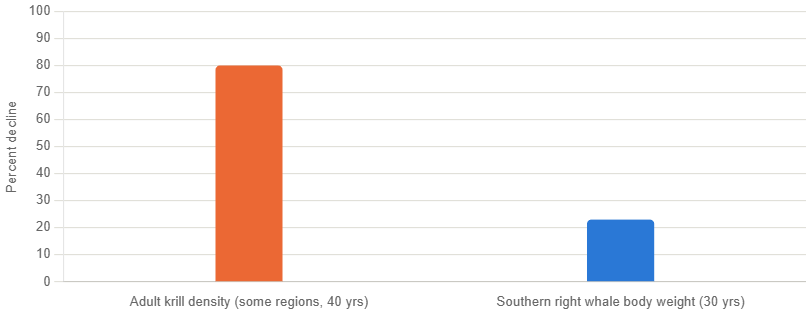
| Antarctic krill decline | Adult krill density has dropped by 70 to 80 percent in some Southwest Atlantic areas over 40 years |
| Under ice marine life | Arctic microalgae can photosynthesize in near total darkness, building biomass by late March (AWI, Nature Communications) |
| Southern right whale impact | Body weight down 23 percent over three decades tied to reduced krill supply |
| Core survival strategy | Sea ice algae and timed blooms fuel the entire food chain, from copepods to whales |
What Is a Polar Ocean Ecosystem?
A polar ocean ecosystem is the web of marine life found in and around the Arctic Ocean and the Southern Ocean surrounding Antarctica. It includes everything from bacteria trapped inside sea ice to blue whales feeding far offshore. These waters sit at the top and bottom of the globe. Because of that, they deal with extremes most other oceans never face.
Oyster Reef Ecosystems The Underrated Filter of Coastal Waters
Sunlight disappears completely during the polar night, sometimes for months at a stretch. Sea ice acts like a lid. It changes how heat, oxygen, and nutrients move between the air and the water below. Despite this, polar marine biology research keeps showing these waters are not empty or frozen solid. They are alive, and in some seasons, remarkably productive.
Seamount Ecosystems The Underwater Mountains Teeming With Life
That productivity does not happen randomly. It follows a tight, seasonal rhythm. Light, ice cover, and a handful of keystone species drive the whole pattern. This is the same underlying logic behind other tightly timed coastal systems, something we break down further in our estuary ecosystem guide.
The Arctic Ocean Ecosystem: Life at the Top of the World
The Arctic Ocean ecosystem centers on sea ice itself, not just the open water beneath it. Unlike Antarctica, which is a continent surrounded by ocean, the Arctic is an ocean surrounded by continents. That difference shapes everything about how nutrients flow and where animals gather.
Abyssal Plain Ecosystem What Lives on the Ocean’s Flattest Floor
Each spring, as sunlight returns, the underside of the ice turns a rusty brown color. This is ice algae. It is often the very first sign of life waking up after the dark winter. These algae cling to channels and pockets inside the ice, using whatever faint light filters through the snow and frozen surface above them.
Under Ice Marine Life: What Lives Beneath the Frozen Surface
Under ice marine life is far more active than older textbooks used to suggest. In 2011, a NASA-backed expedition called ICESCAPE, led by Stanford researcher Kevin Arrigo, found a massive phytoplankton bloom growing directly underneath the Arctic ice pack in the Chukchi Sea. Researchers had assumed ice blocked too much light for that kind of bloom. So the discovery reshaped how scientists model Arctic productivity. For more detail on how researchers classify these food webs, WHOI’s overview of polar marine life is a useful companion resource.
Life under the ice is not limited to algae. Common residents of this layered habitat include:
- Ice algae and phytoplankton, which form the base of the food web
- Copepods and amphipods, tiny crustaceans that graze on algae and feed almost everything above them
- Arctic cod, a small but critical fish species that links plankton to larger predators
- Ringed seals, which use breathing holes in the ice and rely on cod-rich waters
- Polar bears, which hunt seals from the ice edge and depend entirely on stable sea ice to do so
The MOSAiC Expedition: A Year Frozen in the Arctic
The MOSAiC expedition pushed this understanding even further. Between 2019 and 2020, the German icebreaker Polarstern drifted, frozen into the pack ice, for over a year. It carried scientists from twenty countries across the central Arctic. Their goal was to study the ocean, ice, and atmosphere as one connected system, including during the pitch black months of polar night.
Findings from that expedition, led by Dr. Clara Hoppe at the Alfred Wegener Institute, showed something surprising. Arctic microalgae at 88 degrees north began rebuilding biomass through photosynthesis as early as the end of March. At that point, the sun still sat barely above the horizon. This proved that photosynthesis can occur at far lower light levels, and likely at greater depths, than researchers had assumed.
How Arctic Species Cope With Months of Darkness
Survival here comes down to timing and storage, not brute toughness. Arctic cod pack on fat reserves during the brief productive summer. They then live off those reserves through the long winter. Copepods do something similar. They enter a low energy resting state deep in the water column until light and food return.
Sea ice plays a supporting role that goes beyond simply providing a surface for algae to grow on. Research published in Communications Earth and Environment in 2026 found that mechanical ridging releases frozen particulate organic carbon back into the water. Ridging happens when ice sheets crash together and break apart. This gives grazing organisms like tintinnid ciliates a food source even in total winter darkness, something scientists had not fully mapped out before.
Mesopelagic Zone Ecosystem Life in the Ocean’s Twilight Zone
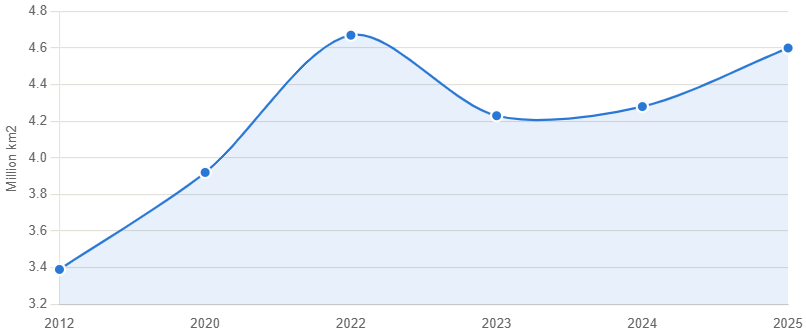
The scale of ice loss in the Arctic has become one of the most closely tracked indicators of change on the planet. Here is what the last several years of NSIDC and NASA data show for the September minimum extent, the point each year when Arctic sea ice shrinks to its smallest size.
(Arctic sea ice minimum trend chart shown above remains valid here.)
The chart shows the record low of 2012 at 3.39 million square kilometers. Some years climbed after that, while others dipped again. The trend line still sits well below levels recorded before 2007. According to NSIDC, the last nineteen years have produced the nineteen lowest Arctic sea ice extents ever recorded by satellite. That pattern held again in 2025, when the minimum came in at 4.60 million square kilometers. It held again in March 2026, when the winter maximum tied the lowest ever recorded at 14.29 million square kilometers.
For a deeper look at how coastal and nearshore habitats respond to changing water conditions, our guide on the tide pool ecosystem covers a similarly delicate but very different kind of marine environment.
Antarctic Ecosystem Facts: Life at the Bottom of the World
The Southern Ocean around Antarctica runs on a different rhythm than the Arctic. The underlying idea, though, is the same. Life depends on sea ice, on tightly timed blooms, and on one small animal that almost everything else relies on to survive.
The Southern Ocean Food Web
Antarctic ecosystem facts almost always start with krill, and for good reason. Antarctic krill, a shrimp-like crustacean roughly the size of a paperclip, sits at the center of the entire food web. Whales, seals, penguins, fish, and seabirds all depend on dense krill swarms, either directly or through a short chain of predators.
Krill spend their early life sheltering inside sea ice. They use the cracks and undersides as both a nursery and a feeding ground, much like Arctic cod rely on ice cover further north. Winter sea ice protects young krill from predators. It also gives them access to ice algae during months when open water offers little food. When that ice forms late or melts early, fewer larvae make it through the season.
Krill: The Tiny Engine of the Antarctic Ecosystem
Recent research paints a troubling picture for this keystone species. According to a review covered by Scientific American, adult krill populations in some regions have fallen by 70 to 80 percent over the past 40 years. The Southwest Atlantic sector once held more than a quarter of the entire global krill population. That density has thinned out dramatically, according to data from the Australian Antarctic Program.
The knock-on effects reach far beyond krill itself. A 2024 study tracking southern right whales near South Africa found their average body weight had dropped by 23 percent over three decades. Researchers linked the change directly to reduced krill availability in Southern Ocean feeding grounds. Lower body weight in these whales has meant fewer calves born each season and slower growth in juveniles that do survive.
(Krill and whale decline chart shown above remains valid here.)
Krill Fishing and Management Gaps
Fishing pressure adds another layer to the problem. In 2024, the krill fishery in the CCAMLR managed Area 48 pulled in roughly 0.5 million tons. That was the highest catch ever recorded in that zone, finally passing the previous peak set in the early 1980s. That same year, the Commission for the Conservation of Antarctic Marine Living Resources failed to renew its spatial catch limits. This left a gap in management just as climate pressure on krill stocks is increasing.
Numbers alone do not capture what is happening across the Southern Ocean, so the table below lays out the most current, verified figures side by side.
| Metric | Arctic Ocean | Antarctic (Southern Ocean) |
|---|---|---|
| Latest minimum extent | 4.60 million km² (September 10, 2025) | 1.98 million km² (March 1, 2025), 4th straight year below 2.0 million km² |
| Latest maximum extent | 14.29 million km² (March 15, 2026), tied lowest on record | 17.81 million km² (September 17, 2025), 3rd lowest on record |
| Keystone species | Arctic cod | Antarctic krill |
| Top predator example | Polar bear | Orca and leopard seal |
| Biggest current pressure | Rapid ice thinning and habitat loss | Krill decline plus expanding commercial fishing |
For more background on how these two systems compare, the Smithsonian’s guide to Arctic and Antarctic ecosystems is a solid companion resource.
Polar Marine Biology: Shared Survival Strategies
Arctic and Antarctic species sit at opposite ends of the planet. Even so, they have landed on strikingly similar solutions to the same core problem: surviving months without light or reliable food. Polar marine biology research keeps circling back to a small set of shared strategies. These show up again and again across completely unrelated species.
Common Adaptations Across Both Poles
A few of the most important adaptations include:
- Antifreeze proteins. Many polar fish species produce natural antifreeze compounds in their blood. These stop ice crystals from forming inside their bodies even in subzero water.
- Fat storage over speed. Many species build large fat reserves during short productive seasons. They slow their metabolism the rest of the year instead of staying active year round.
- Ice-based nurseries. Both krill in the Antarctic and copepods in the Arctic use the underside of sea ice as shelter for their young. This protects them from open water predators.
- Tight timing with light. Breeding, migration, and feeding all cluster around the brief windows of sunlight. Almost nothing in these systems happens randomly.
- Deep water buffering. Some species migrate to slightly warmer, deeper layers during the harshest months. They return to the surface once conditions improve.
Why Timing Matters More Than Toughness
These strategies are not just interesting trivia. They explain why a single missed ice season, or one year of unusually warm water, can ripple through an entire food web within months rather than decades. Ice has formed late by two or three weeks repeatedly since 2007, according to NOAA’s Arctic program. Species relying on that timing simply do not get a second chance that year.
Why the Polar Ocean Ecosystem Matters for the Whole Planet
A healthy polar ocean ecosystem does far more than support penguins and polar bears, as charismatic as those animals are. Its effects reach global weather, ocean currents, and coastlines thousands of miles away.
The Albedo Effect and Global Climate
Sea ice reflects sunlight back into space through a property called albedo. This helps regulate global temperature. As ice thins and shrinks, more dark ocean water gets exposed. That water absorbs heat instead of reflecting it, adding to warming in a feedback loop scientists have tracked closely for years.
A System Under Pressure
According to a comprehensive report from Ocean & Climate Platform, polar oceans sit at the center of both the climate crisis and the biodiversity crisis at the same time. Changes here affect global weather patterns, ocean currents, and species that migrate thousands of miles to feed in these waters. You can read more in their special report on the polar ocean, which lays out the connections in detail.
Coastal habitats far from the poles feel these shifts too, often through changing currents and nutrient flow. If you want to see how a different but equally sensitive marine habitat responds to environmental pressure, our guide to the salt marsh ecosystem is worth a read. Our broader estuary ecosystem guide ties several of these coastal systems together in one place, and you can explore more marine habitat breakdowns on Sea Mystics directly.
The practical upshot for anyone tracking marine science is simple. Warming trends confirmed through 2026 satellite data are not distant projections anymore. They are showing up right now in whale body weight, krill catch records, and ice extent measurements that scientists publish every single month.
Frequently Asked Questions
What is the biggest difference between the Arctic and Antarctic ocean ecosystems?
The Arctic is an ocean surrounded by land, while Antarctica is a continent surrounded by ocean. This changes how currents move nutrients. It also explains why the two systems support somewhat different food webs, even though both rely heavily on sea ice.
Can anything actually survive under Arctic ice in total darkness?
Yes. Research from the MOSAiC expedition confirmed that microbial grazers, and even some algae, remain active through the polar night. They feed on organic material stored in the ice from the previous growing season.
Why is krill so important to the Antarctic ecosystem?
Krill sits at the base of the food chain. It is the primary food source for whales, seals, penguins, and many fish species. A decline in krill numbers has measurable effects on predator health, including whale body weight and reproduction rates.
Is Arctic sea ice actually recovering or still declining?
Recent data does not show recovery. The winter maximum recorded in March 2026 statistically tied the record low set in 2025. The last nineteen years have produced the nineteen lowest minimum extents ever recorded.
How do polar fish avoid freezing in subzero water?
Many polar fish species produce natural antifreeze glycoproteins in their blood and tissue. These prevent ice crystals from forming and damaging their cells even when water temperatures drop below freezing.
Conclusion
The polar ocean ecosystem is proof that life finds a way even under some of the harshest conditions on Earth. Algae grow sideways inside sea ice. Whales time their entire migration around a few weeks of sunlight. What the latest research makes clear, though, is that this balance is fragile and already shifting. Ice extent records, krill population studies, and whale health data all point in the same direction. The changes are happening on a timeline measured in years, not centuries. Understanding how this hidden world works is the first step toward protecting it. Scientists working on expeditions like MOSAiC are giving us a clearer picture than ever before of what is really happening beneath the ice.
References
- National Snow and Ice Data Center, Arctic sea ice minimum and maximum extent reports, 2025 to 2026
- NASA Science, Arctic Winter Sea Ice Ties Record Low, 2026
- Alfred Wegener Institute, Photosynthesis in Near Darkness study, Nature Communications
- Woods Hole Oceanographic Institution, Polar Life ecosystems overview
- Ocean & Climate Platform, Special Report: The Polar Ocean at the Heart of Climate and Biodiversity Crises
- Smithsonian Ocean, Arctic and Antarctic ecosystems
- Scientific American, Krill Are Disappearing from Antarctic Waters
- PNAS, Adjusting the Management of the Antarctic Krill Fishery, 2025
- Nature Scientific Reports, Population changes in a Southern Ocean krill predator, 2024
- NOAA Arctic Report Card, Sea Ice chapter, 2025