
A lone seal rests on a quiet ice floe in Antarctica, feeling safe above the waterline. Then, without warning, three heads rise from the water in perfect unison. Seconds later, a wave rolls the ice and tips the seal into open water. This is orca hunting behavior in action, and it is one of the smartest predator strategies in the entire animal kingdom. Killer whales, also called orcas, rarely hunt alone. Instead, they work as tight family teams, using signals, patience, and shared skill to bring down prey that no single whale could catch on its own. Along the way, we will also touch on blue whale facts size comparisons, because understanding the biggest animal on Earth helps explain why orcas depend so heavily on group strategy rather than raw size.
To get a better understanding of how whale facts marine mammals breaks down exactly what to expect.
This guide breaks down the real science behind orca teamwork, the exact techniques different pods use around the world, and why cooperation beats brute strength every single time.
If you want to learn more about Humpback whale’s annual migration route guide for practical tips and expert advice.
If you want to learn more about seal vs sea lion tips and expert advice.
Key Takeaways
| Fact | Detail |
|---|---|
| Primary hunting method | Coordinated pack hunting using signals and role division |
| Common pod size | 3 to 9 whales during active hunts, though pods can merge into larger groups |
| Top hunting speed | Up to 56 km/h (about 35 mph) during pursuit |
| Wave washing population | Roughly 100 known B1 pack ice orcas in Antarctica |
| 2025 breakthrough study | Drone footage of 26 Norwegian orcas hunting herring in coordinated pairs |
| Leadership structure | Matriarch led family groups, called matrilines |
| Prey range | Seals, herring, sharks, and occasionally whale calves |
Why Orcas Hunt in Packs Instead of Alone
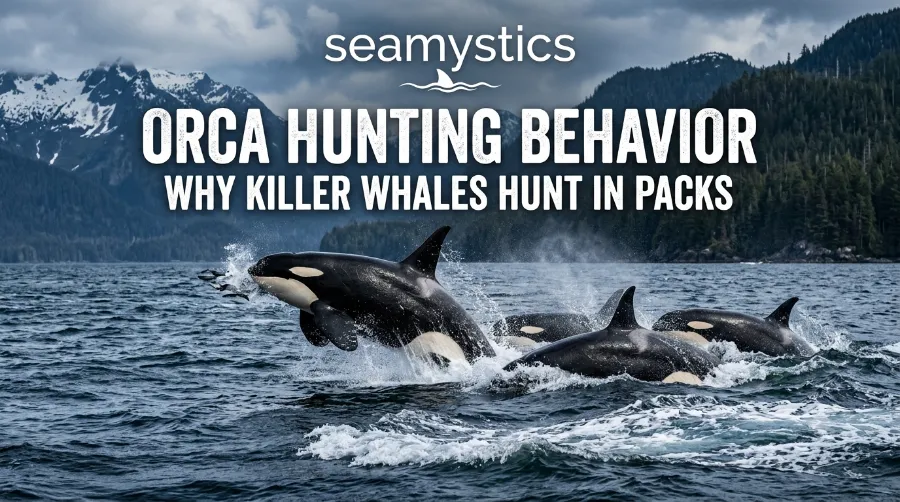
Orcas belong to the dolphin family, and like many marine mammals, they are social to the core. A single orca is a fast, intelligent predator. However, many of their preferred prey species are either too large, too fast, or too well protected for one whale to handle safely. As a result, pods have developed hunting styles that rely on numbers, timing, and communication rather than pure force.
If you want to learn more about narwhal facts arctic whale guide for practical tips and expert advice.
Matriarchal Leadership and Family Bonds
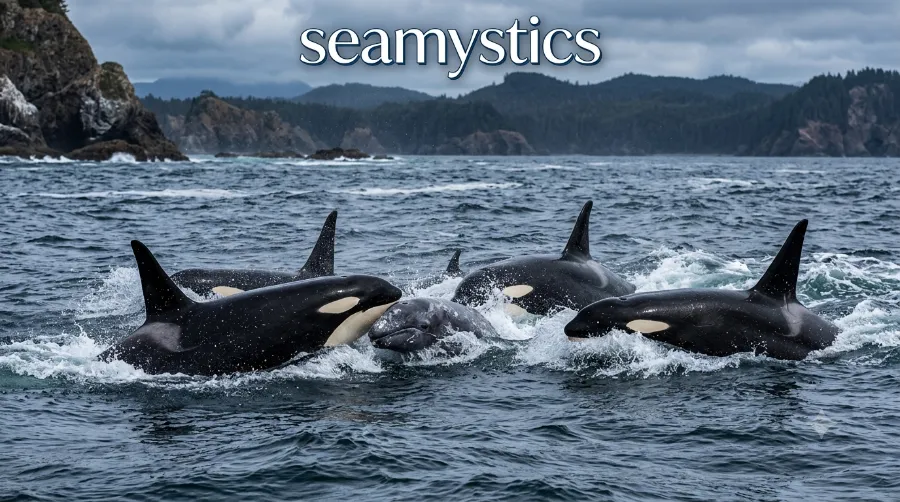
Most orca pods are built around a senior female, known as the matriarch, who often leads for decades. Her daughters, sons, and grandchildren typically stay close to her for life, so a pod is really an extended family unit. Because of this closeness, individuals in a pod tend to swim within about 100 meters of each other and coordinate almost everything, including feeding and travel. This tight bond means young whales grow up watching, and eventually joining, real hunts from a very early age.
If you want to learn more about manatee facts marine mammal tips and expert advice.
If you want to learn more about whale song communication explained tips and expert advice.
Communication Through Dialects and Clicks
Every pod develops its own set of clicks, whistles, and pulsed calls, almost like a family accent. These calls help whales stay in contact underwater, confirm each other’s position, and signal when prey has been spotted. Since sound travels faster and farther underwater than light, this acoustic system gives orcas a major advantage over prey that cannot hear them coming. In fact, some hunting calls are pitched specifically to sit inside the hearing range of target species, which helps herd fish without alerting them too early.
Blue Whale Facts Size: What Ocean Giants Reveal About Orca Pack Hunting
To fully appreciate why orcas hunt as a team, it helps to look at the other end of the size scale. Blue whale facts size comparisons put things into perspective quickly. A blue whale can stretch close to 30 meters long and weigh nearly 200 tons, making it the largest animal ever known to exist, according to detailed blue whale facts compiled by whale conservation researchers. An adult orca, by contrast, usually reaches around 6 to 8 meters, meaning a single blue whale is roughly four times longer than one orca.
If you want to learn more about sperm whale deep divetips and expert advice.
Despite this massive size gap, orcas are still capable of targeting young or weakened whales, though never a healthy adult blue whale alone. This is only possible because of coordinated group tactics rather than individual strength. As one detailed guide on blue whale size and biology explains, sheer scale alone does not guarantee safety in the ocean; behavior and group dynamics matter just as much. This is precisely why orca hunting behavior focuses on strategy, timing, and teamwork instead of trying to match prey size for size. For a broader look at marine mammal biology and comparisons across species, our whale facts and marine mammals guide covers this topic in more depth.
Real Hunting Techniques Orcas Use in the Wild
Different orca populations around the world have developed their own specialized hunting styles, shaped by local prey and environment. These techniques are learned, not instinctive, which means calves must be taught by older pod members over several years.
Here are some of the most well documented techniques used today:
- Wave washing: Used by Antarctic pack ice orcas to knock seals off floating ice
- Carousel feeding: Used by Norwegian orcas to trap herring into tight balls
- Coordinated pair hunting: Two whales working in sync to strike prey from precise angles
- Beach hunting: Deliberately stranding to grab prey close to shore, then wriggling back to sea
- Karate chop tactic: A precise tail strike aimed at sharks to flip and disable them
Wave Washing Antarctic Seals
In the icy waters off the western Antarctic Peninsula, a specialized group known as B1 pack ice orcas has mastered wave washing. Researchers who spent 75.4 hours observing three separate groups during January 2009 recorded 16 confirmed seal kills, along with one Antarctic minke whale. Interestingly, these orcas targeted Weddell seals in 14 out of 15 identified seal kills, even though Weddell seals made up only 15 percent of the seals available. Meanwhile, crabeater seals, which represented 82 percent of the local population, were almost entirely avoided, most likely because they are more aggressive and harder to dislodge safely.
Today, scientists estimate only around 100 of these highly specialized wave washing orcas exist worldwide. Wildlife filmmakers who have tracked this population for close to a decade describe the coordination as remarkable, since the whales must swim side by side at matching speed and dive at the exact same moment to generate a wave strong enough to tip a seal into the water.
Carousel Feeding for Herring
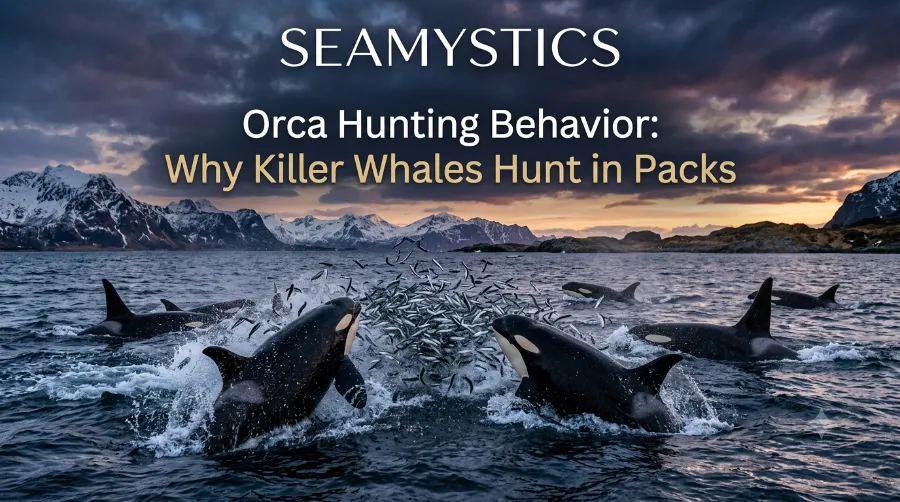
Off the coast of Norway, orcas use an entirely different approach suited to schooling fish rather than seals. In carousel feeding, a pod of typically 3 to 9 whales surrounds a school of herring and slowly herds them into a tight, spinning ball near the surface. The whales flash their white undersides, blow bubbles, and slap their tails to keep the fish bunched together. Once the ball is tight enough, several whales take turns stunning fish with powerful tail strikes while the rest continue herding to hold the formation.
Coordinated Pair Hunting
A 2025 study published in the journal Current Biology added fresh detail to this picture. Researchers used camera equipped drones to observe a pod of 26 orcas hunting migrating herring off Norway, based on footage collected during the winter of 2016 to 2017. The team found that pairs, typically one larger whale and one smaller whale, swam together toward prey at specific, repeated angles, striking with precision that appeared to improve with practice over time. According to the biologists involved, this pairing strategy likely developed because hunting in shallow coastal waters, where boats and human activity are common, requires tighter cooperation to succeed consistently.
Karate Chop and Shark Hunting
Orcas are also known to hunt sharks, including great white sharks, using a technique researchers have nicknamed the karate chop. A 2023 study using genetic evidence off the coast of Australia confirmed killer whale predation on white sharks, based on bite pattern analysis of a recovered shark carcass. Witnesses reported the same catalogued orcas, tracked across eight separate sightings between 2007 and 2023, working together to corral and subdue large prey, which suggests long term hunting partnerships rather than random encounters.
Why Hunting in Packs Beats Hunting Alone
Group hunting offers several clear advantages over solo attempts, and researchers have documented these benefits across multiple orca populations.
| Hunting Style | Success Rate Factors | Typical Prey |
|---|---|---|
| Solo hunting | Limited to smaller, slower prey | Small fish, squid |
| Pair hunting | Higher precision through role division | Herring, fast schooling fish |
| Full pod hunting | Highest success on large or dangerous prey | Seals, sharks, whale calves |
Because pack hunting spreads the risk across several whales, no single individual has to take on a dangerous prey item alone. Additionally, group hunts allow orcas to herd, distract, and strike at the same time, which dramatically increases the odds of a successful catch. This is one reason orca hunting behavior has remained largely unchanged for generations, even as prey populations shift due to environmental pressure.
How Orca Pods Teach Hunting Skills to Calves
Young orcas are not born knowing how to hunt. Instead, they learn gradually through a long apprenticeship inside the pod, often stretching over several years.
- Observation stage: Calves swim close to adults during hunts without participating directly
- Practice on easy prey: Young whales are guided toward slower or weaker prey to build confidence
- Supervised attempts: Adults allow calves to attempt strikes while staying nearby to assist if needed
- Skill refinement: Repeated practice sharpens timing, angle, and coordination with podmates
- Full participation: Mature whales take on equal roles in complex hunts like wave washing or carousel feeding
This teaching process explains why hunting techniques often differ so sharply between regions. A pod in Norway teaches carousel feeding because that is what its ancestors mastered, while a pod in Antarctica passes down wave washing instead. For readers interested in how these family units are structured beyond hunting, our guide on orca pod social structure explores matriline bonds in more detail.
Interestingly, not every interaction orcas have reflects predation. Some recent behavioral research has even documented what researchers call prosocial acts. A 2025 study recorded 34 separate cases across four oceans where wild orcas appeared to offer prey items to humans on boats, in the water, and on shore, involving 18 different species offered as gifts. While scientists are still debating the exact motivation, these findings hint at social behaviors that extend beyond simple survival instinct.
Frequently Asked Questions
Do orcas always hunt in the same pack?
Most orcas stay within their family matriline for life, so their hunting partners tend to remain consistent for years or even decades.
How many orcas are usually involved in a single hunt?
Group size varies by prey. Herring hunts often involve 3 to 9 whales, while larger or more dangerous prey may require a bigger combined pod effort.
Can orcas really hunt animals as large as whales?
Yes, but almost always through coordinated group tactics targeting young, sick, or isolated individuals rather than a healthy adult in its prime.
Why do different orca populations use different techniques?
Because hunting methods are learned and passed down through generations, techniques evolve based on local prey type and environment rather than instinct alone.
Are blue whale facts size details relevant to orca hunting behavior?
Yes, since understanding the extreme size gap between orcas and blue whales highlights why teamwork, not strength, drives successful hunts in the open ocean.
Conclusion
Orca hunting behavior stands out as one of the clearest examples of intelligence and cooperation in the natural world. From wave washing seals in Antarctica to carousel feeding herring off Norway, every technique relies on family bonds, learned skill, and precise timing rather than individual power. Blue whale facts size comparisons only reinforce this point, showing that even the largest animal on the planet cannot rely on size alone for total safety. As research continues into 2026 and beyond, scientists are likely to uncover even more detail about how these remarkable marine mammals plan, teach, and execute their hunts together. To explore more verified whale facts and marine mammals research, visit our full pillar guide on whale facts and marine mammals or browse more marine life coverage at Sea Mystics.
References
- National Geographic, “These orcas have mastered wave washing,” 2025
- Current Biology via Smithsonian Magazine, “Killer Whales Hunt Fish in Highly Coordinated Pairs,” 2025
- PubMed, “Testing the waters: Attempts by wild killer whales to provision people,” 2025
- NCBI, “Genetic Evidence of Killer Whale Predation on White Sharks in Australia”
- Wikipedia, “Carousel feeding”
- Whale and Dolphin Conservation, “Facts About Blue Whales”
- Original Diving, “Blue Whale Facts”