
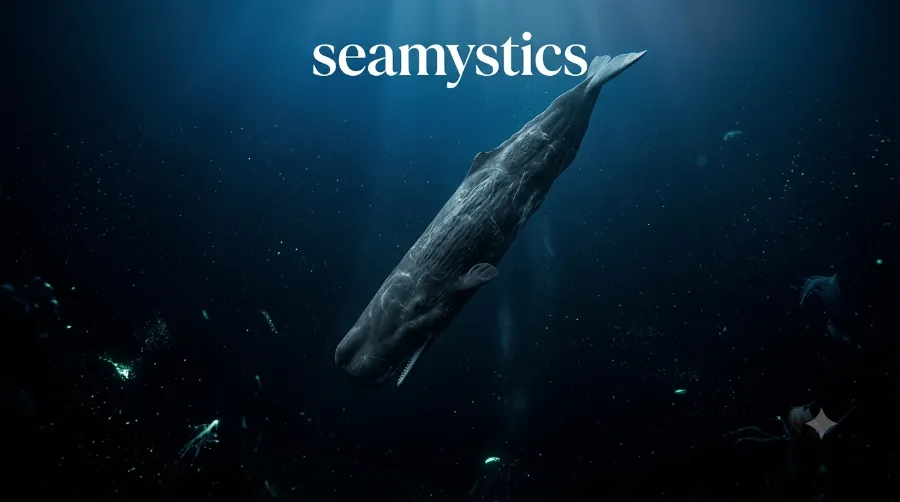

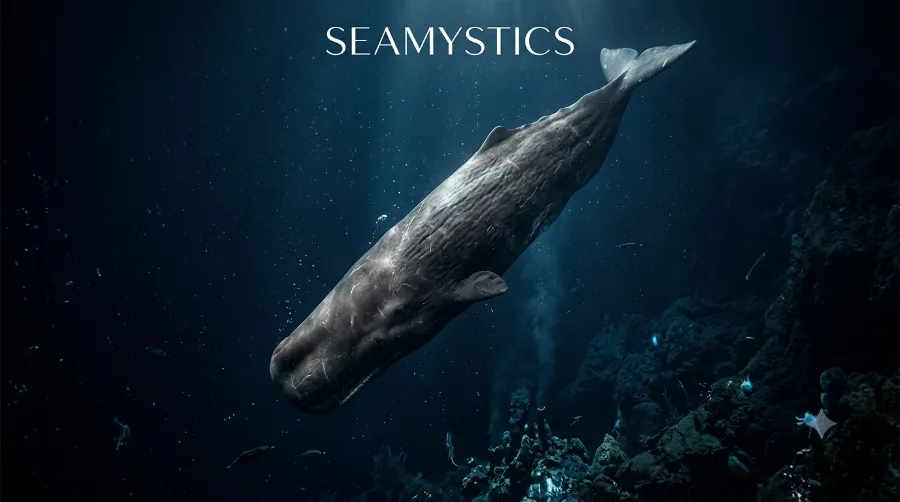
Picture total darkness. No light, no warmth, and pressure strong enough to crush a submarine. Now picture a fifty foot animal swimming calmly through that darkness like it’s an afternoon stroll. That is the reality of a sperm whale deep dive, and it remains one of the most jaw dropping feats in the animal kingdom.
If you want to learn more about sperm whale deep divetips and expert advice.
Sperm whales are not just big. They are built like living submarines, engineered by millions of years of evolution to handle depths that would kill almost any other mammal. Marine biologists have spent decades tracking these giants, and every new study reveals another layer of their incredible design. This guide breaks down exactly how they pull it off, using real data, recent research, and a bit of ocean wonder along the way.
If you want to learn more about manatee facts marine mammal tips and expert advice.
Key Takeaways
| Fact | Detail |
|---|---|
| Maximum recorded depth | Around 7,382 feet (2,250 meters) |
| Typical dive depth | 2,000 to 3,280 feet (600 to 1,000 meters) |
| Average dive time | Up to 45 minutes, sometimes over 90 |
| Key adaptation | Flexible, collapsible ribcage |
| Oxygen trick | High myoglobin levels in muscle tissue |
| Main food source | Deep sea squid, including giant squid |
| Conservation status | Vulnerable (IUCN), Endangered (US ESA) |
| Longest documented breath hold | Over 90 minutes |
What Makes a Sperm Whale Deep Dive So Extreme
A sperm whale deep dive is not a casual swim downward. It is a full body transformation that happens in seconds. Before descending, the whale slows its heart rate, redirects blood flow, and empties air from parts of its lungs. As a result, it becomes a completely different creature the moment it disappears beneath the waves.
Because of this, scientists consider the sperm whale one of the most specialized divers among marine mammals. Meanwhile, most land based mammals, including humans, would suffer serious injury attempting even a fraction of this depth. Therefore, understanding this process gives us a window into one of nature’s most efficient survival machines.
The Depth Record That Stunned Scientists
For a long time, researchers believed the sperm whale held the title of deepest diving marine mammal. According to tracking studies, sperm whales have been recorded plunging to depths of roughly 7,382 feet, which is deeper than most submarines can safely travel. That said, newer research from the Scripps Institution of Oceanography found that Cuvier’s beaked whales can actually dive even deeper, in some cases past 9,800 feet.
Even so, the sperm whale remains firmly in second place among marine mammals, and its dive numbers are still staggering. To put this in perspective, 7,382 feet is roughly one and a third miles straight down. Consequently, this single fact alone explains why the sperm whale continues to fascinate researchers studying whale facts marine mammals around the globe.
How Long Can They Stay Down
Depth is only half the story. Duration matters just as much, and sperm whales excel here too. Typically, a sperm whale dive lasts around 45 minutes, though longer dives past 60 or even 90 minutes have been documented by marine researchers.
During this time, the whale holds its breath completely. Unlike fish, it cannot pull oxygen from the water, so every second underwater relies entirely on stored oxygen. As a result, its entire body chemistry shifts into an efficient, low waste survival mode the instant it dives.
Whale Facts Marine Mammals Rely On to Survive Crushing Pressure
Deep sea pressure increases roughly one atmosphere for every 33 feet of depth. At 7,000 feet, that pressure would be enough to collapse the lungs and chest cavity of most large animals almost instantly. However, sperm whales have three major biological tools that prevent this from happening.
Firstly, their skeletal structure bends instead of breaking. Secondly, their blood and muscles store oxygen in ways most mammals cannot match. Thirdly, they use a unique internal organ to control buoyancy with incredible precision. Together, these traits explain some of the most remarkable whale facts marine mammals researchers have documented in the last few decades.
The Collapsible Ribcage
One of the sperm whale’s most important adaptations is a flexible ribcage that can partially collapse under pressure. Because the ribcage is not rigidly locked in place, the lungs can shrink safely instead of rupturing. This design also reduces how much nitrogen the blood absorbs, which lowers the risk of decompression sickness during ascent.
In comparison, human divers face serious danger from nitrogen buildup even at far shallower depths. Sperm whales avoid this problem almost entirely thanks to their unique chest structure. For readers curious how other ocean giants compare, the blue whale facts and size guide offers an interesting contrast in body engineering.
Oxygen Storage and Myoglobin
Before diving, a sperm whale does not take one giant gulp of air like a human preparing to swim underwater. Instead, it stores oxygen directly in its blood and muscle tissue using a protein called myoglobin. Sperm whales have myoglobin levels far higher than land mammals, which allows their muscles to hold enormous oxygen reserves.
In addition, their blood volume is proportionally larger than most mammals, packed with oxygen carrying red blood cells. During a dive, blood flow is redirected away from non essential organs and focused almost entirely on the brain and heart. This clever internal rationing is a major reason a sperm whale deep dive can last so long without harm.
The Spermaceti Organ and Buoyancy Control
Sitting inside the whale’s massive head is a strange, waxy substance called spermaceti. Historically, this organ was heavily hunted by whalers for oil, which pushed the species toward serious population decline. Today, scientists understand that spermaceti actually plays a critical role in buoyancy and possibly even echolocation.
By cooling or warming the spermaceti through nasal passages, the whale can change its density slightly. This helps it sink faster on the way down and rise more efficiently on the way back up. It is a built in ballast system, similar in concept to how submarines manage depth, though achieved through completely natural biology.
How Sperm Whales Find Food in Total Darkness
Sinking thousands of feet into pitch black water raises an obvious question. How does a sperm whale actually find food down there? The answer lies in one of the most powerful biological sonar systems on the planet.
Echolocation in the Deep
Sperm whales produce loud clicking sounds using air passages near the spermaceti organ. These clicks travel through the water, bounce off nearby objects, and return as echoes the whale can interpret. As a result, the whale builds a detailed mental map of its surroundings without needing any light at all.
According to NOAA Fisheries, sperm whale clicks are among the loudest sounds produced by any animal, reaching levels that can travel for miles underwater. This system is so precise that it allows the whale to detect prey the size of a soda can from a significant distance. For anyone interested in how other species use sound underwater, the whale song and communication guide explores this topic in more depth.
What They Are Hunting
The primary target of most sperm whale dives is squid, including deep sea and giant squid species that rarely surface. A single adult sperm whale can eat roughly one ton of food per day, largely made up of squid and some deep water fish. Because their prey lives in the mesopelagic and bathypelagic zones, the whale has no choice but to follow it into extreme depths.
Interestingly, scars found on sperm whale skin often come from battles with giant squid during these deep hunts. Researchers studying stomach contents have found squid beaks numbering in the thousands inside a single whale. This gives a rare, tangible clue into just how much hunting happens far below where any human eye can see.
Sperm Whale Deep Dive Behavior Compared to Other Marine Mammals
To fully appreciate the sperm whale, it helps to see how it stacks up against other deep diving species. The table below summarizes recent tracking data collected by marine research institutions.
| Species | Max Depth | Max Dive Duration | Typical Depth |
|---|---|---|---|
| Sperm Whale | 7,382 ft (2,250 m) | Up to 90+ minutes | 2,000 to 3,280 ft |
| Cuvier’s Beaked Whale | 9,874 ft (2,992 m) | Over 2 hours | Varies widely |
| Northern Bottlenose Whale | 7,500 ft (2,288 m) | Up to 98 minutes | Mostly mesopelagic |
| Elephant Seal | 5,000 ft (1,500 m) | Up to 2 hours | Around 1,640 ft |
As shown above, several species now compete with the sperm whale for deep diving records. Nevertheless, the sperm whale remains one of the most consistently studied and best understood of these extreme divers. Its size, global distribution, and vocal behavior make it easier for scientists to track compared to the more elusive beaked whales.
Real-Life Research: The Dominica Sperm Whale Project and Recent Studies
Much of what we know today comes from long term field research rather than lab experiments. In 2005, marine biologist Dr. Shane Gero founded the Dominica Sperm Whale Project, a long running study following more than 20 sperm whale family units in the Eastern Caribbean. This project has tracked individual whales for close to two decades, documenting their diving patterns, social bonds, and vocal dialects.
Similarly, NOAA Fisheries has conducted drone based surveys of sperm whales in the Gulf, including work carried out between June and August 2025, to estimate body length and monitor population health. These modern tools give researchers a clearer, non invasive way to study dive behavior without disturbing the animals. As a result, our understanding of the sperm whale deep dive has improved significantly over just the last few years.
Meanwhile, acoustic studies in the western North Atlantic have found that sperm whales often forage at three distinct depth bands, roughly 400 to 800 meters, 800 to 1,200 meters, and beyond 1,200 meters. According to this research, whales spend nearly half of their bottom dive time in the deepest of these three zones. This pattern suggests the deepest water often holds the richest squid hunting grounds, which is exactly why the whales keep returning there.
A Quick Look at Dive Stages
Understanding a sperm whale deep dive becomes easier when broken into clear stages. Below is a simplified breakdown based on current research.
- Surface preparation, where the whale takes several breaths and adjusts its lung volume.
- Descent phase, where the whale dives at roughly 5.5 feet per second toward the hunting zone.
- Bottom phase, where most feeding and echolocation activity occurs, often lasting 20 to 40 minutes.
- Ascent phase, where the whale rises steadily to avoid pressure related injury.
- Surface recovery, where the whale rests and breathes for several minutes before diving again.
This cycle repeats throughout the day, sometimes dozens of times, depending on food availability and the whale’s energy needs. Because each dive burns significant energy, sperm whales must balance depth, duration, and rest carefully. Over time, researchers have found that individual whales often develop consistent, almost habitual diving routines.
Why Deep Diving Matters for Conservation
Sperm whales are currently classified as Vulnerable by the IUCN and Endangered under the US Endangered Species Act. Historically, commercial whaling devastated global populations, largely due to demand for spermaceti oil and blubber. Even though large scale whaling ended decades ago, the species has never fully recovered to pre whaling numbers.
Today, new threats have emerged that directly affect their ability to dive and hunt safely. Underwater noise pollution from shipping and industrial activity can interfere with echolocation, making it harder for whales to locate prey. According to the World Wildlife Fund, deep sea ecosystems that sperm whales depend on are also facing growing pressure from human activity, which makes ongoing conservation research more urgent than ever.
Because sperm whales dive so deep and travel so widely, protecting them requires cooperation across multiple countries and ocean regions. Organizations like Whale and Dolphin Conservation continue to track populations, advocate for quieter shipping routes, and push for stronger marine protections. For readers who want to explore how other species face similar pressures, the humpback whale migration guide and the orca hunting behavior guide both cover related conservation themes.
Frequently Asked Questions
How deep can a sperm whale actually dive?
Sperm whales have been recorded diving to around 7,382 feet, though most dives stay closer to 2,000 to 3,280 feet depending on food availability.
How long can a sperm whale hold its breath?
Most dives last around 45 minutes, but some documented dives have stretched past 90 minutes.
Do sperm whales sleep while diving?
No, sperm whales typically rest near the surface in short vertical naps rather than sleeping during deep dives.
What do sperm whales eat at these depths?
They mainly eat squid, including giant squid, along with some deep water fish species.
Are sperm whales the deepest diving mammals in the ocean?
Not quite. Cuvier’s beaked whales and northern bottlenose whales have both been recorded diving slightly deeper in recent studies.
How This Compares Across the Whale Family
Sperm whales are just one branch of a much larger and more diverse marine mammal family. Species like dolphins rely on intelligence and teamwork rather than depth to hunt successfully, as explained in the dolphin intelligence guide. Others, like narwhals, adapt to entirely different challenges such as Arctic ice cover, covered in the narwhal tusk and Arctic life guide.
Even animals outside the whale family show interesting parallels. Seals and sea lions, for instance, use very different diving strategies suited to shallower coastal waters, a topic explored further in the seal versus sea lion comparison. Together, these comparisons highlight just how specialized the sperm whale deep dive truly is within the wider marine mammal world.
Conclusion
The sperm whale deep dive stands as one of the clearest examples of evolution solving an almost impossible problem. Through a flexible ribcage, oxygen rich blood, a buoyancy controlling spermaceti organ, and powerful echolocation, this animal thrives in a place that would destroy most other creatures. As new tracking technology continues to reveal fresh data, our picture of this behavior keeps getting sharper and more detailed. Ultimately, protecting sperm whales means protecting the deep ocean ecosystems they depend on, which benefits marine life far beyond just one species.
References
- Whale and Dolphin Conservation. Sperm Whale Species Guide. https://us.whales.org/whales-dolphins/species-guide/sperm-whale/
- World Wildlife Fund. Deep Connections. https://wwfwhales.org/news-stories/deep-connections
- NOAA Fisheries. Sperm Whale Species Overview. https://www.fisheries.noaa.gov/species/sperm-whale
- Woods Hole Oceanographic Institution. The Deepest Divers. https://www.whoi.edu/oceanus/feature/the-deepest-divers/
- Wild Dolphin Project. Sperm Whales: Deep Diving Giants of the Ocean.