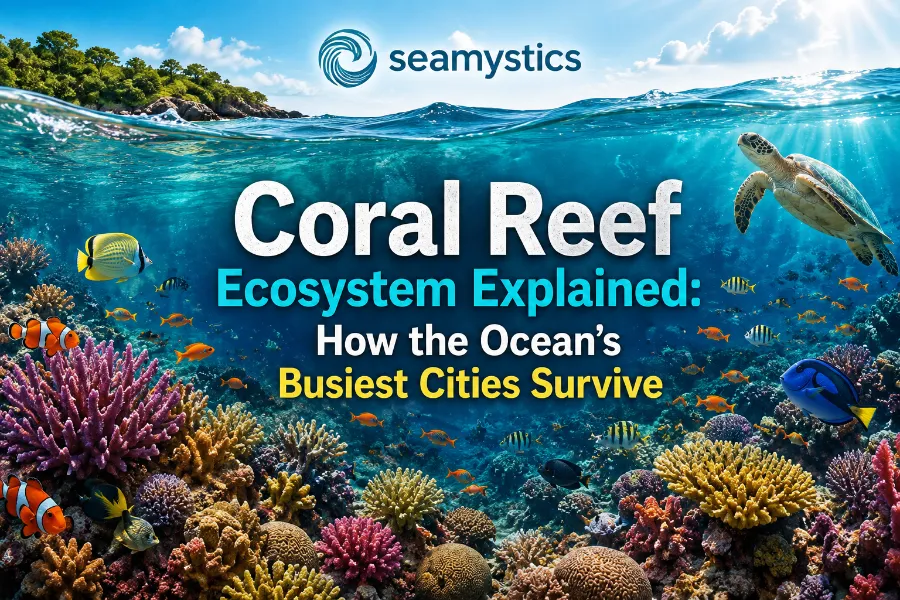

Picture a city that never sleeps, where millions of residents hunt, hide, hunt again, and somehow still make room for tourists. That city is not on land. It sits under warm, shallow water, built from limestone, and it houses more life per square foot than almost anywhere else on Earth. When people ask for a coral reef ecosystem explained in plain terms, the honest answer is this: it works like a busy, crowded, oddly organized metropolis, and right now, that metropolis is fighting for its life.
If you want to learn more about hydrothermal vent ecosystem facts tips and expert advice.
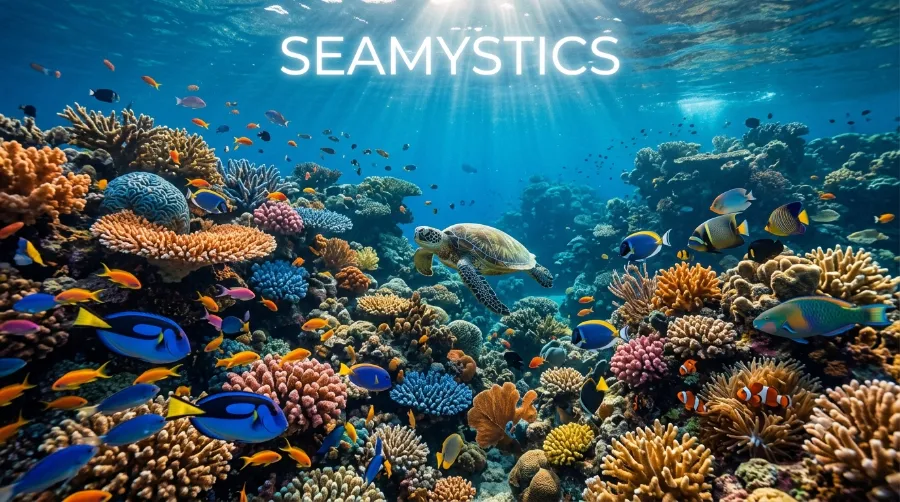
Reefs cover less than one percent of the ocean floor, yet they support roughly a quarter of all marine species. That single fact alone should stop anyone in their tracks. Before diving deeper into the science, here is a quick snapshot of what this guide covers.
If you want to learn more about kelp forest ecosystem facts tips and expert advice.
Key Takeaways
| Topic | What You Need To Know |
|---|---|
| Coverage | Reefs occupy less than 1% of the seafloor but host about 25% of marine species |
| Builders | Coral polyps and algae called zooxanthellae form the base of the whole system |
| Recent crisis | The 2023 to 2025 global bleaching event hit roughly 84% of the world’s reef area |
| Economic value | Reefs support fisheries, tourism, and coastal protection worth billions each year |
| Biggest threats | Warming oceans, pollution, overfishing, and coastal development |
| Hope | Restoration projects and marine protected areas are showing measurable recovery |
Now, let’s walk through how this underwater city actually functions, why it matters so much, and what is putting it at risk today.
If you want to learn more about deep sea food web tips and expert advice.
What Makes a Coral Reef Ecosystem Tick
A reef looks like a rock garden from a distance. Up close, it is closer to a living apartment complex. Every crack, ledge, and tunnel holds a tenant, and every tenant plays a role in keeping the building standing.
If you want to learn more about mangrove ecosystem ocean role tips and expert advice.
Understanding a coral reef ecosystem explained from the ground up means starting with two tiny partners that make everything else possible.
Coral Polyps, the Tiny Builders
Coral polyps are small, soft-bodied animals related to jellyfish and sea anemones. Thousands of them live together in a single colony, and each one secretes calcium carbonate to build a hard skeleton around itself. Over decades, and sometimes centuries, these skeletons stack up and form the reef structure that fish, crabs, and countless other creatures call home.
If you want to learn more about symbiosis in coral reefs tips and expert advice.
A single polyp is barely visible without close inspection. Yet the Great Barrier Reef in Australia, built from these same tiny animals, stretches over 2,300 kilometers and can be seen from space. That scale did not happen overnight; it took thousands of years of steady, patient construction.
If you want to learn more about open ocean ecosystem zones tips and expert advice.
Zooxanthellae, the Hidden Engine
Inside each coral polyp lives a microscopic algae called zooxanthellae. This algae performs photosynthesis and shares the sugars it produces with the coral, covering up to 90% of the coral’s energy needs. In return, the coral gives the algae a safe home and access to sunlight.
This partnership also explains a reef’s vivid color. The algae give coral its green, brown, or golden hues. When ocean temperatures rise too high, corals expel this algae in a stress response known as bleaching, and the coral turns ghostly white. According to the U.S. Environmental Protection Agency, coral reefs form one of the most biologically diverse ecosystems on the planet precisely because of this delicate algae-coral relationship, which is why even small temperature shifts can trigger widespread damage (EPA).
learn more about Seagrass meadows and ocean health tips and expert advice.
Deep Sea Mysteries Behind Reef Biodiversity
Reefs sit in shallow, sunlit water, so calling them a deep sea mystery might sound odd at first. However, the connections between shallow reefs and the wider deep ocean run deeper than most people realize, and scientists are still uncovering new species and behaviors every year.
Researchers at the Woods Hole Oceanographic Institution note that reef ecosystems act as nurseries for species that later migrate into deeper waters, linking shallow reef health directly to the health of the open ocean (WHOI). In other words, damage a reef today, and you may be quietly damaging deep sea food chains for years to come.
want to learn more aboutwhale fall ecosystem explained health tips and expert advice.
Why Reefs Host a Quarter of Marine Life
Reefs create structural complexity that open water simply cannot offer. Nooks, crevices, and overhangs give small fish a place to hide from predators. This is one of the biggest deep sea mysteries scientists continue to study: how such a small footprint on the ocean floor supports such an outsized share of marine biodiversity.
According to the Coral Reef Alliance, reefs shelter an estimated 4,000 species of fish, along with thousands of species of mollusks, crustaceans, and marine plants (Coral.org). If you want a broader look at how these pieces connect across the wider ocean, our guide on how marine ecosystems work breaks the full picture down step by step.
Reef Biodiversity by the Numbers
| Category | Estimated Species Supported |
|---|---|
| Fish species | Approximately 4,000 |
| Coral species | Around 800 hard coral species worldwide |
| Marine species overall | About 25% of all known marine species |
| Ocean floor coverage | Less than 1% |
| People relying on reefs for food or income | Over 500 million globally |
These numbers are not just trivia. They represent a food web so tightly packed that removing even one link can cause ripple effects across dozens of species.
The Ocean’s Busiest Cities: Life Inside a Reef
If a reef is a city, then every species has a job. Some are builders, some are cleaners, some are security guards, and some simply pass through to shop for food. This division of labor keeps the whole system balanced, and it is a big part of any coral reef ecosystem explained honestly.
Food Webs and Cleaning Stations
Small fish called cleaner wrasses run what scientists genuinely call cleaning stations. Larger fish, and sometimes even sharks, line up and wait their turn to have parasites picked off their skin. This behavior benefits both sides, since the cleaner fish gets a meal and the larger fish stays healthy.
Meanwhile, herbivorous fish like parrotfish graze on algae that would otherwise smother coral. A single parrotfish can process hundreds of kilograms of reef material each year, grinding coral skeletons into the fine white sand that makes up many tropical beaches. Without these grazers, algae would quickly choke out coral growth.
Here is a short list of common reef “jobs” and the species that fill them:
- Builders: hard corals that construct the physical reef structure
- Grazers: parrotfish and surgeonfish that keep algae growth in check
- Cleaners: wrasses and shrimp that remove parasites from larger fish
- Predators: reef sharks and groupers that keep prey populations balanced
- Recyclers: sea cucumbers and crabs that break down organic waste
Real-World Example: The Great Barrier Reef
The Great Barrier Reef offers one of the clearest real-world examples of this busy city in action. In 2023, researchers documented healthy coral colonies at multiple monitoring sites, only to record widespread bleaching by early 2024 as ocean heat stress spread across the region.
By 2025, sections of the reef showed partial recovery in cooler zones, while warmer northern sections continued to struggle. This pattern shows how sensitive the entire community, from coral to cleaner fish to grazing parrotfish, remains to even small shifts in water temperature. It also shows why continuous monitoring matters more now than at any point in recorded history.
Threats Facing the Coral Reef Ecosystem Today
No coral reef ecosystem explained article would be complete, or honest, without addressing the crisis unfolding right now. Reefs worldwide are under more pressure than at any time since scientists began tracking them.
According to NOAA and the International Coral Reef Initiative, the fourth global coral bleaching event ran from early 2023 through mid-2025 and affected roughly 84% of the world’s coral reef area across more than 80 countries and territories. That figure surpassed the previous record set during the 2014 to 2017 bleaching event, which affected about 68% of global reefs.
Bleaching Events Timeline
| Global Bleaching Event | Years | Percentage of Reefs Affected |
|---|---|---|
| First global event | 1998 | 21% |
| Second global event | 2010 | 37% |
| Third global event | 2014 to 2017 | 68% |
| Fourth global event | 2023 to 2025 | 84% |
This table tells a simple, uncomfortable story. Each successive global bleaching event has hit a larger share of the world’s reefs, and the gap between events keeps shrinking. Scientists at NOAA now describe near-annual bleaching as the new normal for many reef regions rather than a rare emergency.
Local Pressures: Pollution and Overfishing
Rising ocean temperatures are not the only problem. Coastal development, agricultural runoff, and untreated sewage introduce excess nutrients into reef waters, which fuels algae overgrowth and smothers coral. Overfishing removes key grazers and predators, throwing the entire food web out of balance.
A well-known case comes from the Florida Keys, where Cheeca Rocks reef experienced a documented shift from healthy to fully bleached between May and October 2023, before showing partial recovery by March 2024 following cooler winter temperatures. This single reef became a widely cited example of how quickly heat stress can transform a thriving coral community into a bleached one, and how recovery, while possible, is never guaranteed.
How Scientists and Communities Are Fighting Back
Despite the grim statistics, this is not a story without hope. Marine biologists, coastal communities, and conservation groups are testing new approaches, and some of them are already producing measurable results.
Restoration Projects Worth Watching
Coral nurseries now operate in dozens of countries, growing fragments of heat-resistant coral species before transplanting them back onto damaged reefs. In the Caribbean, organizations have outplanted hundreds of thousands of coral fragments over the past decade, targeting species that have shown greater resilience to warming water.
Here are three restoration strategies gaining traction worldwide:
- Coral gardening, where fragments are grown on underwater frames before transplanting them onto degraded reefs
- Assisted evolution, where scientists selectively breed corals for heat tolerance
- Marine protected areas, which limit fishing and development pressure to give reefs room to recover naturally
What You Can Do
Individual choices add up faster than most people expect. Choosing reef-safe sunscreen, supporting sustainable seafood, and reducing household carbon footprints all play a small but real part in reef health. If you want to explore this topic further, our related guide at /related-guide covers practical steps anyone can take to support ocean conservation.
At Sea Mystics, we believe understanding the problem is the first step toward solving it, and you can explore more ocean science breakdowns on our main site.
Frequently Asked Questions
What is a coral reef ecosystem in simple terms?
A coral reef ecosystem is a community of coral, fish, algae, and countless other marine species that live together around a structure built by coral polyps over time.
Why are coral reefs called the rainforests of the sea?
Reefs earn this nickname because they cover a tiny fraction of the ocean floor yet support an enormous share of marine biodiversity, much like rainforests do on land.
What causes coral bleaching?
Bleaching happens when stressed coral expels the algae living inside it, usually due to unusually warm water, which causes the coral to turn white and lose its main energy source.
Can bleached coral recover?
Yes, in some cases. If water temperatures cool down quickly enough, coral can regain its algae and recover, as seen at Cheeca Rocks in the Florida Keys between late 2023 and early 2024.
How long does it take a reef to grow?
Reef growth is slow, often just a few centimeters per year for many coral species, which is why large reef structures like the Great Barrier Reef took thousands of years to form.
What percentage of the world’s reefs have been affected by bleaching since 2023?
Roughly 84% of the world’s coral reef area experienced bleaching-level heat stress between 2023 and 2025, according to NOAA and the International Coral Reef Initiative.
Conclusion
Coral reefs behave like the ocean’s busiest, most crowded cities, packed with builders, cleaners, grazers, and predators that all depend on each other to survive. That balance took thousands of years to build, yet recent bleaching events show how quickly it can unravel under rising ocean temperatures. The good news is that restoration efforts, protected areas, and everyday choices are already helping some reefs recover, which means there is still time to protect these underwater cities for the generations that come after us.
References
- NOAA Coral Reef Watch, “NOAA Confirms 4th Global Coral Bleaching Event,” 2024
- NOAA NESDIS, “World’s Fourth Mass Coral Bleaching Event Likely Ended in 2025”
- International Coral Reef Initiative, “84% of the World’s Coral Reefs Impacted in the Most Intense Global Coral Bleaching Event Ever,” 2025
- U.S. Environmental Protection Agency, “Basic Information About Coral Reefs” (epa.gov)
- Woods Hole Oceanographic Institution, “Ocean Topics: Coral Reef Ecosystems” (whoi.edu)
- Coral Reef Alliance, “The Diverse Wildlife of Coral Reef Ecosystems” (coral.org)