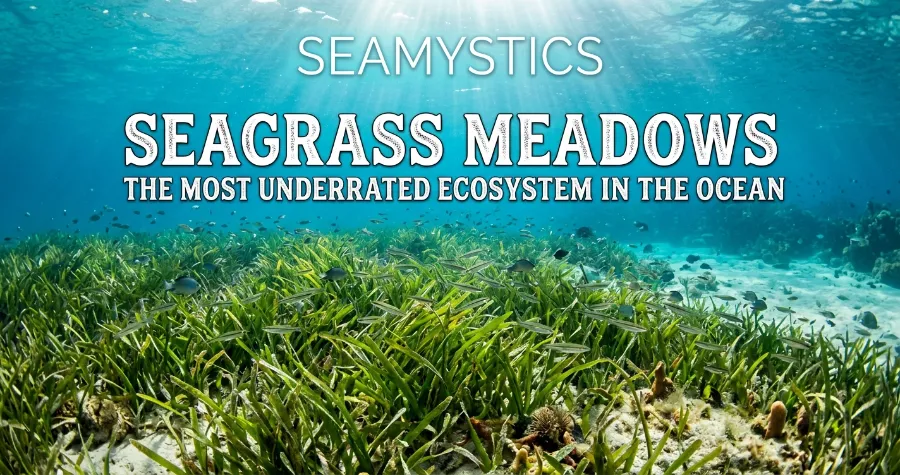

Most people picture coral reefs or kelp forests when they think about ocean life worth protecting. Seagrass meadows rarely make that list, and that is a mistake. In fact, these quiet underwater grasslands are doing more heavy lifting for seagrass meadows and ocean health than almost any other coastal habitat, yet they remain one of the least talked about parts of our marine ecosystems.
To start, seagrass is not seaweed. Rather, it is a flowering plant, related more closely to lilies than to algae, that took root in shallow coastal waters roughly 100 million years ago. Today, it forms dense underwater meadows from the tropics to the edge of the Arctic Circle. As a result, it plays a role in ocean health that scientists are only now fully measuring.
want to learn more aboutwhale fall ecosystem explained health tips and expert advice.
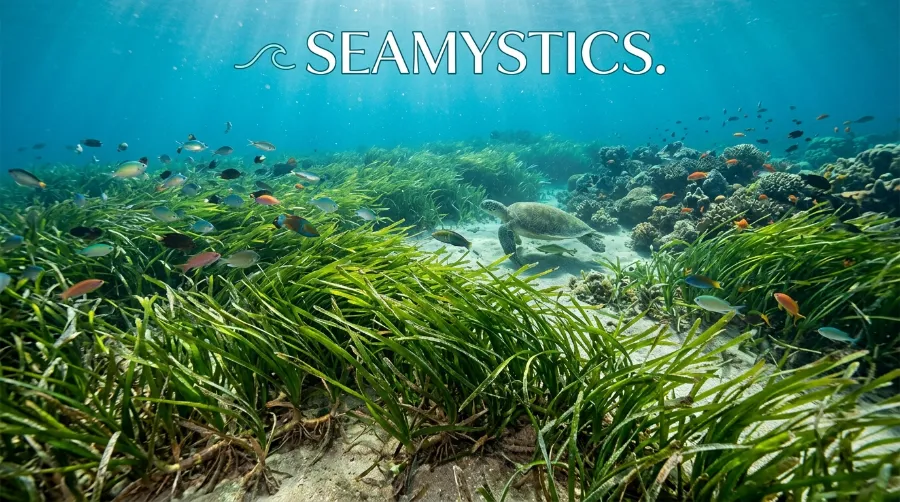
This guide walks through why seagrass meadows matter so much, what is threatening them, and what real recovery looks like. Along the way, you will see how seagrass fits into the broader story of how marine ecosystems work, and why losing this habitat would ripple far beyond the coastline.
TL;DR: Seagrass meadows cover less than 0.1% of the ocean floor. However, they store carbon at rates that rival tropical rainforests, support fisheries worth billions of dollars, and shelter species from seahorses to sea turtles. Sadly, they are disappearing fast, with global loss estimated at around 7% per year since 1990. Even so, targeted restoration projects like the one on Virginia’s Eastern Shore prove recovery is possible.
Key Takeaways
| Topic | Fact |
|---|---|
| Ocean floor coverage | Less than 0.1% of the seafloor, yet outsized impact |
| Carbon storage | Stores organic carbon in sediment for centuries to millennia |
| Global loss rate | Around 7% annually in recent decades |
| Historical decline | 29% of known seagrass extent lost since 1879 |
| Economic value | Nutrient cycling services estimated at $1.9 trillion per year globally |
| Species supported | Seahorses, manatees, dugongs, juvenile fish, sea turtles |
| Best known recovery | 20-plus-year eelgrass restoration on Virginia’s Eastern Shore |
What Are Seagrass Meadows
Seagrass meadows are underwater fields of flowering plants that grow in shallow, sunlit coastal waters. Unlike coral reefs, which are built by animals, seagrass is a true plant with roots, stems, and even flowers. It spreads through underground rhizomes. Consequently, it forms dense, interlocking meadows that can stretch for miles along a coastline.
These meadows sit at the center of coastal marine ecosystems in a way that is easy to overlook. For instance, they filter water, stabilize sediment with their root systems, and buffer shorelines against storm surge. For a deeper look at how these pieces fit together, this breakdown of how marine ecosystems work is a useful starting point.
A Home for Thousands of Species
A single acre of healthy seagrass can support tens of thousands of fish and invertebrates. Specifically, juvenile cod, herring, and snapper use seagrass meadows as nurseries before moving to open water. Meanwhile, seahorses anchor themselves to the blades, and manatees and dugongs graze on it almost exclusively.
By comparison, a coral reef ecosystem relies on a completely different structure, as explained in this guide to how coral reef ecosystems work. Even so, seagrass meadows often sit right next to reefs. Therefore, they act as a nursery ground that feeds fish back into the reef system as they mature.
Seagrass Meadows and Ocean Health: The Carbon Connection
This is where seagrass earns its reputation as an undervalued climate tool. Like any plant, seagrass captures carbon dioxide through photosynthesis. However, it also does something most land plants cannot do well: it buries that carbon in waterlogged sediment where oxygen cannot reach it. As a result, the carbon stays locked away for centuries instead of decomposing.
The Numbers Behind Blue Carbon
Recent research puts real figures behind this claim. A 2025 global carbon inventory found that seagrass meadows, despite covering only 160,000 to 266,000 square kilometers worldwide, store as much as 40 million tons of carbon in their living tissue alone. Notably, this matches or exceeds the per-hectare carbon storage of tropical forests.
Similarly, a separate 2025 study led by Conservation International found that seagrass meadows store a global median of 24.2 metric tonnes of organic carbon per hectare in just the top foot of seabed sediment. That is roughly equal to the annual emissions of five gasoline-powered cars. Furthermore, in carbon-rich regions like Florida’s coastline, a single hectare can store the equivalent of 10 to 22 cars’ worth of annual emissions.
Here is a simplified comparison of carbon storage across major coastal habitats, based on published research:
| Ecosystem | Approximate Carbon Storage Rate | Source |
|---|---|---|
| Seagrass meadows | ~24.2 tonnes/hectare (sediment, global median) | Conservation International, 2025 |
| Tropical rainforest | Comparable per-hectare biomass storage, faster turnover | Nature Communications, 2025 |
| Mangrove forest | Similarly high, varies by region | See our mangrove ecosystem guide |
| Salt marsh | High, but lower total global extent | Blue carbon research literature |
If seagrass is lost, that stored carbon does not simply disappear. Instead, it releases back into the atmosphere and ocean. Indeed, the same 2025 study warned that protecting these ecosystems could avert climate damages worth more than $200 billion.
How Fast Are We Losing Seagrass
The scale of seagrass loss is genuinely alarming. A landmark global assessment covering more than 200 studies found that seagrasses have disappeared at a rate of 110 square kilometers per year since 1980. Overall, 29% of known seagrass extent has been lost since records began in 1879. Even more concerning, the rate of decline accelerated from under 1% per year before 1940 to 7% per year since 1990.
To put that in perspective, researchers behind that same study described it this way: the world loses a seagrass meadow roughly the size of a soccer field every thirty minutes.
Regional Case Studies
Regional data shows how quickly this can happen close to home. In Maine, for example, state environmental data showed that eelgrass coverage in Casco Bay dropped from 5,012 acres to 2,286 acres between 2018 and 2022. That is a decline of more than half in just four years. Likewise, in the Gulf of Mexico, researchers tracking Laguna Madre found that rising water depth caused two common seagrass species to vanish entirely from monitoring stations within five years.
Main Drivers Behind Seagrass Decline
The causes behind these numbers are fairly consistent across regions:
- Coastal development and dredging that physically destroy or bury meadows
- Nutrient runoff from agriculture and wastewater, which fuels algae blooms
- Rising water temperatures and marine heatwaves
- Sea level rise, which pushes meadows into water too deep for adequate light
- Boat propeller scarring and anchor damage
- Invasive species that outcompete native seagrass
This pattern of decline mirrors what is happening elsewhere, including the symbiotic breakdowns explored in this piece on symbiosis in coral reefs.
Why Seagrass Loss Hits Marine Ecosystems Hard
Because seagrass sits at the base of so many coastal food webs, its decline creates ripple effects far past the meadow itself. For example, when Virginia’s eelgrass beds collapsed in the 1930s due to disease and hurricane damage, the state’s bay scallop fishery disappeared almost overnight. By 1933, Virginia watermen harvested no bay scallops at all.
That kind of collapse is not limited to shellfish, though. Seagrass loss also reduces nursery habitat for commercially important fish and weakens natural coastal defenses. In addition, it lowers water quality, since seagrass roots would otherwise stabilize sediment. Meanwhile, species like manatees, green turtles, and dugongs face real pressure, since they depend on seagrass as a primary food source.
These dynamics connect to the wider web of ocean life, similar to patterns seen in the deep sea food web.
A Real Comeback Story: Restoring Eelgrass in Virginia
Seagrass loss is not necessarily permanent, and one project proves it well. Starting in 1999 with a single naturally occurring patch of eelgrass off Virginia’s Eastern Shore, researchers launched what has become the largest successful seagrass restoration effort in the world.
The Numbers Behind the Recovery
The scale of this project is worth sitting with. Over roughly two decades, researchers and volunteers spread more than 70 million eelgrass seeds across plots covering more than 200 hectares. By the mid-2020s, those restored meadows had expanded to 6,195 acres. Today, they support an estimated 200,000 bay scallops raised in a local hatchery. More recent tracking, in fact, put total eelgrass coverage close to 9,500 acres.
What makes this project remarkable is not just the scale. Rather, it is the speed of ecological recovery. Within the first ten years, scientists observed the ecosystem rebounding rapidly across nearly every indicator of health, including water quality and fish biomass.
What Made the Virginia Project Work
A few practical lessons stand out from this restoration effort:
- Volunteers played a central role, contributing over 2,175 hours to seed collection over more than a decade
- Seeds were collected during a narrow window in late spring, then stored in flowing seawater tanks before fall planting
- Water quality mattered enormously, since cooler, clearer bays gave the project a better chance than more polluted areas
- Long-term monitoring allowed scientists to track recovery across multiple indicators, not just coverage area
This restoration model offers a genuine blueprint for other regions. It also echoes strategies used in other threatened habitats, such as those described in this guide to kelp forest ecosystems.
How Seagrass Compares to Other Ocean Habitats
Seagrass meadows do not operate alone. Instead, they interact with and support several other marine ecosystems, each with a different structure and role.
| Ecosystem | Primary Role | Related Reading |
|---|---|---|
| Coral reefs | Biodiversity hotspot, coastal protection | Coral reef ecosystem guide |
| Kelp forests | Carbon capture, habitat for cold-water species | Kelp forest ecosystem guide |
| Mangroves | Coastal buffering, nursery habitat | Mangrove ecosystem guide |
| Hydrothermal vents | Deep sea chemosynthetic life | Hydrothermal vent ecosystem facts |
| Open ocean zones | Migratory species, pelagic food webs | Zones of the open ocean |
Unlike deep sea systems, which rely on chemical energy far from sunlight, seagrass depends entirely on shallow, clear water. That is exactly why coastal development and pollution hit it so hard.
What You Can Actually Do
Protecting seagrass does not require a marine biology degree. In fact, coastal communities and boaters can make a measurable difference through a few consistent actions:
- Avoid anchoring directly in seagrass beds, and use marked mooring buoys where available
- Reduce fertilizer and lawn chemical runoff, since nutrient pollution is a top driver of decline
- Support local seagrass monitoring and seed collection programs
- Choose responsible tour operators when snorkeling or boating near seagrass habitats
Additionally, World Seagrass Day, recognized annually on March 1st since the United Nations formally proclaimed it in 2022, has become a focal point for these efforts. Organizations track World Seagrass Day initiatives and highlight practical ways to get involved. Likewise, other groups have published accessible explainers on how seagrass meadows help fight climate change, while sustainable travel organizations outline how travelers can help protect seagrass meadows.
Frequently Asked Questions
Is seagrass the same thing as seaweed?
No. Seagrass is a flowering plant with true roots, while seaweed is algae without roots or flowers.
Why is seagrass better at storing carbon than forests?
Seagrass buries carbon in oxygen-poor sediment, so it stays locked away for centuries. Forest carbon, by contrast, cycles back into the atmosphere faster.
How much seagrass has the world lost?
Roughly 29% of known seagrass extent has been lost since 1879, with recent annual loss rates around 7%.
Can damaged seagrass meadows recover?
Yes. As Virginia’s Eastern Shore project shows, recovery is possible with clean water, seed supply, and sustained effort.
What animals depend most on seagrass?
Manatees, dugongs, green sea turtles, seahorses, and juvenile fish of many commercial species all rely on it heavily.
Conclusion
Seagrass meadows do not get the attention that coral reefs or kelp forests receive. Even so, they quietly do more for coastal carbon storage, fisheries, and shoreline protection than most people realize. The data is clear that these ecosystems are disappearing fast. However, the Virginia restoration story proves that recovery is genuinely possible when science, funding, and community effort come together. Ultimately, protecting seagrass meadows and ocean health is not a distant goal. It is something coastal communities and travelers can actively support starting now.
References
- Conservation International, “New Research: Protecting Seagrass Ecosystems is Essential to Preventing Climate Damages,” 2025
- Nature Communications, “Global estimates of seagrass blue carbon stocks in biomass and net primary production,” 2025
- PNAS, “Accelerating loss of seagrasses across the globe threatens coastal ecosystems,” 2009
- Global Change Biology, “Long-term declines and recovery of meadow area across the world’s seagrass bioregions,” 2021
- Earth.Org, “Seagrass Meadows Are Declining Globally at Alarming Rate,” 2023
- Communications Earth & Environment, “Rapid sea level rise causes loss of seagrass meadows,” 2024
- The Nature Conservancy, “Restoring Eelgrass on Virginia’s Eastern Shore”
- NOAA Ocean Service, “New Seed Strategies Lead to Unparalleled Eelgrass Success”
- Science News, “Seagrass restoration project brings back a crucial ecosystem,” 2020
- Estuaries.org, World Seagrass Day resources
- Seaside Sustainability, “How Seagrass Meadows Help Fight Climate Change”
- Sustainable Travel International, “Seagrass Meadows” travel guide